As a content creator, your authority is your currency. Whether you're a YouTuber breaking down complex topics, a podcaster interviewing experts, or a publisher aiming to be the definitive voice in your niche, the quality of your research is non-negotiable. Transitioning from hobbyist to a revenue-generating professional means your audience expects more than just opinions; they demand evidence, data, and verifiable facts.
This isn't just about avoiding misinformation. It’s about building a content library with lasting value that can be repurposed, expanded, and monetized for years. Strong sourcing transforms a one-off video or blog post into a foundational asset, a piece of a larger, more valuable knowledge base. When every claim is backed by solid data, you create a trusted resource that attracts a loyal audience and opens doors for future projects. To truly substantiate your content, especially in academic or in-depth fields, understanding how to conduct a comprehensive literature review is vital. Explore indispensable literature review example types to see how professionals synthesize information.
But where do you find information that stands up to scrutiny? This roundup dives into 7 essential, reliable research sources that professionals use to build unshakeable content. We'll explore not just where to look, but how to use these platforms, complete with screenshots and direct links, to build a powerful, organized knowledge base. This guide is your starting point for transforming raw data into compelling narratives and building a content engine that drives all your future creative work.
1. JSTOR
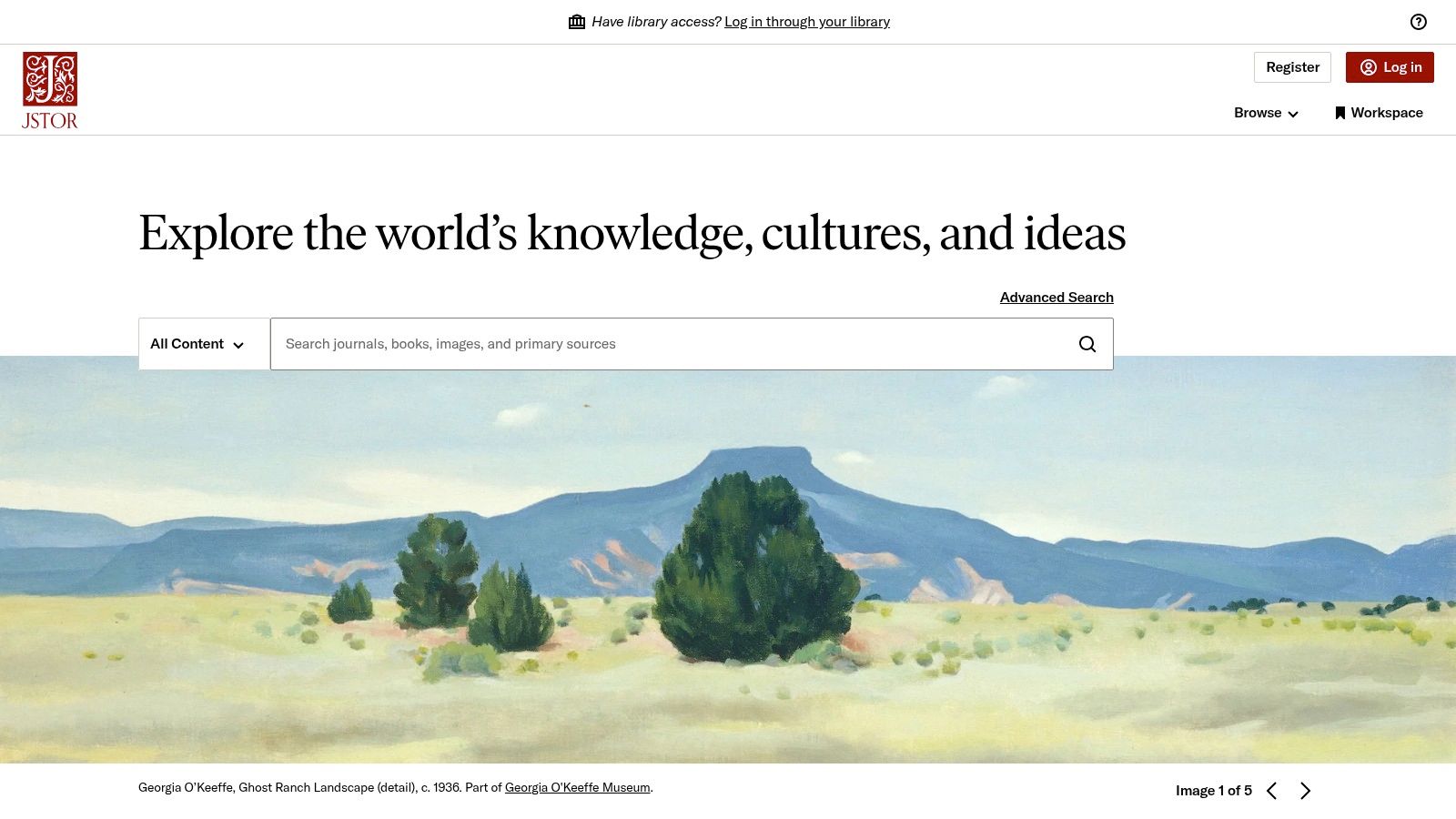
JSTOR, short for Journal Storage, is a digital library founded in 1995. It stands as one of the most essential reliable research sources for anyone needing deep, authoritative archival content. It's an indispensable tool for podcasters, documentarians, and writers who need to ground their narratives in rigorously vetted academic work and primary source material.
What makes JSTOR unique is its focus on archival depth. While some databases prioritize the very latest publications, JSTOR excels at providing access to the "backfile" of thousands of prestigious academic journals, often stretching back to their very first issue. This makes it an unparalleled resource for historical context, tracing the evolution of ideas, or finding foundational research in a specific field.
Key Features and Access Models
JSTOR provides several pathways to its vast collection, catering to both institutional and individual researchers.
- Institutional Access: The most common way to access JSTOR is through a library subscription at a university, college, or public library. This typically grants unlimited access to the institution's subscribed collections.
- JPASS for Individuals: For creators without institutional affiliation, JPASS is a personal access plan. It offers monthly or annual subscriptions with a set number of PDF downloads per month (e.g., 10 articles/month or 120/year).
- Free Content & Read-Online Access: A significant portion of JSTOR's archive is in the public domain and freely available. Additionally, users can register for a free personal account to read up to 100 articles per month online, though this does not include PDF downloads.
Practical Tips for Content Creators
To get the most out of JSTOR, integrate it strategically into your research workflow.
- Use Advanced Search: Go beyond simple keyword searches. Use the advanced search to filter by publication date, discipline (like History or Sociology), and item type (like articles, book chapters, or pamphlets). This is crucial for narrowing down results for a specific historical documentary or podcast series.
- Leverage Primary Source Collections: Don't overlook the "Primary Sources" tab. Here you can find historical documents, letters, photographs, and ephemera that can add incredible texture and authenticity to your storytelling.
- Organize Your Findings: When you find a crucial article, download the PDF and its citation immediately. For larger projects, use a tool like Contesimal to organize your content library. This allows you to create a searchable personal knowledge base, making it easy to query your entire archive of research for specific names, dates, or concepts when scripting your next video or blog post. Exploring what makes JSTOR a premier research tool provides a masterclass in what to look for in a credible source.
Quick Takeaway: Use JSTOR when your project demands historical depth and academic rigor. It's less suited for breaking news but is the gold standard for foundational research and accessing high-quality, peer-reviewed articles from past decades.
Website: https://www.jstor.org
2. IEEE Xplore Digital Library
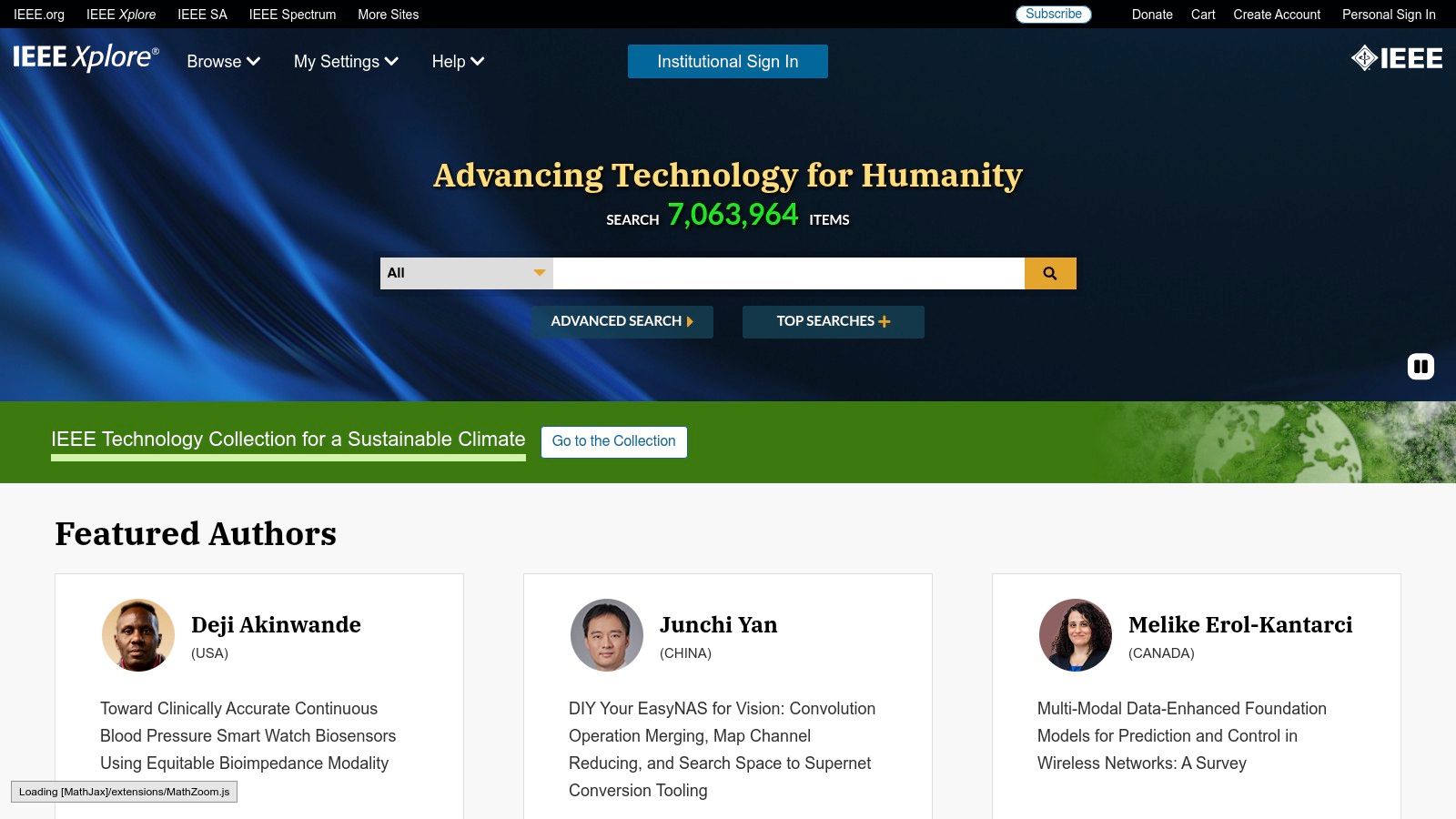
The IEEE Xplore Digital Library is the premier resource for technical literature in engineering, computer science, and related technologies. Maintained by the Institute of Electrical and Electronics Engineers (IEEE), it’s one of the most reliable research sources for content creators, tech journalists, and documentarians covering topics like AI, robotics, telecommunications, and software development. It provides access to high-impact, peer-reviewed content that underpins modern technological innovation.
What sets IEEE Xplore apart is its focus on the entire lifecycle of technical research. It doesn't just host journal articles; it's a comprehensive repository of conference proceedings, which often contain the most cutting-edge, nascent research. It also includes the technical standards that define how technologies work globally, making it an essential tool for creators needing to explain complex tech with precision and authority.
Key Features and Access Models
IEEE Xplore offers multiple access pathways, reflecting its diverse audience of academics, corporate engineers, and individual researchers.
- Institutional Access: Most universities and technology corporations provide full access to IEEE Xplore through their library subscriptions, offering unlimited viewing and downloads.
- Pay-Per-Article: For creators needing a single, crucial document, most articles can be purchased individually. This is ideal for one-off projects or verifying a specific technical claim.
- IEEE Membership: Becoming an IEEE member can provide discounted access to certain publications and journals, a cost-effective option for creators specializing in a specific tech niche.
- Open Access (OA): A growing collection of articles is available via Open Access, which means they are free to read and download for everyone, though publishing in these journals often requires an Article Processing Charge (APC) from the author.
Practical Tips for Content Creators
To effectively leverage IEEE Xplore, you need to navigate its technical depth strategically.
- Target Conference Proceedings: For the latest breakthroughs in fields like AI or quantum computing, start your search with recent conference proceedings. These papers often predate formal journal publications by months or even years and are perfect for a tech news podcast or YouTube channel.
- Deconstruct Technical Standards: If your content explains how Wi-Fi, Bluetooth, or Ethernet works, go directly to the source. The IEEE standards documents are highly technical, but their introductions and abstracts provide authoritative definitions and context you won't find elsewhere.
- Build a Knowledge Base: Technical research is dense. When you download a critical PDF, immediately save the citation and organize it in a tool like Contesimal. This helps you build your content library, allowing you to quickly query your collection for specific algorithms, company names, or technical terms when scripting a video or writing a deep-dive blog post.
Quick Takeaway: Use IEEE Xplore when your project requires authoritative, technically precise information on engineering or computer science. It is the go-to source for cutting-edge research, industry standards, and peer-reviewed articles that shape the world of technology.
Website: https://ieeexplore.ieee.org
3. SpringerLink (including Springer+)
SpringerLink is a comprehensive online collection of scientific, technical, and medical (STM) publications, as well as humanities content. It serves as a massive digital library for peer-reviewed journals, books, and reference works from imprints like Springer, Palgrave Macmillan, and Apress, making it one of the most versatile reliable research sources available. For creators covering topics from software development to medical breakthroughs, SpringerLink provides direct access to current, high-impact research.
What sets SpringerLink apart is its flexible and creator-friendly access model, particularly with the introduction of Springer+. While traditional databases often require full institutional subscriptions, SpringerLink offers granular, pay-per-article options and a personal subscription that bridges the gap for independent producers, writers, and podcasters who need targeted access without the institutional price tag.

Key Features and Access Models
SpringerLink's strength lies in its diverse access pathways, which cater to a wide range of research needs and budgets.
- Springer+ for Individuals: This personal subscription plan operates on a credit system, providing a set number of units per month or quarter. These units can be exchanged for PDF downloads of journal articles or eBook chapters, making it a predictable and affordable option for regular research.
- Per-Article/Chapter Purchasing: If you only need a single piece of content, you can purchase articles and eBook chapters individually. This is ideal for one-off projects or verifying a specific fact without committing to a subscription.
- DRM-Free eBooks: Many of the eBooks available through SpringerLink are offered DRM-free, allowing for greater flexibility in how you use and store your purchased research materials across different devices.
- Broad Multidisciplinary Coverage: The platform hosts a vast catalog spanning from computer science (via Apress) to social sciences and humanities (via Palgrave Macmillan), ensuring you can find authoritative content for nearly any niche.
Practical Tips for Content Creators
To maximize SpringerLink's value, focus on its flexibility and breadth.
- Budget with Springer+: For ongoing projects like a YouTube series on emerging tech or a health-focused podcast, the Springer+ subscription offers a cost-effective way to access a steady stream of research. The unit-based system makes it easy to budget your research expenses.
- Target eBook Chapters: Don't just search for journal articles. Springer's extensive eBook collection contains deep, foundational knowledge. Purchasing a single, highly relevant chapter can often provide more comprehensive background for a video script or blog post than a single article.
- Download and Cite Immediately: When you acquire a paper or chapter, save the PDF and grab the citation information right away. This simple habit is crucial for maintaining a well-organized research library and ensuring you know how to add citations properly when you create your final piece of content.
Quick Takeaway: Use SpringerLink when you need access to a wide range of current scientific, technical, and medical research, especially if you lack institutional access. Its flexible, unit-based purchasing models are perfect for independent creators who need to control their research budget.
Website: https://link.springer.com
4. Wiley Online Library
Wiley Online Library is a vast multidisciplinary platform from one of the world's most established academic publishers. It serves as a cornerstone among reliable research sources, offering access to over 1,600 journals, thousands of books, and major reference works across life sciences, medicine, social sciences, and humanities. For creators producing content on scientific breakthroughs, medical advancements, or psychological trends, Wiley is an essential gateway to current, peer-reviewed research.
What distinguishes the Wiley Online Library is its incredible breadth and flexible access models. It is a primary publisher, meaning much of the content is original to its platform, including journals published on behalf of prestigious scholarly societies. This makes it a go-to source for cutting-edge findings in fields like chemistry, clinical medicine, and materials science, often before they are aggregated elsewhere.
Key Features and Access Models
Wiley provides several ways for creators and institutions to access its premium content, making it adaptable to different research needs and budgets.
- Institutional Access: Similar to other major databases, the primary access route is through subscriptions held by university, corporate, or medical libraries. This provides seamless, comprehensive access for affiliated users.
- Pay-Per-View: For independent creators without an institutional login, Wiley offers a direct pay-per-view option. You can purchase 48-hour online access or a downloadable PDF of a single article or book chapter, which is ideal for one-off research needs.
- Open Access: Wiley is a major player in the open-access movement. A growing number of its articles are published as "gold open access" (immediately free to read) or "hybrid" (published in a subscription journal but made open access through a fee), providing a wealth of free-to-use research.
- Article Select Tokens: This is a unique model for organizations, allowing them to pre-purchase a bundle of "tokens" that employees or members can redeem for article downloads, offering a more controlled way to manage research spending than full subscriptions.
Practical Tips for Content Creators
To leverage Wiley’s vast repository, a targeted approach is key, especially when dealing with highly specialized scientific content.
- Filter for Impact: When searching, sort results by "Cited by" to quickly identify influential papers that have shaped the conversation in a particular field. This helps you focus on foundational or breakthrough research for your next explainer video or blog post.
- Check for Society Journals: Many top-tier journals are published by scholarly societies in partnership with Wiley. Citing research from a journal affiliated with an organization like the American Cancer Society or the British Ecological Society can add significant authority to your content.
- Use the Pay-Per-View Strategically: If you only need one or two critical articles for a project, the per-article cost can be more economical than a monthly subscription service. Assess your needs before committing to a larger plan. Once you've purchased the PDF, add it to your content library to build your own queryable database, ensuring you can easily revisit key data points and citations for future projects.
Quick Takeaway: Use Wiley Online Library when you need access to the latest peer-reviewed research, especially in science, technology, and medicine. Its flexible pay-per-view and strong open-access offerings make it accessible to independent creators.
Website: https://onlinelibrary.wiley.com
5. Project MUSE
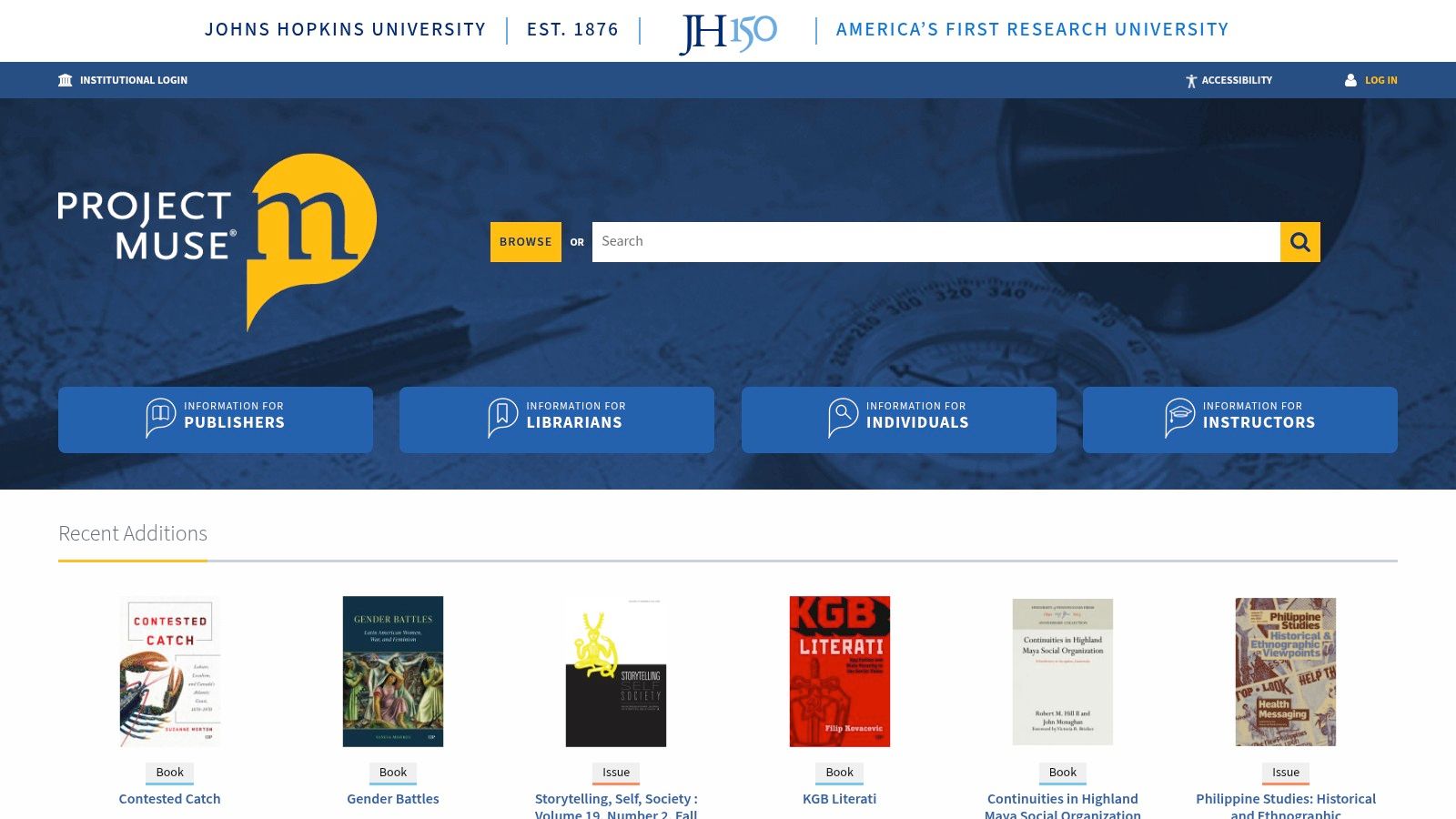
Project MUSE is an online database of peer-reviewed academic journals and e-books, focusing on the humanities and social sciences. Launched by Johns Hopkins University Press, it serves as a crucial bridge between scholarly societies, university presses, and the research community. For creators developing podcasts on sociology, documentaries on literary history, or articles on political theory, Project MUSE is one of the most reliable research sources for high-quality, curated content.
What sets Project MUSE apart is its deep partnership with non-profit and university-based publishers. This curation ensures that the content is not only rigorously peer-reviewed but also originates from institutions dedicated to advancing scholarly knowledge. Unlike broader databases that might include commercial publishers, MUSE offers a focused collection that is highly respected within academic circles, making it a go-to for authoritative deep dives into cultural and social topics.
Key Features and Access Models
Project MUSE provides several access options, with a clear distinction between institutional and individual pathways.
- Institutional Access: The primary access method is through subscriptions held by academic and public libraries. This provides affiliated users with seamless access to vast journal collections and book packages.
- Individual Subscriptions & Purchases: Unlike many academic databases, MUSE offers individual subscriptions for a select number of journals. Furthermore, where publishers have enabled it, users can purchase single articles or entire journal issues, providing a pay-as-you-go option for independent creators.
- Open Access Content: Project MUSE hosts a growing number of open-access books and journals that are completely free to read and download for everyone, without needing any login credentials.
Practical Tips for Content Creators
To leverage Project MUSE effectively, focus on its specialized collections and user-friendly interface.
- Filter by Research Area: Use the "Browse" function to explore content by subject, such as "Film, Theater, and Performing Arts" or "U.S. History." This is an excellent way to discover foundational and contemporary scholarship relevant to your content niche.
- Check for Individual Access: Before giving up on an article that seems locked, look for a "Purchase" or "Subscribe" option. For a one-off project, buying a single critical article can be far more cost-effective than a full JPASS subscription elsewhere.
- Archive and Index Your Sources: When you purchase or download an article, immediately save the PDF and citation. For creators building a knowledge base for a series, organizing these PDFs in a tool like Contesimal is a game-changer. It makes your entire content library searchable, allowing you to quickly find specific quotes, data points, or author names when scripting your next episode or post.
Quick Takeaway: Turn to Project MUSE for authoritative, university-press-level research in the humanities and social sciences. Its flexible individual purchase options make it particularly valuable for independent creators without institutional access.
Website: https://muse.jhu.edu
6. PubMed Central (PMC)
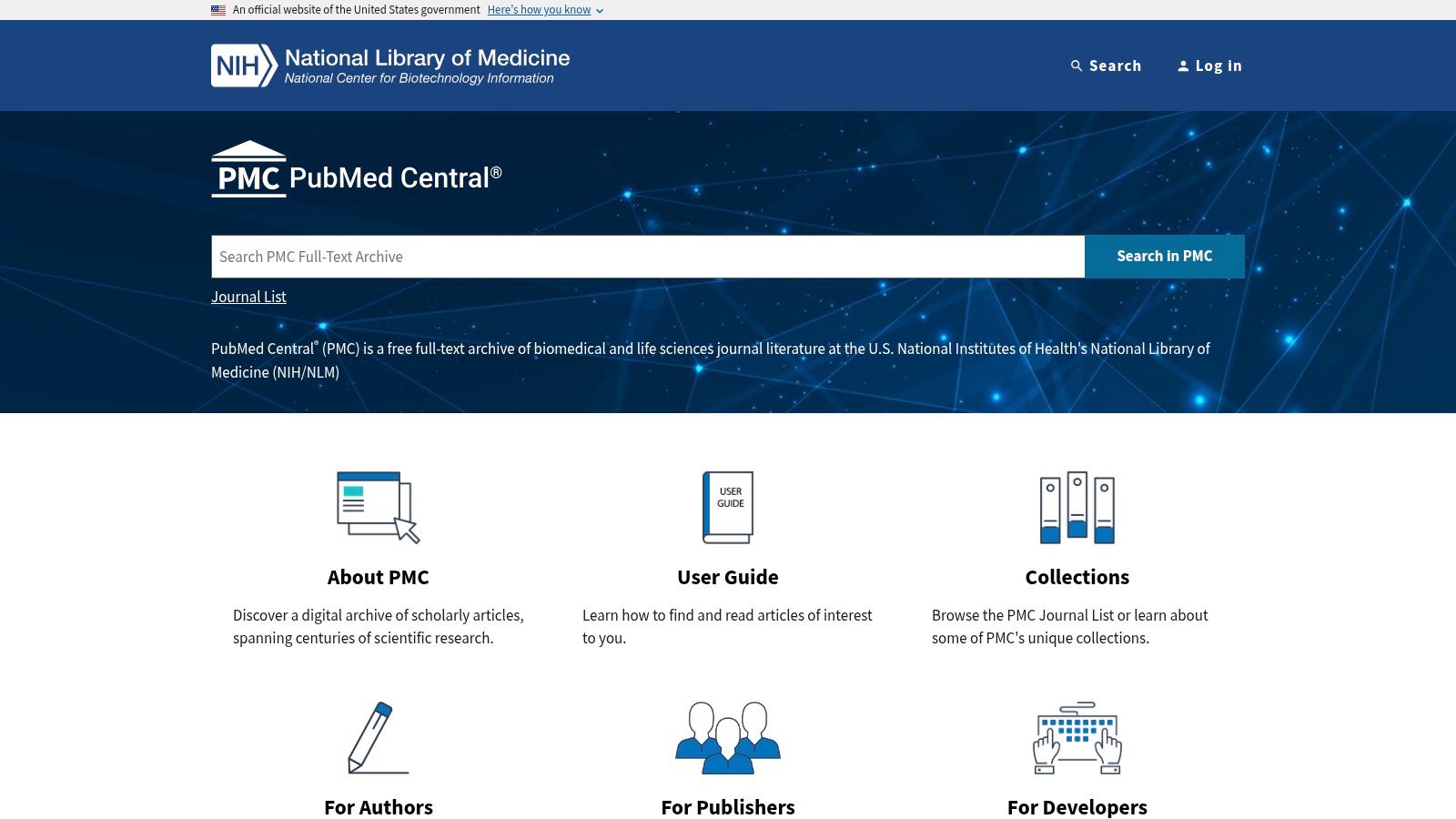
PubMed Central (PMC) is a free digital repository that archives open-access, full-text scholarly articles that have been published in biomedical and life sciences journals. Maintained by the U.S. National Library of Medicine (NLM), it stands as one of the most critical reliable research sources for content creators covering health, medicine, psychology, and biological science. For podcasters, health bloggers, and documentarians, PMC provides direct access to the primary research that underpins modern science news and discoveries, completely free of charge.
What makes PMC exceptionally valuable is its public access mandate and deep integration with the broader PubMed system. While PubMed itself is a database of citations and abstracts, PMC provides the full-text article, allowing you to move beyond a summary to analyze the study's methods, data, and conclusions directly. This is essential for creators who need to explain complex scientific topics accurately and avoid the misinterpretations that often plague second-hand reporting.
Key Features and Access Models
PMC is defined by its commitment to free, unrestricted access, making it a powerful tool for independent creators and established media organizations alike.
- Completely Free Access: Unlike subscription-based journals, every article in PMC is available to read and download in full without any paywalls or institutional login. This is a result of the NIH Public Access Policy, which requires scientists to submit their final, peer-reviewed manuscripts arising from NIH funds to the archive.
- Integration with PubMed: PMC is linked directly from PubMed search results. When you find an interesting study abstract on PubMed, a link to "Free full text in PMC" will take you straight to the complete article, streamlining your research process from discovery to deep-dive analysis.
- Diverse Content Collections: The archive includes not only final published articles but also author manuscripts (the final peer-reviewed version before publication) and select preprints, offering a broad view of the research landscape.
- Machine-Readable Datasets: For advanced creators or data journalists, PMC offers bulk access to its collections for text mining and computational analysis, opening up possibilities for creating data-driven content.
Practical Tips for Content Creators
To leverage PMC effectively, focus on precision and verification in your content workflow.
- Verify with the Source: When you see a news headline about a new medical study, use PMC to find the original research paper. Read the full study to understand its limitations, sample size, and the authors' own conclusions, which are often more nuanced than news reports suggest.
- Use Advanced Search Filters: The search interface allows you to filter by article type, publication date, and journal. This helps you narrow your search to find, for example, only randomized controlled trials or systematic reviews, which are often considered higher levels of evidence.
- Download and Archive Systematically: Save the PDF of every key study you reference. Use a tool like Contesimal to build a private, searchable knowledge base of these scientific papers. This allows you to quickly cross-reference findings across multiple studies when scripting a video series or writing a detailed article on a health topic. These articles are excellent examples of the types of primary sources of information available to modern creators.
Quick Takeaway: Use PubMed Central when you need free, authoritative access to full-text biomedical and life sciences research. It's the go-to resource for verifying health claims and grounding your content in primary scientific literature.
Website: https://www.ncbi.nlm.nih.gov/pmc
7. Amazon
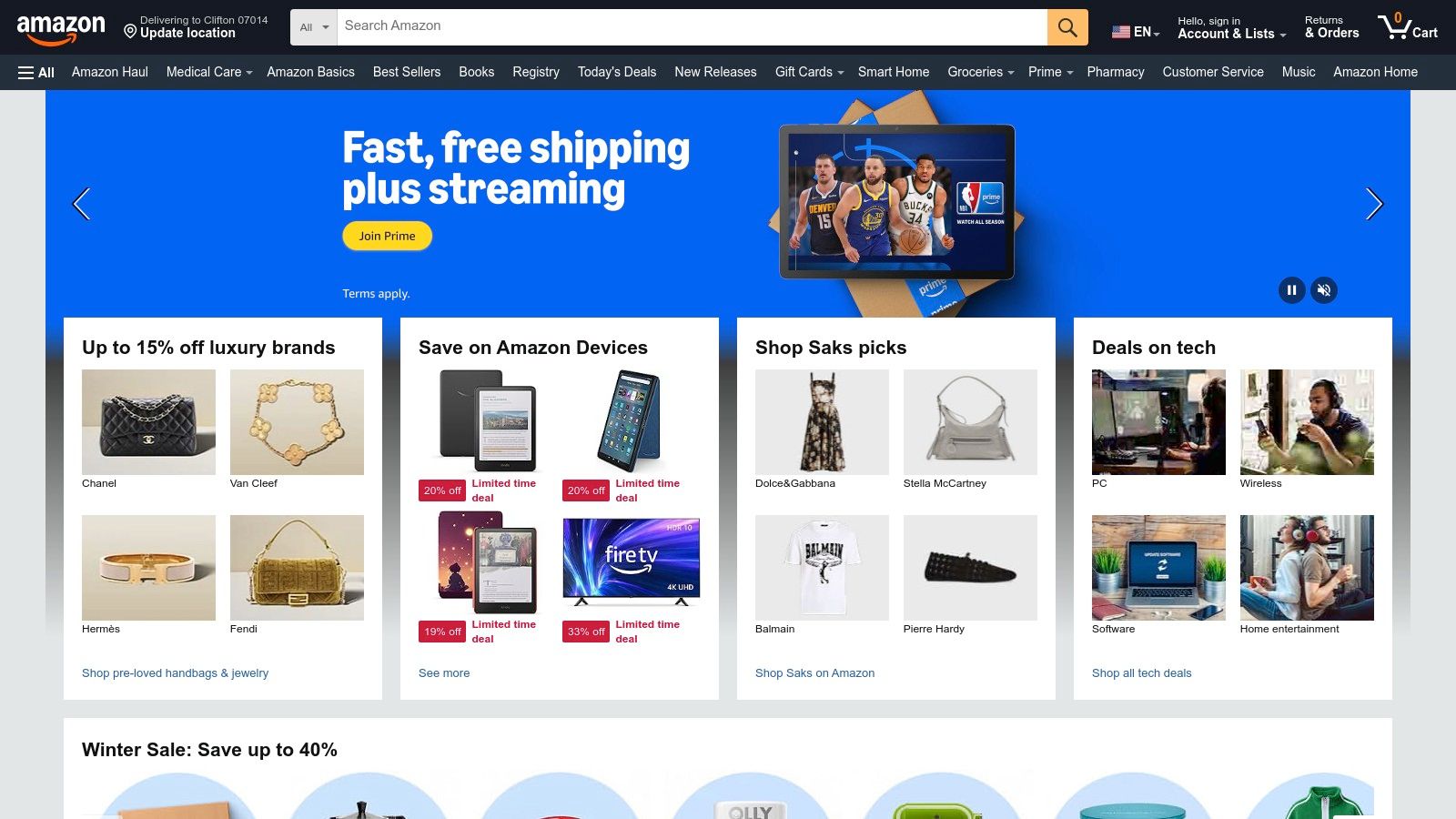
While not a traditional academic database, Amazon serves a crucial and practical role as one of the most accessible reliable research sources for physical and digital books. For content creators needing immediate access to the latest academic handbooks, specific textbook editions, or even rare, out-of-print reference works, Amazon is an indispensable marketplace. It's the go-to platform for when you need to purchase a key text that isn't available through your local library or a digital subscription.
What makes Amazon a powerful research tool is its vast catalog and logistical prowess. It bridges the gap between digital discovery and physical ownership, offering everything from brand-new scholarly monographs to used practitioner guides via its extensive third-party seller network. For a podcaster needing a specific biography overnight or a YouTuber looking for a niche historical atlas, Amazon's marketplace provides unparalleled speed and selection.
Key Features and Access Models
Amazon’s value for researchers lies in its retail efficiency and the breadth of its inventory, catering to almost any need or budget.
- Vast New & Used Catalog: Access millions of new academic books, handbooks, and reference works directly from publishers. The third-party marketplace is a treasure trove for finding used copies, international editions, and out-of-print titles.
- Rapid Shipping with Prime: For creators on a tight deadline, Amazon Prime offers Same-Day, One-Day, or Two-Day delivery on eligible items in many areas. This feature is a game-changer when you need a source in hand immediately for fact-checking or scriptwriting.
- Kindle E-Books: Many academic texts are available as Kindle e-books, allowing for instant delivery and access. This digital format is perfect for highlighting, note-taking, and searching text, which can significantly speed up the research process.
- Buyer Protections: Amazon's A-to-z Guarantee provides robust buyer protection when purchasing from third-party sellers, ensuring you receive the item as described or get your money back, which reduces the risk of buying used materials.
Practical Tips for Content Creators
To leverage Amazon effectively for research, treat it as a targeted acquisition tool rather than a discovery engine.
- Check the ISBN: To ensure you're buying the correct edition of an academic text, always verify the ISBN (International Standard Book Number). This is crucial for citing specific page numbers or referencing data from a particular version of a study.
- Read "Look Inside" Previews: Use the "Look Inside" feature to preview a book's table of contents, index, and initial chapters. This is an excellent way to vet a source and confirm it contains the information you need before making a purchase.
- Create a Research Wishlist: Use Amazon's Wishlist feature to save potential sources you discover elsewhere. This keeps your research organized and allows you to track prices or wait for a used copy to become available. Once purchased, you can then organize the key takeaways in a tool like Contesimal to build a queryable knowledge base for future projects.
Quick Takeaway: Use Amazon when you need to purchase a specific book, textbook, or reference work quickly. It excels at fulfillment and access but is not a scholarly database for broad-topic discovery.
Website: https://www.amazon.com
7-Source Reliability Comparison
| Platform | Implementation complexity | Resource requirements | Expected outcomes | Ideal use cases | Key advantages |
|---|---|---|---|---|---|
| JSTOR | Low for individual use; moderate for institutional licensing | Institutional subscriptions or JPASS (download limits); per-item purchases | Authoritative archival access to journals, books, primary sources | Archival research; humanities and social sciences; primary-source projects | Deep archival coverage; curated collections; predictable personal entitlements |
| IEEE Xplore Digital Library | Moderate to high for orgs; easy for single-article buys | Institutional packages, member pricing, pay-per-article, APCs for OA | High-impact engineering, CS literature, conference proceedings, standards | Engineering and computer science research; standards lookup; conference literature | Authoritative engineering content; flexible access routes; transparent OA pricing |
| SpringerLink (including Springer+) | Low to moderate; consumer-friendly subscription model | Springer+ monthly/period credits, per-article/chapter purchases, many DRM-free eBooks | Broad multidisciplinary articles and eBook access with unit-based budgeting | Multidisciplinary research; eBook-intensive projects; predictable per-unit access | Flexible personal plans; strong eBook catalog; simple unit-based budgeting |
| Wiley Online Library | Moderate due to varied license/token options | Subscriptions, pay-per-view, Article Select tokens, APCs for OA | Wide portfolio access across medicine, chemistry, social sciences; variable entitlements | Clinical and applied research; institutions needing flexible purchase modes | Broad portfolio; multiple purchasing models; active OA programs |
| Project MUSE | Low for enabled individual titles; moderate for institutional packages | Individual journal subscriptions (subset), institutional collections, PLUS+ packages | Curated university-press journals and books in HSS with clear access guidance | Humanities and social sciences scholarship from university presses | High-quality university-press curation; transparent individual vs institutional options |
| PubMed Central (PMC) | Minimal — open public archive, no subscription | Free public full-text access; bulk download and text-mining collections | Free, citable biomedical and life sciences full text integrated with PubMed | Biomedical research, NIH-funded literature, text mining and data analysis | Completely free repository; strong metadata and PubMed integration; machine-readable datasets |
| Amazon | Minimal — consumer purchase workflow | Pay-per-item (new/used), shipping or e-book delivery; seller-dependent pricing | Rapid acquisition of books, handbooks, and out-of-print titles | Purchasing textbooks, practitioner references, quick access when library lacks copy | Vast catalog and marketplace; fast delivery; access to new and used/rare editions |
From Research to Revenue: Activating Your Content Library
You now have a powerful arsenal of reliable research sources at your disposal, from the deep academic archives of JSTOR to the cutting-edge tech papers in IEEE Xplore. But accessing these sources is only the first step. The real differentiator for professional creators is turning that raw research into a revenue-generating asset.
The journey from a hobbyist to a pro isn't just about creating more content—it's about building a smarter, more valuable content library. Each article, report, and transcript you gather shouldn't be a one-time-use item. Instead, it should become a permanent, searchable building block in your expanding knowledge base, ready to be repurposed, revisited, and remixed into future projects. This is how you stop the cycle of redundant research and start building a true content engine that drives your brand forward and generates infinite value.
Organize, Understand, Take Action: Your New Workflow
Think of your collection of research not as a static folder of PDFs but as a dynamic, intelligent database. The goal is to move beyond simply citing a source for a single video or blog post and instead create a connected web of knowledge that your entire team can query and build upon. This strategic shift has several immediate benefits for your content workflow:
- Discover Hidden Angles: By organizing all your research in one place, you can uncover unexpected connections between topics. You might find a statistic from a government report that perfectly validates a point made in an expert podcast you archived six months ago, creating a fresh, data-backed angle for a new video.
- Accelerate Content Creation: Instead of starting every new project from scratch, you can query your own curated library. Imagine asking your system, "Find all quotes from my research about the future of AI in marketing," and getting an instant, organized list of insights from dozens of high-quality sources you've already vetted.
- Enhance Collaboration: For teams, a centralized content library is transformative. Writers, editors, and video producers can all access the same pool of verified information, ensuring brand consistency and dramatically reducing the time spent searching for foundational materials.
Activating Your Library with Contesimal
To make this vision a reality, you need a platform designed to organize, understand, and activate your content library. This is where a tool like Contesimal comes in. By ingesting all your disparate sources—PDFs from academic journals, links to news articles, and transcripts from podcasts—you create a unified, queryable asset. This allows you and your team to collaborate, discover new value in your old content, and pull specific information instantly.
When humans and AI collaborate seamlessly on your content library, everyone benefits. You can find that one crucial data point for your next video, align your content across multiple platforms, and figure out how to create your next viral hit by building on your most successful concepts. This is how you turn your old longform content into a money maker today. By organizing your assets, you can understand them in new ways and take action to reignite your content library and bring it to life.
Ultimately, the most successful creators, publishers, and marketers are those who build scalable systems. Your content library is your most valuable asset. By treating it as such and using powerful tools to organize it, you move beyond being just a content creator. You become a knowledge-driven media entity, capable of generating infinite value from the hard work you've already done.
Ready to transform your scattered research into a powerful, revenue-generating content engine? Contesimal is designed to help you organize, understand, and take action on your entire library of content. Start building your centralized knowledge base today and unlock the true value of your research at Contesimal.