
Promoting a podcast starts way before you hit record on episode one. The whole game is won by building a solid pre-launch foundation. This is what turns your first episode from a hopeful shout into the void into a strategic debut, helping you transition from a hobbyist into a professional creator.
It boils down to three big things: defining your brand, creating a digital home, and batching your initial content. Nail these, and you're setting yourself up for a smooth, professional start that will ultimately help you make money with your content.
Building Your Pre-Launch Promotion Foundation
So many new podcasters get hyper-focused on the audio and the mic… and completely forget the groundwork that actually makes promotion possible. Think of your podcast like a business. You wouldn't open a shop without a name on the door, a clear sign, or products on the shelf, right? The same logic applies here.
A strong foundation makes sure that when people discover your show, they find a polished, credible, and engaging brand waiting for them. This pre-launch phase is where you shift from a hobbyist mindset to a pro one, putting the systems in place that will support your growth and help you generate more audience across platforms.
Defining Your Brand Identity
Your brand is much more than a logo. It's the entire vibe you give off, the first impression that convinces a potential listener to press play when they have a million other options.
- Pinpoint Your Ideal Listener: Who are you really talking to? Get specific. "Entrepreneurs" is too broad. "Early-stage SaaS founders struggling with their first marketing hires" – now that is a niche you can own. When you know this person's pains, goals, and sense of humor, you can tailor everything you do directly to them.
- Choose a Memorable Name: Your podcast name needs to be easy to say, spell, and search for. Ditch the clever-but-confusing names. Before you commit, check if the name is available on all the podcast directories, as a website domain, and on social media. Consistency is key for creators who need to align content across many platforms.
- Design Standout Cover Art: In a crowded podcast app, your artwork is your billboard. It has to be clear, compelling, and readable even as a tiny thumbnail on a phone. It should instantly signal what your show is about. In fact, 62% of new listeners say they're more likely to check out a podcast if they like its cover art.
Creating Your Digital Home Base
Sure, your podcast will live on directories like Spotify and Apple Podcasts, but you need a central hub that you own and control. That’s your website.
Even a simple website makes your show feel legitimate and gives you a destination for all your marketing. It’s where you’ll send people from social media, your email list, and guest appearances. At a minimum, your site needs a place for show notes, transcripts, and a really obvious way for people to subscribe.
For small businesses, folding a podcast into your main company site can be an incredible content marketing move. It just adds so much depth and personality to your brand. If you want to go deeper on this, we've put together some great insights on podcasting for small business in our detailed guide.
A podcast without a website is like a business without a storefront. It gives you a permanent address on the internet, boosts your SEO, and gives you a space to build a real relationship with your audience that isn't dependent on a third-party app.
Batching Your First Episodes
Launching with just one episode is a common rookie mistake. You get someone excited about your show, and then… they have nowhere else to go. Poof. They're gone.
By recording and editing your first 3-5 episodes before you launch, you accomplish a few critical things. First, you give eager new listeners something to binge on, hooking them right from the start. Second, it creates a buffer for you, taking the pressure off a frantic weekly production schedule right out of the gate. And finally, it helps you find your rhythm and iron out any production kinks when the stakes are lower.
This whole process really flows from one step to the next, building a solid base for your show's future.
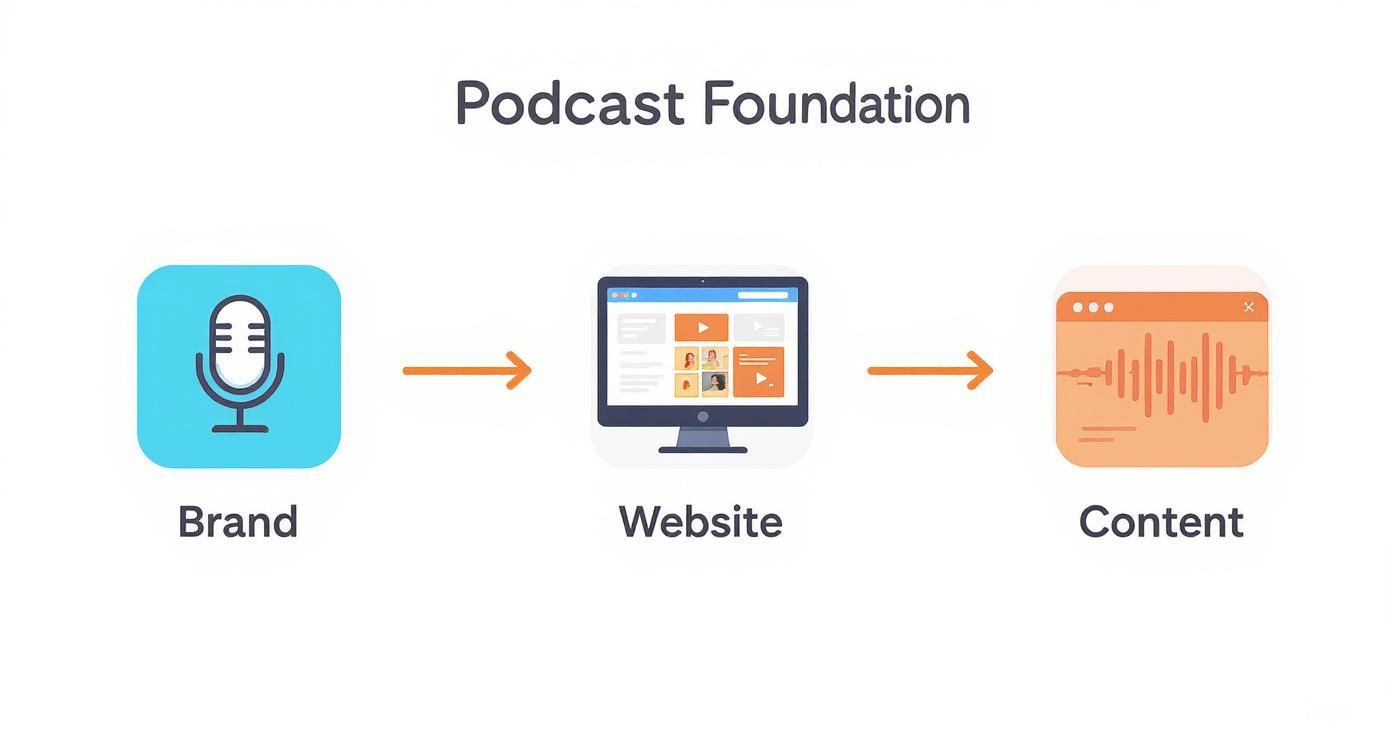
It all starts with a strong brand identity, which informs your website, which then becomes the home for the consistent content you create.
Getting Found: Mastering Podcast SEO and Directory Optimization
For your podcast to get discovered, you need to speak the language of search engines and directories. Think of podcast SEO (Search Engine Optimization) as the digital breadcrumbs that lead new listeners right to your show, even if they’ve never heard of you before.
This isn’t about trying to game the system. It’s about making your content visible to the exact people who are already looking for it. When you get this right, it creates a steady, organic stream of highly engaged listeners, which is key for YouTubers and podcasters looking to transition from hobbyist to professional.
The Foundation of Podcast Discoverability
At its core, podcast SEO is all about keywords. These are simply the words and phrases your ideal listener is typing into Google, Spotify, or Apple Podcasts when they want to find something new.
Your first job is to get inside their head. What problems are they trying to solve? What questions are they asking? Sure, tools like Google Keyword Planner are helpful, but don’t underestimate the power of just opening a podcast app and typing. See what auto-populates in the search bar—that’s a direct window into real user behavior.
Getting proactive about promotion is non-negotiable in today’s market. With a projected 4.5 million shows by 2025, the space is more crowded than ever. This saturation means you have to be smart and strategic to stand out, especially with video podcasts now attracting 41% of U.S. listeners. You can discover more insights about podcasting trends on podcaststatistics.com.
Where to Put Your Keywords for Maximum Impact
Once you’ve got a solid list of keywords, you need to sprinkle them in the right places.
- Your Podcast Title: If it makes sense, get your main keyword right in the title. A show called "The Daily Stoic" instantly tells you what it’s about. A vaguer name like "Mind Shift" could easily get lost in the noise.
- Episode Titles: Every single episode is a fresh chance to rank. Ditch "Episode 10 – Interview with Jane" for something like "Growing a Startup to $1M with Jane Doe." See the difference?
- Show and Episode Descriptions: Naturally weave your primary and secondary keywords into your descriptions. Your goal is to tell a compelling story about what the listener will get, and the keywords should fit right in.
Think of it this way: your podcast title is the main sign on your storefront. Each episode title is like a daily special advertised on an A-frame sign out on the sidewalk. Both are critical for pulling in different kinds of traffic.
The Hidden Power of Show Notes and Transcripts
Here’s a hard truth: search engines can’t listen to audio. But they are amazing at reading text. This is where show notes and full transcripts become your secret SEO weapon.
Every single word you speak can be turned into searchable content that Google can index. It might seem like a heavy lift to create a full transcript for every episode, but it makes your entire audio library discoverable. Someone searching for a super-specific topic you mentioned for just two minutes in an hour-long episode can now find your show. It's a game-changer.
This is also where organizing your content library gives you a massive advantage. When you can easily search your own transcripts and show notes, you can find soundbites, quotes, and segments to repurpose. This doesn't just boost your SEO; it fuels your entire content marketing engine, helping you take your longform content across platforms with ease.
Optimizing Your Directory Listings
Beyond keywords, the way you set up your show on platforms like Apple Podcasts and Spotify really matters. When you first submit your show, pay close attention to the categories.
Don't just pick a massive category like "Business." Get specific. Drill down into subcategories like "Marketing" or "Entrepreneurship." It's so much better to be a big fish in a small, relevant pond than to be completely invisible in the ocean. This one simple choice helps the platforms recommend your show to exactly the right listeners.
Here's a quick checklist to keep your podcast SEO on point.
Podcast SEO Checklist
| SEO Element | Action Item | Why It Matters |
|---|---|---|
| Podcast Title | Include your main topic or keyword if it feels natural. | This is your show's primary identifier and a powerful ranking signal. |
| Episode Titles | Make them specific, descriptive, and keyword-rich. | Attracts listeners searching for niche topics covered in that episode. |
| Show Description | Weave in primary and secondary keywords naturally. | Tells directories and listeners what your show is about at a glance. |
| Episode Notes | Write detailed show notes with keywords, links, and guest info. | Provides more text for search engines to index and adds value for listeners. |
| Transcripts | Publish a full transcript for every episode on your website. | Makes every spoken word searchable, unlocking long-tail SEO traffic. |
| Categories | Choose the most specific and relevant subcategories possible. | Helps directories recommend your show to the most interested audiences. |
Sticking to these fundamentals ensures you're giving your podcast the best possible chance to be found by the people who will become your most loyal fans.
Repurposing Content to Maximize Your Reach
Every single podcast episode you record isn't just one piece of content. Think of it as a goldmine of potential assets. Learning how to promote a podcast effectively is all about working smarter, not harder—it's about how you upcycle your old content to create new value.
Instead of staring at a blank page trying to dream up new ideas, you can slice and dice one long-form episode into dozens of smaller pieces of content. This isn't just about filling your content calendar. It’s about meeting your audience on the platforms they already love, in the formats they actually want to consume. A single sixty-minute interview can fuel your entire marketing plan for a week or more.
Turning One Episode into Many Assets
The whole idea behind repurposing is to take your main piece of content—the audio episode—and atomize it. You're breaking it down into smaller, more shareable pieces specifically designed for different platforms.
For instance, one episode can easily become:
- Short Video Clips (15-60 seconds): Pull out the most compelling soundbites, the juiciest guest insights, or those funny, off-the-cuff moments. Slap on some captions and a headline, and you’ve got perfect content for TikTok, Instagram Reels, and YouTube Shorts.
- Audiograms: You've seen these. They're static images with animated sound waves and captions. They perform incredibly well on platforms like Instagram and LinkedIn, where audio needs a visual hook to grab attention.
- Quote Graphics: Snag a powerful quote from your episode and turn it into a clean, branded graphic. These are killer for sparking conversations on Instagram, Facebook, and LinkedIn.
When you do this, you're not just screaming "new episode is out!" You're giving people a genuine taste of the value inside, making them far more likely to click play and helping you create infinite content value.
From Audio to SEO-Rich Blog Posts
One of the most powerful moves you can make is turning your episode transcripts into full-blown blog posts. Remember, Google can't listen to your audio, but it can crawl and index every single word of text on your website.
A full transcript makes your entire conversation searchable. But don't stop there. Take that raw text and shape it into a well-structured blog post. Add headings, bullet points, and images to make it easy to read. Suddenly, you have a valuable, long-form piece of content that can pull in organic traffic for months, even years.
You're essentially double-dipping—capturing an audio audience and a reading audience with the same core material.
Every episode you've ever recorded is a potential blog post waiting to be written. By transcribing and formatting your audio content for your website, you unlock a massive amount of SEO potential that was previously trapped inside an audio file.
Unlocking Your Back Catalog
Your old episodes aren't expired milk. They're evergreen assets just waiting to be rediscovered. Content repurposing breathes new life into your back catalog, reigniting interest in conversations you had months or even years ago. This is how you turn your old longform content into a money maker today.
This is where organizing your content library becomes a massive advantage. When you can easily search your entire library of transcripts and show notes, you can instantly find segments on specific topics. You can then pull clips, quotes, and ideas from multiple old episodes to create fresh, themed content—like a "best of" compilation or a roundup blog post. Your archive transforms from a dusty list into a dynamic resource.
For creators who are ready to get systematic about this, understanding how content repurposing adds value is the first step toward building a more resilient content engine.
Platforms like Contesimal are built for this exact purpose. They allow creators to organize their content library to create new value and ultimately make money with it. This turns your old content into a powerful, ongoing engine for audience growth.
Using Social Media to Build a Thriving Community
Real podcast growth isn’t about chasing download numbers. It's about building a loyal community that actually cares about your show—the kind of fans who don't just listen but become your biggest champions. Social media is the perfect arena for this, but only if you stop just dropping links and yelling, "A new episode is live!"
True community building is a two-way street. You have to create conversations, make your audience feel seen, and give them a reason to connect with you and, just as importantly, with each other. This is how you turn passive listeners into a dedicated tribe and start to set up the parameters for real revenue generation.
Go Beyond Broadcasting New Episodes
Your social media feed should be a destination, not just a billboard. Of course you need to announce new episodes, but that can't be the only thing you do. The goal is to spark real conversations and give people a reason to follow you, even when there isn't a new episode to promote.
It’s all about creating content that adds value and invites people to jump in:
- Ask Engaging Questions: Post questions directly tied to a recent episode's topic. If you just talked about productivity hacks, ask your audience to share their go-to trick. It's simple, but it works.
- Share Behind-the-Scenes Content: Show people your recording setup, a funny pre-show moment, or even a screenshot of your chaotic editing timeline. This stuff humanizes your show and makes your audience feel like they're part of the inner circle.
- Run Listener Q&As and Polls: Use Instagram Stories or Twitter polls to let your audience weigh in on future content. Giving them this kind of influence fosters a deep sense of ownership among your fans.
Create a Dedicated Community Hub
Engaging on public platforms is great, but giving your most dedicated fans a private space to connect can be a total game-changer. This is where you can have deeper conversations and build stronger relationships, far from the noise of a public timeline.
Think about creating a dedicated space like a Discord server or a private Facebook Group. These hubs become the go-to spot where listeners can dissect episodes, share their own insights, and connect with each other over their shared love for your show. Nurturing this space not only gives you priceless direct feedback but also fuels some seriously powerful word-of-mouth marketing.
A dedicated community space transforms your audience from a scattered group of individuals into a cohesive tribe. It's the difference between having listeners and having a true fanbase that will carry your show for the long haul.
This strategy is especially powerful when you look at the explosive global growth of podcasting. The number of monthly listeners is expected to hit over 584 million worldwide in 2025, with massive growth happening in emerging markets. By building a strong community now, you're setting your show up to capture the attention of this expanding audience. You can explore more about the global growth of podcasting on commandyourbrand.com.
Choosing the Right Platforms for Your Audience
Don't spread yourself thin trying to be everywhere at once. The key to effective social media is to focus your energy where your ideal listeners already hang out. Knowing your audience is everything.
- For Business and Professional Niches: LinkedIn and Twitter are your best friends. They're perfect for sharing insightful clips, written takeaways, and starting professional discussions.
- For Lifestyle, Comedy, or Storytelling Shows: Instagram, TikTok, and YouTube Shorts are visual powerhouses. Use them for sharing punchy video clips, audiograms, and those behind-the-scenes moments we talked about.
- For Highly Engaged, Niche Communities: This is where a dedicated Discord server or Facebook Group shines. They help you foster those deeper connections and more focused conversations.
By focusing on just one or two key platforms, you can create higher-quality content that's actually tailored to that audience. A targeted approach will always beat blasting generic posts across every network.
Growing Through Strategic Partnerships and Paid Ads

To really kick your podcast's growth into high gear, you need to get in front of audiences that already exist. While SEO and social media are building your foundation, strategic collaborations and a smart paid ad strategy can give you a serious jolt of momentum. This is all about borrowing trust and tapping into established communities to fast-track your own.
Think of it like this: instead of shouting into the void and hoping someone hears you, you're getting a warm introduction from a source people already know and like. This is one of the best ways to cut through the noise and find listeners who are basically primed to love your show.
Tapping Into Existing Podcast Audiences
Hands down, the single most effective way to promote your podcast is by getting in front of people who are, at this very moment, listening to another podcast. These are your people—they already have the apps, the listening habits, and the interest.
Guesting on other podcasts is your golden ticket. It puts you directly in the ears of a new, relevant audience and gives you an instant credibility boost. Start by making a list of shows that share a similar listener profile but aren't direct competitors.
Your pitch needs to be about the value you can bring to their audience, not just a plea for a promo spot. Come prepared with a specific, compelling topic you can talk about that fits right into their content.
Another killer tactic is the show swap. It's a simple, reciprocal deal where you and another podcaster agree to promote each other. This could be a short promo read at the start of an episode or even a full "feed drop" where you each publish one of the other's best episodes.
Demystifying Paid Podcast Promotion
Organic growth is the backbone of any healthy podcast, but paid advertising can be a powerful amplifier, especially when you know exactly who you're trying to reach. The goal here is precision, not just spraying your budget around and hoping for the best.
Running targeted campaigns on social media platforms like Instagram or LinkedIn can be incredibly effective. You can zero in on users based on their interests, job titles, and even the pages they follow. A great place to start is by "boosting" a high-performing video clip or audiogram that already has strong organic engagement.
Beyond social, you can advertise directly within podcast apps. Services like Overcast or other platforms that place ads on podcasts can deliver your message right to active listeners. This usually requires a bigger budget, but the targeting can be incredibly specific and potent.
Paid ads probably shouldn't be your first move, but they can be a brilliant fourth or fifth. Once you have a solid content library and a clear idea of your ideal listener, a small, targeted ad spend can be the fuel that turns a slow burn into a bonfire.
Setting a Budget and Measuring Your Return
You don’t need a massive ad budget to see results. Seriously, start small—even $100 to $200 can give you some valuable data. The key is to define your goal first. Are you trying to drive website traffic, get more subscribers, or just boost brand awareness?
Track your metrics like a hawk. Look for a noticeable spike in downloads in the days right after your campaign runs. For a more advanced approach, use a unique URL or a special promo code that you only mention in the ad to directly measure how many people take action.
The podcast advertising world is booming right alongside listenership. Global spending is projected to hit $4.46 billion in 2025, which is up nearly 11% from the year before. This signals a massive opportunity for podcasters to use paid channels to their advantage. You can learn more about podcast advertising trends on podcastatistics.com.
Comparing Podcast Promotion Strategies
Deciding between organic and paid tactics can feel tricky. This table breaks down the core differences to help you figure out where to invest your time and money.
| Strategy | Cost | Time Investment | Potential Reach | Best For |
|---|---|---|---|---|
| Guest Appearances | Free | High | Targeted | Building authority and reaching engaged listeners. |
| Show Swaps | Free | Medium | Targeted | Mutual growth with a peer in your niche. |
| Social Media Ads | $ – $$ | Medium | Broad or Targeted | Quickly amplifying your best content to new audiences. |
| Podcast App Ads | $$ – $$$ | Low | Highly Targeted | Reaching dedicated podcast listeners at scale. |
Ultimately, the sweet spot is a mix of both. Start by building organic relationships and getting your name out there. Once you have some momentum, you can use paid ads to pour a little gasoline on the fire.
Podcast Promotion FAQs
You've got questions, we've got answers. Here are a few of the most common things podcasters ask about growing their show. Think of this as your cheat sheet for setting the right expectations and making smart moves.
How Long Until I See Promotion Results?
I get it, you're eager to see those download numbers climb. But patience is the name of the game in podcasting.
If you’re leaning on organic tactics like SEO and consistently chopping up your episodes for social media, you’re playing the long game. It's a marathon, not a sprint. You should start seeing a slow, steady upward trend in your downloads within three to six months if you stick with it.
Paid ads, on the other hand, can give you that instant jolt of traffic. But the second you turn off the spending, the traffic stops. The real secret weapon, no matter your approach, is consistency. The vast majority of podcasters who break through have been hitting publish and promoting their show week in and week out for at least a year.
What Podcast Metrics Actually Matter?
It’s so easy to get fixated on that big, shiny total download number. But that’s a vanity metric. To really get a feel for your show's health and figure out what’s actually working, you have to dig a little deeper.
Focus on these metrics for a true picture of your growth and engagement:
- Downloads Per Episode: Look at the downloads each new episode gets within the first 30 days. This is your most honest signal of whether your audience is anticipating and enjoying your new content.
- Audience Consumption Rate: This tells you how much of each episode people are actually listening to. Seeing a huge drop-off in the first few minutes? Your intro might be dragging, or the hook isn't landing.
- Follower Growth: This is your ride-or-die crew—the people who hit "follow" or "subscribe." This number is way more valuable than a random download spike because it represents a committed fanbase that wants more.
Do I Need a Big Budget to Promote My Show?
Absolutely not. While a budget can definitely pour some gasoline on the fire, many of the most effective promotion tactics are completely free. You just trade dollars for time and effort.
Mastering podcast SEO, turning your audio into an endless stream of social media clips, building an email list, and networking your way onto other people’s shows… these things cost you time, not money. Honestly, these organic methods tend to build a more loyal, engaged audience in the long run because you're earning their attention with real value.
Start with a solid foundation of free, organic strategies. Once you get a feel for what content really hits home and which channels are driving listeners, then you can think about putting a small, targeted budget behind your winners.
Think of it this way: organic growth builds the bonfire. Paid ads are just the accelerant you pour on it once it’s already roaring. You wouldn't waste money trying to light damp wood, right?
Ready to turn your entire podcast library into a promotion machine? Contesimal is built to help you organize your content library, enabling you to create new value and ultimately make money with it. Stop letting your back catalog collect digital dust and start creating infinite content from what you've already made. Explore what's possible at https://contesimal.ai.