
Walt Disney Company, Marvel, and Netflix follow a clear pattern. They take a single idea and stretch it across films, series, books, products, and live events. This habit built three of the strongest story brands in modern media. Each group understood how long one idea can last when handled with care. They also saw that audiences respond well when a familiar story appears in new formats. This steady expansion gave them reach in many markets and kept their brands active for decades.
Large studios built value by reshaping one core idea again and again. Disney turned Mickey Mouse into a global symbol through animation, toys, books, clothing, games, and attractions. This created a cycle of interest that renewed itself each year. Disney also revived older animated films and shaped them into live-action hits. These releases spoke to people who grew up with the originals and drew in new families. Marvel took a deep library of comics and turned those stories into films, shows, games, and tie-in materials. This kept each character in circulation and helped the studio build a clear path for new fans.
A strong content library can produce far more value than most creators expect. Many creators stop at the first format and leave unused material on the table. A deeper plan changes that pattern.
Netflix used older films and shows to shape new programs. The platform studied viewing data and reshaped it into new series and specials. This lowered risk and raised the value of existing rights. Publishers took print work and turned it into audio, video, and short digital formats. YouTube creators cut long videos into clips, graphics, and summaries for fast distribution. These moves show how repurposed work can reach new groups, extend the life of each idea, and raise revenue. They also show how creators can move faster when they work from a single core library.
A steady repurposing plan lifts the impact of a content library. It also builds a more durable content strategy. You spend less, reach more people, and create a long trail of touchpoints from one idea.

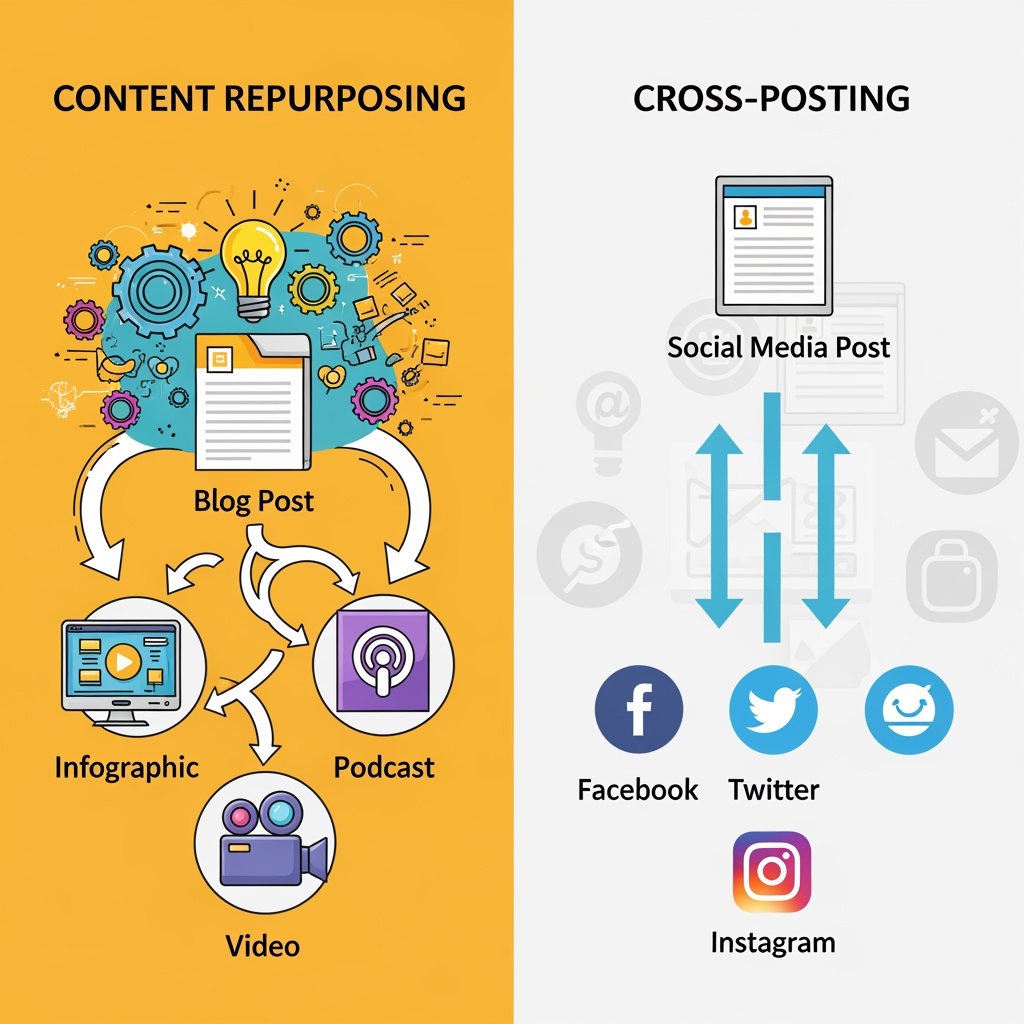
Content Repurposing vs Cross Posting
Repurposing and cross posting serve different aims. Repurposing turns one piece into a new format. A long article becomes a short clip. A video becomes an infographic. A podcast becomes a short written guide. This approach meets new groups and fits the habits of each channel. It also helps creators test new ideas with less effort. Repurposed pieces can expand reach on a daily or weekly cycle without the full cost of new production.
Cross posting means you share the same file on more than one platform. A creator posts one video on YouTube and places the same file on Facebook. This raises reach but does not adjust the message or the pace for each audience. Cross posting works best when speed is the only goal. It falls short when each platform calls for a different tone, length, or visual style.
Repurposing creates fresh material from one source. Cross posting repeats the same piece. A strong content plan often uses both, but repurposing yields more long-term value.
How Repurposing Strengthens a Content Strategy
Content teams can raise the value of their work through a few clear steps. Below are expanded examples of each move.
- Create bite-sized content.
Cut long videos or articles into short clips, quotes, and images. These pieces spread fast and spark quick engagement. Short pieces fit well on Instagram, TikTok, and X. A single long article can create dozens of smaller posts, each built from one strong line or point. These short pieces also help creators test which moments resonate most with their audience. - Transform formats.
Turn a written post into audio. Turn a podcast into a short video. Turn a video into a written summary. Each format reaches a new group. Some people learn by reading. Others respond to short visuals. Some prefer audio while driving or walking. Format shifts create entry points for all these habits. They also extend the life of ideas without forcing new production cycles. - Improve SEO.
Refresh older pieces with updated facts, new links, and clearer titles. This can restore traffic and improve search rank. Many older articles fall out of search results because they lack updated data. A simple refresh can bring them back into circulation. These updates can include new dates, recent studies, or clearer phrasing with stronger keywords. - Build collections.
Group related pieces into guides or small books. This helps readers move through a topic with less effort. A guide built from five posts can become a free download or an email series. This raises subscriber count and builds trust. Collections also help creators build authority in a niche without creating new large pieces. - Use audience material.
Invite users to share comments, clips, or stories. Turn this material into testimonials, case studies, or highlight reels. These pieces show real reactions, which helps build trust. They also extend the value of audience interactions. A single review or quote can fuel several posts or graphics. - Run regular audits.
Review older work to find pieces that still attract interest. These pieces can feed new clips, posts, or short guides. An audit also surfaces gaps in the library. This helps teams produce new material that supports repurposing in the next cycle.
Adding Value, Not Creating It
Repurposing adds lift to a content plan. It does not replace new work. One strong idea can turn into many forms. This stretches the impact of the time and money already spent. It also reduces the need for constant net-new creation. A creator who builds ten strong pieces can turn them into hundreds of smaller pieces across the year.
Repurposed work fits each platform and each audience. It keeps older ideas active and helps teams grow reach without constant production pressure. This supports stronger margins and a more stable content plan. It also lowers creative burnout, since the team works with what already exists.
Where Repurposing Falls Short
Repurposing fails when the base material is weak or outdated. A dated article will not gain strength by turning into a clip. A simple repost of audio with a static image often falls flat. These moves waste time and add little value. A repurposing plan works only when the base material is solid, clear, and useful.
A content library also needs steady growth. Without new material, the overall message slows. Fresh ideas keep the library relevant and create new chances to repurpose. A mix of new work and revived work keeps the audience engaged and helps the brand stay current with trends.
Repurposing works best when paired with clear, steady creation. Each part supports the other.
How YouTubers Use Repurposing
YouTubers can gain reach through a few strong steps.
- Short clips for social channels.
Cut each video into small highlights. Post them on TikTok, Instagram, or X to pull viewers back to the main channel. These clips should show moments with clear emotion, sharp insight, or humor. Strong clips help creators appear in search, trends, and feeds. - Turn videos into blog posts.
Write a summary of each video with key points and quotes. Add the clip to the article. This builds search traffic and meets readers who prefer text. It also opens new ad and affiliate paths. Blogs give creators a home base that does not depend on platform rules. - Create podcast audio.
Extract clean audio from each video and post it as a podcast. This reaches people who listen during commutes or workouts. Podcast feeds offer steady discovery and help creators build depth with long-form listeners.
How Podcasters Use Repurposing
Podcasters can expand reach through a few clear moves.
- Write blog posts.
Turn each episode into a written summary with quotes and key points. This draws search traffic and helps people who prefer text. These posts can also be grouped into guides or newsletters. - Make video clips.
Cut short highlights and add simple visuals and captions. Post them on YouTube. This reaches a large audience. It also helps podcasters appear in search results for topics mentioned in the episode. - Post social clips.
Pull short quotes or moments from each episode. Turn them into images, audiograms, or short posts. This keeps each episode alive far beyond the week of release.
How Bloggers Use Repurposing
Bloggers can expand their work with a few steps.
- Create e-books or guides.
Group related posts into one clear resource. Offer it as a download to collect new subscribers. A 5,000-word guide built from existing posts can become the backbone of a lead funnel. - Build infographics.
Turn stats and steps from each post into simple graphics. Share them on social channels to draw readers back to the full post. Infographics also work well on Pinterest, LinkedIn, and search-heavy platforms. - Pull quotes for social posts.
Turn sharp lines from each article into short social updates. This keeps older posts active and draws new readers. A single article can supply months of social content.

As we create new content the ability to expand its value always exists. Everything that has meaning today can have new contextual meaning in near future. That means as you create new content you are also creating the possibility of future value once it enters archival status in your library. So, don’t just create and forget – instead, really try to remember where value is and how to tap into it using your historical documents.