
Who deserves a spot in your acknowledgements, the person with the most impressive title or the person who made it possible for you to finish? A dissertation is never entirely a solo project, yet naming its supporters can feel harder than explaining its methods.
Acknowledgements record the intellectual, financial, practical, and personal support behind your work. They're more than a ceremonial thank-you. Scholarship published in English Today describes their connection to the networks that sustain research, while recognizing their more personal character.
The conventional order moves from supervisors and committee members to funders, participants, staff, peers, and family. The examples below are grouped by relationship instead, so you can find suitable wording quickly, then arrange your finished page according to your institution's guidance.
Thank people for what they actually contributed, not simply for the position they held.
If you've been searching for acknowledgements examples for dissertation writing, treat these samples as starting points, not scripts you must preserve. Choose the relationships that match your experience, replace general descriptions with accurate details, and leave out anything that doesn't belong.
The same specificity makes personal thank-you notes effective, as the Graduation Cap and Gown writing tips can help you practice. Whether you're finishing a thesis, publishing a book, or producing an interview series, clear credit starts with noticing who helped.
1. Acknowledging Family and Partners
Family support often happens far from a seminar room. Someone collects the children, listens after a difficult meeting, or brings dinner while you wrestle with a paragraph that refuses to behave.

Name the support rather than reaching for the biggest adjective. Acknowledging childcare, patience, meals, or companionship tells readers more than describing someone as endlessly wonderful.
Sample Wording You Can Adapt
To my partner, thank you for keeping our household running during late nights and fieldwork trips. Your patience and belief in this project helped me continue when my own confidence faltered.
To my children, thank you for the drawings beside my desk and for reminding me that life extended beyond the next chapter. To my sister, I'm grateful for the school pickups that protected my writing time.
These samples work because they connect affection with recognizable actions. For a parent completing fieldwork, practical care may deserve as much attention as emotional encouragement.
- Tone and length: Use a compact, warm paragraph. Give separate sentences to distinct contributions rather than repeating the same praise.
- Personal detail: Ask before mentioning someone's health, finances, relationship difficulties, or other private circumstances.
- Names and relationships: Use the names people want published, and don't assume everyone wants their family relationship identified.
Etiquette trap: Avoid affectionate complaints that could sound hurtful in print. A joke about your partner surviving your dissertation may be funny at dinner but awkward in a permanent public document.
Draft this passage after you've reviewed the whole journey. The person who helped during final revisions may be different from the person who supported your earliest research.
2. Thanking Your Supervisor and Committee
Professional respect doesn't require extravagant praise. Your supervisor and committee deserve wording that identifies their actual involvement, whether that was refining the research question, challenging an interpretation, or guiding revisions.

Begin with your primary supervisor where your institution's conventions support that order. Then distinguish committee members by contribution instead of distributing identical compliments.
Make Each Contribution Visible
I'm grateful to my dissertation chair for the rigorous feedback on my sampling strategy and the careful questions that strengthened my analysis. My committee members offered thoughtful critiques that helped me develop clearer arguments.
For co-supervision, separate the roles:
I thank my primary supervisor for guidance on the theoretical framework and my co-supervisor for advice on fieldwork design. Their different perspectives helped me examine the relationship between the project's conceptual and practical decisions.
A useful organizing principle comes from La Trobe University's acknowledgement guidance, which describes reflection, thanking, and responsibility as recurring elements. It also reminds writers to account for relevant requirements concerning assistance.
Tone and length: Keep this passage professional and contribution-focused. Expand only when different faculty members provided meaningfully different kinds of help.
Etiquette trap: Don't describe supervision as life-changing if that isn't your experience. For limited involvement, neutral wording such as I acknowledge my supervisor's guidance during the proposal stage can be accurate without suggesting a closer relationship.
Check spellings, titles, and current affiliations before submission. If someone's contribution raises questions about authorship rather than acknowledgement, resolve that with your committee instead of trying to settle it through flattering prose.
3. Crediting Funders and Grant Bodies
A funding acknowledgement isn't the place to improvise an organization's name. Your award documents, not a generic template, should determine the formal credit.
Start by gathering fellowship letters, grant agreements, travel awards, and institutional support records. Separate financial awards from access to facilities so readers can understand what each organization supplied.
- Award identity: Copy the official agency, program, and award names.
- Required language: Preserve any mandatory wording and accompanying disclaimer.
- Grant details: Transfer identifiers directly from the award record, then verify them against the final draft.
- Scope of support: Say whether an award funded the research, travel, equipment, or another specific activity.
Sample Wording for Different Support
This research was supported by a doctoral fellowship from the university graduate school. A departmental travel award supported the archival visits undertaken for this dissertation.
For a grant-funded project, build the sentence around the award's required information:
This work was funded in part by [official funding agency] under grant [award identifier].
Replace the bracketed text before submission, and use the funder's prescribed sentence instead whenever one exists. A sample is a drafting aid, not permission to rewrite contractual wording.
Tone and length: Stay factual and economical. Give the space needed for complete award information rather than adding emotional praise around administrative details.
Etiquette trap: Funding, sponsorship, and endorsement aren't interchangeable. Don't imply that a funder approves your conclusions merely because it supported the project.
For creators and publishers, the same distinction helps when crediting production sponsors, licensed collections, or external data providers. Keep support records while the work is underway, rather than searching old inboxes when the publication deadline arrives.
4. Recognizing Research Participants and Interviewees
People who share their experiences contribute more than material for your findings. They give time, attention, and sometimes sensitive information, so your gratitude must respect the conditions under which they participated.

A public thank-you must never undo a promise of confidentiality. Before naming anyone, review your consent materials, ethics approval, and any publication restrictions.
Thank Generously Without Identifying Unnecessarily
I'm grateful to the teachers and parents who shared their experiences with me. Their willingness to discuss everyday challenges helped me understand the questions at the heart of this study.
I thank the community members who contributed their time and perspectives. To protect confidentiality, I have not named individual participants.
For a sensitive workplace study, even naming a department or small community could reveal who participated. Collective wording should therefore protect identities in context, not merely omit names.
Privacy first: Gratitude doesn't give you permission to reveal someone's participation.
If you're working with recorded testimony, understanding when an interview is a primary source helps distinguish the interview's evidentiary role from your interpretation of it. That distinction matters when adapting dissertation material into podcasts, articles, or documentary scripts.
Tone and length: Use respectful, direct language in a brief paragraph. Avoid portraying participants as voiceless people whom you rescued by listening.
Etiquette trap: Consent to dissertation research doesn't automatically establish permission for unrelated promotional clips or future commercial content. Store consent records securely, document reuse rights, and seek appropriate approval when the intended use changes.
Where suitable, offer participants an accessible summary of the findings. That follow-through can be more meaningful than increasingly elaborate expressions of thanks.
5. Thanking Archivists, Librarians, and Data Stewards
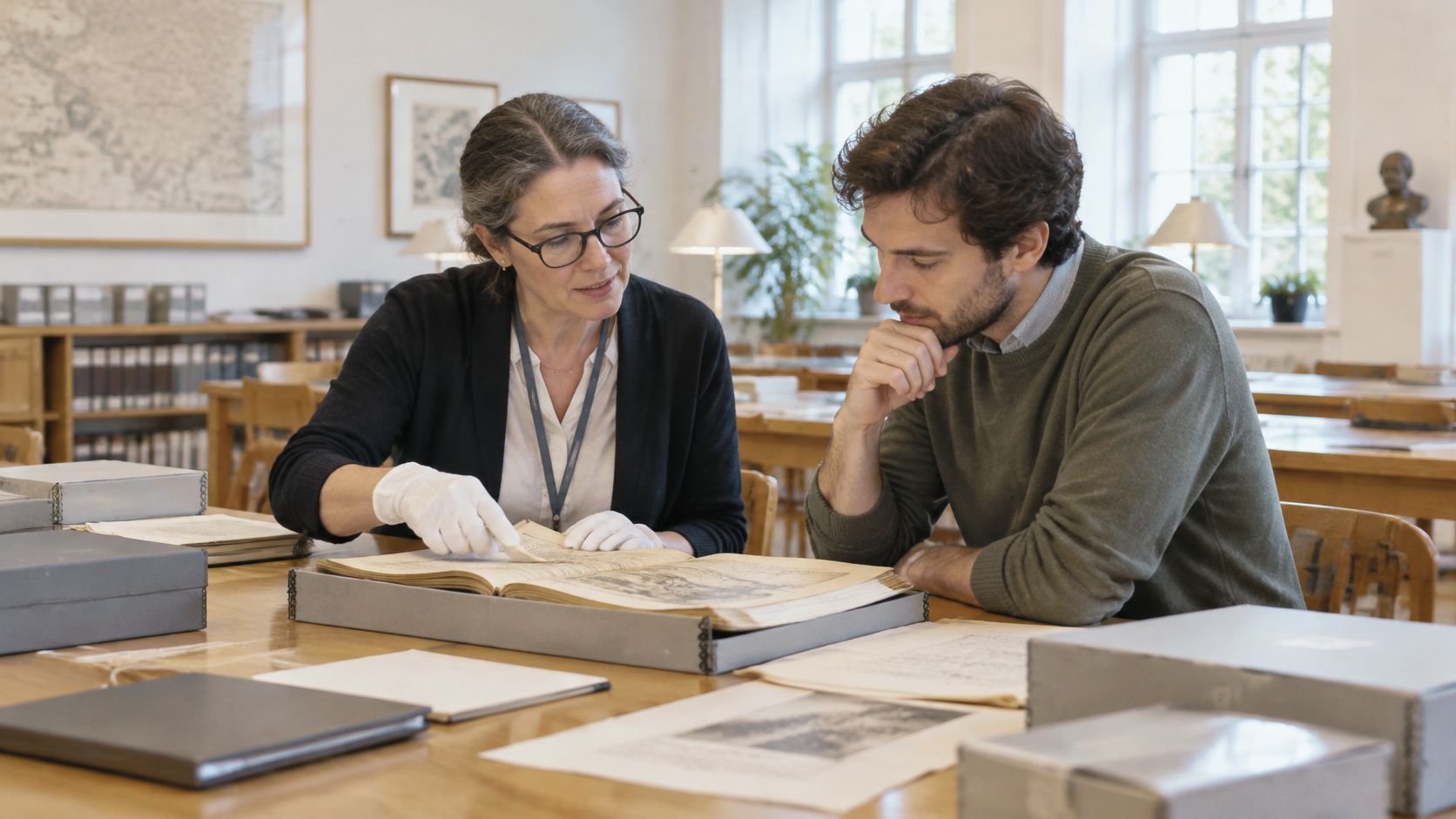
An archivist locates an uncatalogued folder. A librarian helps resolve an elusive citation. A data steward explains why a dataset field doesn't mean what its label seems to suggest.
Name that expertise. These contributors don't merely provide access to things; they help you understand and use sources responsibly.
Credit the Work Behind the Collection
I thank the staff of the regional archive, especially the reference archivist who located the uncatalogued correspondence central to my analysis. Their knowledge of the collection helped me identify connections I would otherwise have missed.
My thanks go to the data librarian who helped me document the survey dataset and prepare it for deposit in the institutional repository.
For a media-history dissertation, you might recognize the person who clarified recording dates or explained catalogue inconsistencies. That's more informative than thanking a repository for being helpful.
- Collection details: Keep accurate repository names, collection identifiers, and access notes in your source log.
- Invisible labor: Recognize metadata, digitization, preservation, and database support when those activities materially helped your work.
- Separate functions: Use acknowledgements to credit assistance and formal citations to identify evidence.
The habits described in archival best practices also support reusable content libraries. Organized source records make it easier to revisit an interview collection, document its provenance, and identify who helped make it usable.
Tone and length: Choose precise, appreciative wording in a short paragraph. Add detail when different collections or staff members supported distinct parts of the dissertation.
Etiquette trap: An acknowledgement doesn't replace a required collection credit, image permission, or dataset citation. Preserve those separately in the locations specified by the relevant repository or rights holder.
6. Acknowledging Transcribers, Editors, and Technical Helpers
I thank the transcriptionist who prepared the interview transcripts and flagged unclear passages for checking against the recordings. I also acknowledge the colleague who reviewed my statistical code and helped verify the regression results.
This wording recognizes skilled labor without suggesting that someone else conducted the dissertation's entire analysis. The role description is the important part.
The University of Hawaiʻi's authorship and acknowledgement guidance requires the student to remain the principal author while identifying contributors and briefly describing their contributions. It also recommends agreeing on acknowledgement wording with contributors before submission.
Describe the Actual Scope of Assistance
Use proofreading for proofreading, translation review for translation review, and statistical consultation for statistical consultation. Don't reduce substantive analytical work to technical help just because that sounds less complicated.
A suitable editing example is:
I acknowledge the professional copy editor who corrected grammar, punctuation, and formatting within the scope permitted by university policy. I remain responsible for the dissertation's arguments, interpretation, and final text.
Tone and length: Use factual sentences that identify the helper, task, and relevant boundary. A compact contribution record is usually more useful than a glowing paragraph.
Etiquette trap: Paying someone doesn't eliminate the need to disclose assistance, and acknowledging assistance doesn't make prohibited help acceptable. Review institutional rules before commissioning editing, translation, coding, or analytical services.
Maintain a record of contractors and their agreed scope. If an approved AI tool materially assisted the workflow, follow your institution's disclosure rules and describe its function in the required location.
For a podcast-derived dissertation, distinguish transcription from transcript verification and editorial selection. Those are different tasks, even when the same person performs them.
7. Honoring Peers, Cohort, and Writing Groups
Your peers may be the people who spotted the assumption everyone else had accepted. They may also have brought snacks, but start with the contribution that helped the dissertation.
Peer acknowledgements can be friendly without becoming a private group chat. Describe draft reading, shared resources, methodological discussions, or the steady accountability that kept your writing moving.
From General Friendship to Specific Thanks
To my writing group, thank you for reading unfinished chapters with honesty and care. Your questions helped me recognize where I had skipped an explanation and where I needed to rethink an argument.
I'm grateful to my cohort colleagues for conversations that helped me refine my original research question. Their willingness to share reading recommendations and discuss emerging ideas made the process less isolating.
For a creative-practice dissertation, substitute the relevant activity: workshop feedback on a screenplay, discussion of narrative choices, or critique of the relationship between the creative and analytical components.
- Individual credit: Name a peer when their contribution was distinctive and they're comfortable being identified.
- Collective credit: Thank the writing group together when the support was shared.
- Accurate boundaries: Distinguish brainstorming and feedback from contributions that may warrant a different form of formal credit.
Tone and length: Allow a little warmth and personality, but keep the passage focused. A shared habit can be memorable without requiring readers to understand an inside joke.
Etiquette trap: Don't publish embarrassing stories about someone's missed deadlines, personal difficulties, or supposedly terrible early drafts. The acknowledgements page isn't the place for a friendly roast.
For publishing and production teams, the transferable habit is simple: record who tested an idea, challenged an assumption, or improved a draft. Collaboration becomes easier to credit when you notice it as it happens.
8. Acknowledging Hardship, Caregiving, and Non-Traditional Circumstances
You don't owe readers a complete account of what completing the dissertation cost you. You can recognize support without publishing private circumstances.
Illness, disability, bereavement, caregiving, financial pressure, and returning to study can shape a research journey. Acknowledgements can name the people or offices that helped, while leaving medical, family, and financial details private.
Choose the Disclosure Level That Feels Right
I dedicate this work to my late mother, whose encouragement remains part of everything I write. I also thank the disability services office for helping arrange the accommodations that supported my completion of this dissertation.
To my father, whom I cared for while completing this project, thank you for teaching me that patience is a form of persistence. I'm grateful to the friends who helped with practical responsibilities during that time.
A more private alternative is equally valid:
I thank those who supported me through difficult personal circumstances and helped me protect the time and energy needed to complete this work.
You can be honest without being exhaustive.
Tone and length: Use calm, direct language. A brief statement can recognize resilience without turning the acknowledgements into an explanation of every interruption.
Etiquette trap: Don't feel compelled to praise someone whose conduct harmed you. General examples such as Scribbr's dissertation acknowledgement guidance can help identify conventional categories, but your wording still needs to reflect your actual relationships.
Where credit isn't required, omission can be a legitimate choice. Where formal recognition is necessary, neutral factual wording may be more appropriate than gratitude you don't feel.
Discuss sensitive wording with a trusted mentor or counselor, and ask permission before sharing another person's circumstances. Focus on the support received and the work completed, not on defending your right to have needed help.
8 Types of Dissertation Acknowledgements at a Glance
Use this table as a drafting order: formal contributors come first, personal thanks come last, so you can write the page in sequence from top to bottom of your outline.
| Item | Who Is Thanked | Typical Tone | Placement in Section | Main Etiquette Risk |
|---|---|---|---|---|
| Acknowledging Family and Partners | Family, partners, children, or close friends | Warm and personal | Last, in the closing personal thanks | Becoming overly sentimental or revealing private details |
| Thanking Your Supervisor and Committee | Supervisors, committee members, and mentors | Formal and professional | First, opening the formal portion | Omitting someone or offering generic or exaggerated praise |
| Crediting Funders and Grant Bodies | Grant agencies, scholarship programs, and institutional funders | Formal and precise | Second, right after supervisors and committee | Incorrect details or failure to use required wording |
| Recognizing Research Participants and Interviewees | Participants, interviewees, and community partners | Respectful and considerate | Third, after funders | Breaching promised anonymity or confidentiality |
| Thanking Archivists, Librarians, and Data Stewards | Archivists, librarians, curators, and data stewards | Professional and appreciative | With staff, after participants | Overlong lists or inaccurate names and permissions |
| Acknowledging Transcribers, Editors, and Technical Helpers | Transcribers, editors, statisticians, developers, and other helpers | Brief and professional | With staff, after participants | Misrepresenting contributions or violating assistance policies |
| Honoring Peers, Cohort, and Writing Groups | Fellow students, peers, writing groups, and study partners | Warm and collegial | After staff, before family | Omitting contributors or creating unwieldy lists |
| Acknowledging Hardship, Caregiving, and Non-Traditional Circumstances | Caregivers, support services, health professionals, and others who helped | Personal and thoughtful | In the personal closing, near family | Disclosing more sensitive personal information than intended |
Institutional requirements can override this sequence, so confirm your graduate school's formatting rules before finalizing where each group appears.
Write Yours Before the Deadline Panic Sets In
Your acknowledgements don't need to sound like an awards speech. They need to be accurate, considerate, and recognizably yours.
Start with a complete candidate list, then arrange the final version in the conventional order: supervisors, funders, participants, staff, peers, then family. Adjust that sequence where institutional requirements apply, and keep mandatory disclosures distinct from optional personal thanks.
A useful foundation is the reflective, thanking, and announcing structure described in scholarship on dissertation acknowledgement moves. In practice, that means briefly recognizing the experience, thanking contributors for specific assistance, and closing with responsibility or a dedication where appropriate.
Build the Page From Your Working Records
Open a document and give each potential contributor a role description before you polish any sentences. Write reviewed interview questions, provided archive access, or covered childcare during fieldwork, rather than starting with adjectives such as invaluable.
Then check the details that goodwill can't fix:
- Names and titles: Confirm spelling, preferred identification, and whether people agree to be named.
- Funding information: Verify agency names, award identifiers, required wording, and disclaimers.
- Privacy and permissions: Check participant confidentiality and permission to disclose personal circumstances.
- Contribution boundaries: Ensure that assistance is described accurately and that acknowledgements don't substitute for authorship decisions or formal citations.
Read the draft aloud. If it sounds stiff, replace ceremonial language with direct thanks; if it sounds like a private diary, remove details that don't need to become public.
Students comparing AI study tools for students can apply the same discipline to digital assistance. Record what a tool did, follow the institution's rules, and keep responsibility for interpretation and final wording with the author.
For researchers and creators, the most useful habit begins well before this page: keep a running log of helpers, sources, and consent records. Organized records help teams reuse longform material across articles, podcasts, newsletters, and videos without losing track of credit or permissions.
Our Contesimal workflow supports shared research dossiers and collaborative sessions where teams exchange findings, lists, and ideas. Research agents can surface keywords, recurring themes, and hidden stories across historical media, giving people a starting point for identifying overlooked contributions that they must then verify.
Adapt the sample wording above and draft your acknowledgements tonight. You can refine the tone later, but you'll have the important work underway before submission week turns every small task into an emergency.
Contesimal helps teams organize and search their content libraries, build shared research dossiers, and collaborate around the material behind their work. Visit Contesimal to bring your research findings together and make the people, sources, and stories behind your next publication easier to discover and credit.