
A creator I worked with had a messy archive. Years of podcast episodes, comparison notes, old buyer guides, and half-finished reviews were sitting in Google Drive, each one useful on its own and commercially weak as a group. Once we sorted that material by topic cluster, search intent, and update cadence, the archive started producing like a catalog instead of aging like a blog.
That pattern shows up across the best affiliate marketing examples websites. Affiliate revenue comes from systems. The pages that earn over time are tied to a process for refreshing recommendations, consolidating overlapping content, improving conversions, and routing readers to the right offer at the right stage of intent. Good copywriting for a website helps, but the bigger advantage is operational. Strong affiliate publishers treat their content library like an asset that needs maintenance, not a pile of posts that happened to rank once.
That’s why this list matters.
These sites are useful because each one runs a different content engine. Some win with rigorous testing. Others win with financial calculators, news velocity, or editorial scale across huge product categories. The common thread is discipline around upkeep. They review what to update, what to merge, what to retire, and where trust can break if monetization gets ahead of editorial judgment.
Wirecutter is the obvious starting point, but not because of the headline outcome. Its real lesson is that a well-managed review archive can become a media property with long-term value. The same principle applies whether your back catalog is built from YouTube videos, podcast transcripts, newsletters, software tutorials, or classic product reviews.
The seven sites below are not just examples to copy. They are operating models to study if you want to turn an existing archive into a revenue-generating content system.
1. Wirecutter

Visit Wirecutter.
A lot of creators study Wirecutter for its reviews. The smarter move is to study its maintenance habits.
Wirecutter matters because it proved that a review archive can keep producing value long after publication, if the publisher treats old recommendations like products that need ongoing care. Its New York Times ownership sharpened that lesson. Once a content library becomes part of a larger media business, every page has to justify itself through accuracy, trust, and repeat usefulness, not just search traffic.
What Wirecutter gets right
The core advantage is consistency in how recommendations are produced and revised. Categories are narrowed. Options are tested against clear criteria. A primary pick is chosen. Trade-offs are explained. Then the page gets revisited when products change, prices shift, or a former recommendation stops deserving the spot.
That process creates editorial memory across hundreds or thousands of URLs. A newer writer does not start from zero. They inherit prior test notes, category logic, formatting standards, and a clear threshold for what counts as a recommendation. For creators sitting on years of tutorials, reviews, videos, or newsletter issues, that is the main takeaway. Revenue grows faster when the archive is organized around update cycles and decision-making rules, not around whatever was published last. Teams usually need better website project planning for content operations before they need more content.
Practical rule: Organize review content by category, purchase intent, test status, and update priority. Publish date alone is a weak system.
Best fit and real limitations
Wirecutter is a strong model for publishers who can document why a recommendation won. That includes software reviewers, gear channels, home office creators, photographers, audio producers, and anyone else whose audience needs help choosing between similar options.
The trade-offs are clear:
- Trust carries the business: Readers click because the recommendation feels argued, not dropped into a template.
- Maintenance drives returns: Older URLs keep earning when someone is responsible for retesting, replacing, and tightening them.
- Production is slower: A careful review workflow loses on raw publishing speed.
- Broad categories get an advantage: Mass-market topics usually justify more frequent updates than narrow enthusiast segments.
Copying the page format is the easy part. Copying the operating discipline is what turns a content archive into an asset.
2. NerdWallet
Visit NerdWallet.
A reader lands on NerdWallet with a high-stakes question. Which credit card is worth applying for, how should they compare loan options, what will a mortgage really cost over time? That pressure changes the entire content model. The page has to inform, compare, disclose, and convert without creating doubt.
That is why NerdWallet is useful to study. It shows how an affiliate site turns a large archive into a decision system. The value is not only in individual articles. It sits in the connections between explainers, comparison pages, calculators, category hubs, and update workflows that keep older URLs useful long after publication.
Why its content engine works
NerdWallet organizes content around decision stages. One page answers the basic question. Another compares providers. A third helps the reader calculate cost or narrow the shortlist. That structure increases page value over time because each asset supports the next step instead of competing with it.
For creators, this is the bigger lesson. Archives earn more when page relationships are planned in advance. Taxonomies, ownership, review cycles, and conversion paths need to be designed as part of the system. If you are rebuilding affiliate content from an older library, website project planning for content operations usually matters more than publishing another standalone post.
The strongest part of the model is consistency.
In a category like personal finance, templating helps the reader trust the result. A stable page structure makes it easier to compare options, understand disclosures, and spot what changed since the last visit. It also makes the archive easier to maintain because editors are updating fields, criteria, and recommendation logic inside a repeatable format instead of rewriting every page from scratch.
What to borrow and what to avoid
NerdWallet offers a useful blueprint for creators in any expensive or high-consideration niche, including software, legal services, insurance, education, and B2B tools.
A few practices translate well:
- Disclosures need to answer real questions: Readers should understand who pays, where offers appear, and whether compensation affects ranking or availability.
- Templates should reduce friction: Standard comparison criteria help readers scan faster and help teams update pages without breaking consistency.
- Support pages increase conversion value: Calculators, glossaries, FAQs, and hub pages give older money pages more context and more internal support.
- Editorial rules need clear owners: Somebody has to decide when rates, terms, providers, or recommendations trigger an update.
The trade-off is workload. This model is powerful because it is maintained. If the underlying offers change often and no one owns revisions, trust drops fast. In regulated categories, weak maintenance is not just a content problem. It becomes a product problem.
The page design is easy to copy. The operating discipline is the main advantage.
3. The Points Guy

Visit The Points Guy.
The Points Guy runs on urgency in a way most affiliate sites don’t. That makes it especially useful to study if your archive includes newsletters, timely videos, deal alerts, or commentary that expires quickly unless it’s packaged well.
Its model is tightly aligned. Readers care about points, miles, credit card offers, flight strategies, and travel redemptions. The affiliate relationships sit close to that intent, so the conversion path feels natural when the editorial standards hold. That alignment is one reason the site has built such a loyal audience among frequent travelers.
Why this model converts
The Points Guy doesn’t rely only on evergreen search. It also benefits from timing. Promotions change. Travel rules change. Issuer terms change. Availability changes. That constant motion creates return visits and gives the brand multiple publishing formats to work with, including articles, newsletters, social content, and app-based touchpoints.
For creators, the lesson is simple. Some affiliate systems work because they’re timeless. Others work because they’re maintained at the pace of the category. If your back catalog includes travel hacks, loyalty strategy episodes, or recurring platform updates, don’t package them like static blog posts. Package them like a living series.
The upside and the cost
The Points Guy is a strong model if your niche has recurring deal cycles and educated readers who want optimization, not just product awareness.
Its strengths are specific:
- Topic to offer alignment is tight: People reading about miles and rewards are already close to action.
- Fast publishing helps: Timely coverage captures short windows of intent.
- Multi-format output reinforces the brand: Web, newsletters, social, and video all support the same commercial loop.
Its biggest weakness is also obvious. Fast-changing categories demand relentless maintenance. If card terms, travel rules, or partner offers shift and your archive doesn’t keep up, old pages become liabilities.
If a niche changes weekly, your publishing rhythm is part of your monetization model.
What doesn’t work here is half-committing. A time-sensitive affiliate site with stale pages trains readers not to trust the next recommendation.
4. TechRadar
Visit TechRadar.
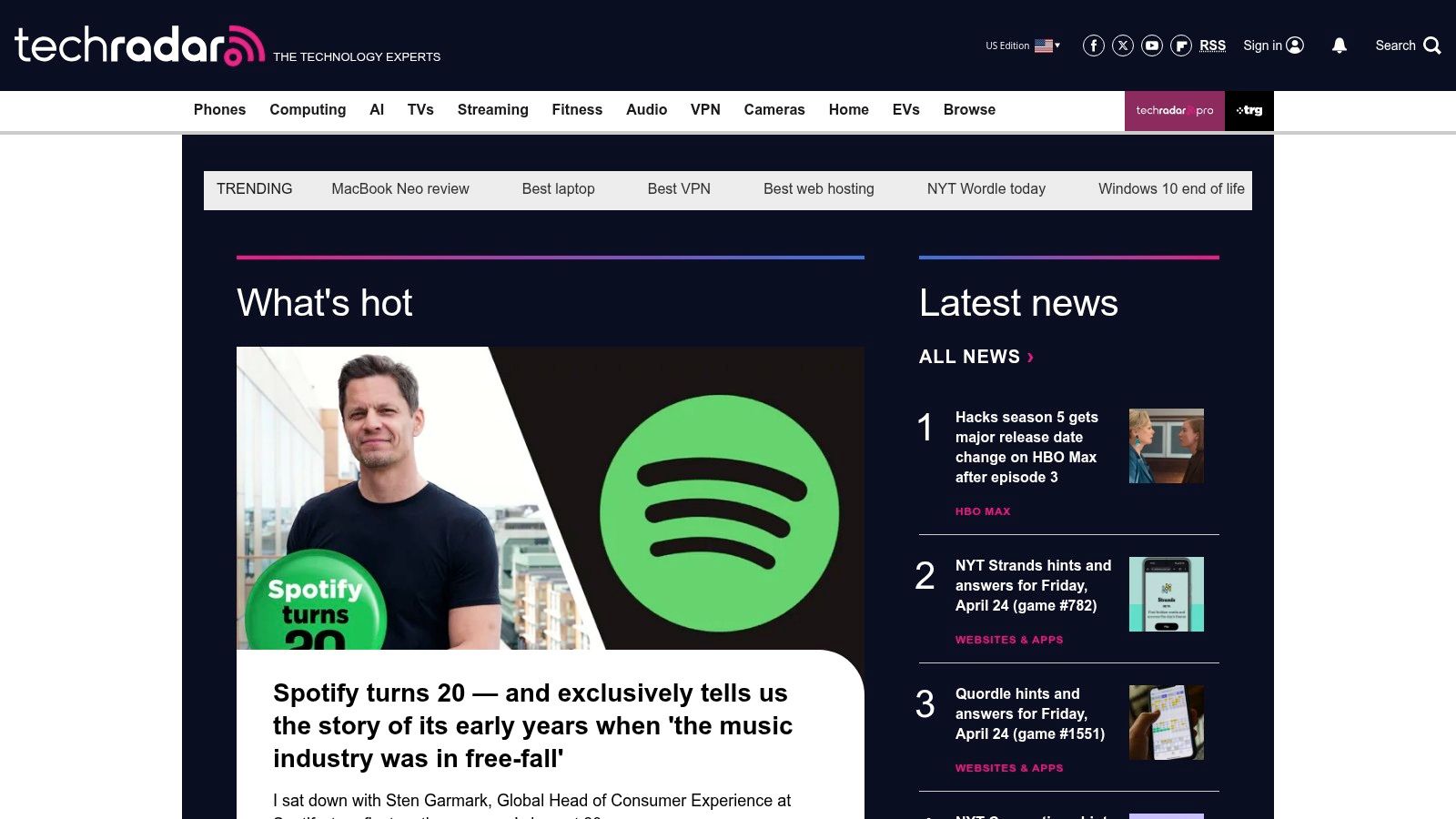
TechRadar is what a scaled commerce publisher looks like when news, reviews, and buying guides all feed the same engine. It’s broad, fast, and operationally heavy. That combination is hard to copy in full, but parts of it are useful for almost any creator building a monetized archive.
The site covers a huge spread of consumer tech categories. That breadth lets it capture different forms of intent. Some visitors want breaking news. Some want “best” lists. Some want deal roundups. Some want direct comparisons. A mature affiliate operation treats those as connected page types, not separate editorial worlds.
The content engine behind the traffic
TechRadar is a reminder that affiliate publishing isn’t just review publishing. It’s also release-cycle publishing. New launches create search spikes. Seasonal promotions create another wave. Old products need to be removed or reframed. Comparison tables need fresh inputs. Deal pages need rapid edits.
That’s why creators moving into affiliate often need a stronger SEO content strategy tied to library management. Without a system for classifying content by update trigger, your archive bloats. With a system, a single review can feed roundups, deal coverage, newsletters, shorts, and evergreen category pages.
What it teaches creators
TechRadar’s model is good for publishers who already produce frequent content and want clearer commercial packaging. It’s less useful for people who publish rarely and hope one heroic review will carry the business.
The practical wins look like this:
- Comparison content scales well: Readers often want evaluated options, not isolated reviews.
- Seasonality matters: Shopping events reward teams that prepare updates in advance.
- Broad category coverage creates more entry points: A reader can enter through news and convert through a buying guide.
- Operational load is high: A large footprint demands constant refreshes.
One caution matters here. Breadth can turn into shallowness quickly. If you expand across too many categories before building a dependable update workflow, quality slips and rankings get fragile.
5. Tom’s Guide

Visit Tom’s Guide.
Tom’s Guide is one of the better examples of practical consumer-commerce publishing. It tends to answer the question regular buyers ask. What should I buy right now, and why this one?
That sounds simple, but it’s strategically important. A lot of affiliate content over-explains products and under-serves decisions. Tom’s Guide often does the opposite. It packages information around selection, timing, and retailer availability, which makes it especially strong during deal cycles and product refresh windows.
Where Tom’s Guide stands out
Its public transparency around content funding and labels is useful because it educates the reader while monetizing the page. That’s not a side detail. In affiliate publishing, label clarity protects trust before the click, not after it.
It also benefits from shared commerce infrastructure across a larger publishing ecosystem. Independent creators can’t replicate that scale, but they can copy the operating idea. Build repeatable review templates, standardize product fields, centralize update notes, and keep retailer changes easy to swap across pages.
A smart model for general consumer creators
Tom’s Guide is especially relevant if your archive serves broad audiences. Think creator gear, TVs, wearables, streaming bundles, home tech, productivity accessories, or mobile devices. You don’t need to be the deepest specialist in the world if you’re good at helping mainstream buyers choose.
What works well:
- Decision-first writing: The content points readers toward a purchase choice quickly.
- Labeling reduces friction: Readers can understand commercial relationships without hunting.
- Deals coverage captures timing: Some purchases happen because the offer appears at the right moment.
What doesn’t work is blurring labels or mixing editorial intent with commercial formatting so heavily that readers can’t tell what they’re looking at. In broad consumer categories, trust is often won or lost on presentation details.
Watch for this: If readers can’t explain your ranking logic in one sentence, your page is doing too much and converting too little.
6. OutdoorGearLab

Visit OutdoorGearLab.
OutdoorGearLab is the specialist’s answer to generalist review sites. It doesn’t win by covering everything. It wins by being specific, test-heavy, and credible inside a category where enthusiasts can smell fluff immediately.
If your archive sits in a niche with knowledgeable buyers, this is one of the most useful affiliate marketing examples websites to study. It shows what happens when trust comes from test criteria, not brand scale.
Why niche depth ages well
Outdoor gear lends itself to evergreen intent. Buyers still search for boots, packs, layers, tents, and accessories long after a product roundup first appears. That’s a major advantage for a content library. A well-structured niche archive can keep producing value for a long time if updates are disciplined.
Its side-by-side scoring and award systems also do something many affiliate sites miss. They reduce cognitive load. Readers don’t want a wall of expertise. They want a reasoned way to compare trade-offs.
Best lessons for creators with focused archives
OutdoorGearLab is a strong model if your library already has category concentration. Maybe you cover cameras for documentary filmmakers, microphones for podcasters, espresso gear, climbing equipment, tabletop tools, or premium software for a specialized workflow. Depth beats breadth when your audience knows the difference.
What works:
- Testing criteria are visible: The authority is in the process, not just the opinion.
- Evergreen search intent compounds: Narrow categories can support long-lived pages.
- Clean UX helps conversion: Commerce modules feel tied to the review, not pasted on top.
What doesn’t work is pretending to be niche-authoritative while relying on generic summaries. In specialist categories, shallow affiliate content gets exposed quickly. If you can’t articulate the actual trade-off between products, you’re better off narrowing your scope further.
7. Digital Trends
Visit Digital Trends.
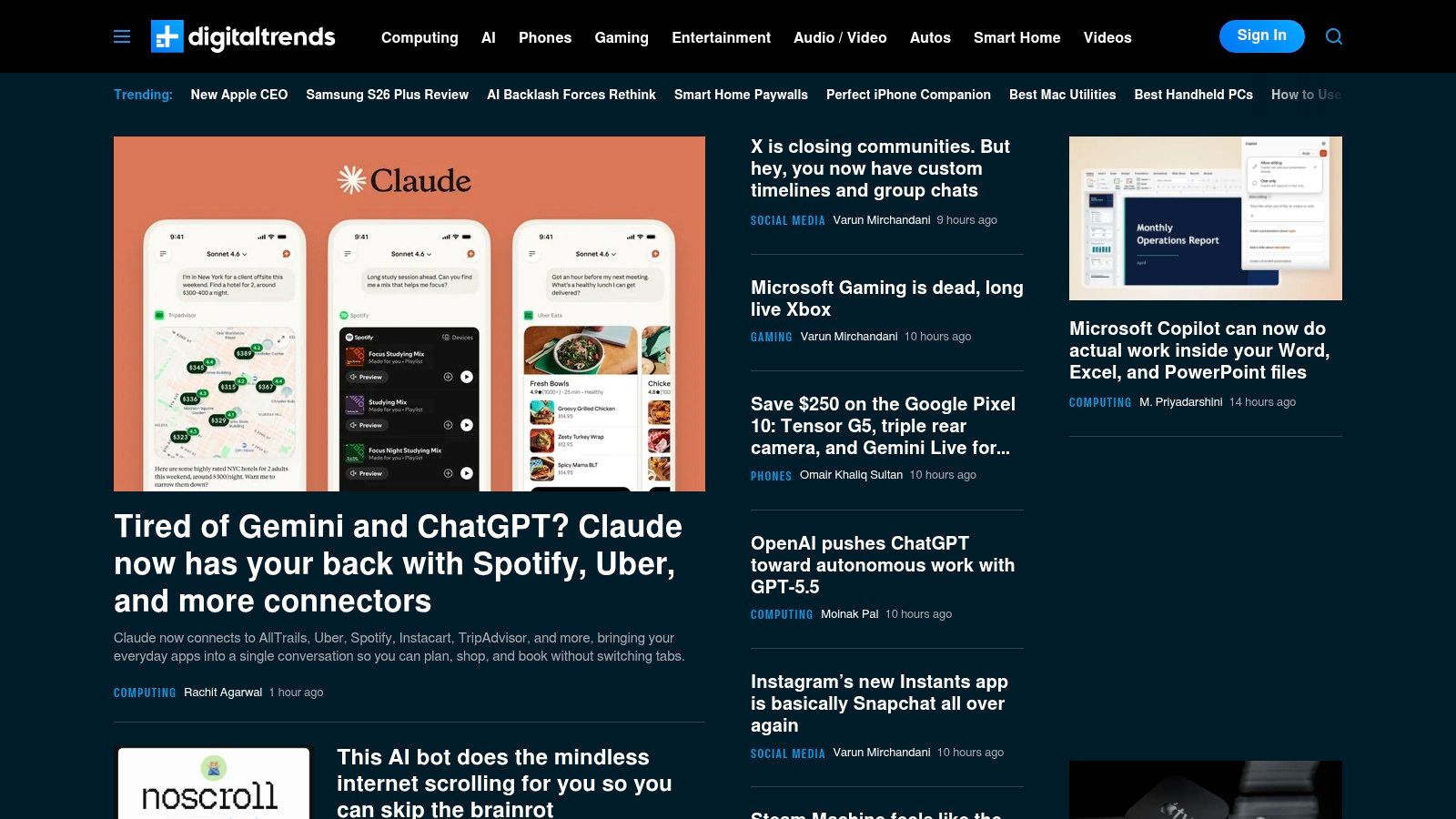
Digital Trends sits in the same broad ecosystem as other large tech publishers, but it’s worth studying for a different reason. It operates as a multi-format brand. News, reviews, commerce content, video, and seasonal deals all support each other.
That matters if your archive isn’t blog-first. Many creators now have mixed libraries. Video episodes, clips, transcripts, newsletter essays, product notes, and social explainers all live in separate places. Digital Trends is a useful reminder that affiliate revenue often improves when those formats stop acting like separate departments.
What a modern content stack looks like
A broad publisher like Digital Trends can route users in multiple ways. Someone may discover a product through a video, validate it through a review, and convert through a deals page. That journey is increasingly normal for independent creator brands too.
The challenge is operational. Multi-format archives become hard to reuse unless someone tags, classifies, and connects them consistently. Without that layer, creators keep remaking ideas they already covered. With it, a single topic can be reissued as a review update, a buying guide insert, a newsletter block, and a short-form clip.
The practical takeaway
Digital Trends is a good benchmark for creators who want to think beyond “article with links” and toward “brand with commerce pathways.”
Its strengths are clear:
- Multiple formats support conversions: Different audience segments enter through different channels.
- Deals operations add another revenue lane: Large retail events can become major editorial moments.
- Published guidelines matter: Commerce content needs clear standards when the operation scales.
Its weakness is familiar. Breadth creates editorial drag. The wider the scope, the harder it is to maintain depth and freshness across every category.
7-Site Affiliate Marketing Comparison
| Model | Implementation complexity | Resource requirements | Expected outcomes | Ideal use cases | Key advantages |
|---|---|---|---|---|---|
| Wirecutter (The New York Times) | High, rigorous testing and newsroom processes | Large editorial/test teams, long retest cycles, legal/compliance | Strong reader trust, durable "best" list SEO, steady affiliate income | Authoritative mainstream product guides and long-term reviews | Methodical testing, high credibility, multi-retailer neutrality |
| NerdWallet | High, regulated methodology and strict disclosures | Compliance/legal staff, financial analysts, calculators/tools, partner integrations | High-value conversions, trusted finance guidance, regulated monetization | Personal finance, lending, credit-card comparison and education | Clear disclosures, structured ratings, strong conversion funnels |
| The Points Guy | Medium, fast cadence with deal-first editorial | Affiliate/card issuer relationships, deal monitoring, travel expertise, content ops | Time-sensitive conversions, strong community engagement | Travel loyalty, credit-card offers, rapid promotion capture | Tight alignment of content/offers, fast publishing, loyal audience |
| TechRadar | Medium–High, broad coverage and commerce tooling | Large editorial and SEO teams, commerce systems, global footprint | Broad traffic, strong seasonal performance, scalable affiliate revenue | Wide consumer tech coverage, buying guides, deal roundups | Global reach, commerce SEO strength, clear labeling of paid content |
| Tom’s Guide | Medium, testing plus fast-moving deals | Testing resources, deal tracking, shared commerce infrastructure | Practical buying guidance, good conversion during sale windows | Consumer electronics and mainstream buyer advice with deals focus | Specific transparency labels, practical "what to buy" orientation, quick deals coverage |
| OutdoorGearLab | High, intensive field testing and specialist reviews | Specialist testers, retail-purchased samples, field testing logistics | High niche trust, evergreen SEO, loyal enthusiast readership | Deep-dive outdoor gear testing for enthusiasts and specialists | Transparent protocols, retail-bought samples, strong niche credibility |
| Digital Trends | Medium, standardized policies at scale | Multi-format teams (video/social), commerce/deals ops, compliance frameworks | Scaled traffic and affiliate revenue, strong event-driven performance | Broad tech & lifestyle commerce with multimedia distribution | Mature disclosure framework, scale, robust deals operation |
Your Action Plan Build a Content Engine, Not Just Pages
The common thread across these sites isn’t the link itself. It’s the system around the link. Each brand treats content as an asset with a lifecycle. Research it, publish it, update it, repackage it, redistribute it, and keep the trust layer intact the whole time.
That’s the part many creators skip when they move from hobby mode to business mode. They focus on publishing more pages instead of building a better library. More pages can help, but only if your archive stays searchable, classifiable, and easy to refresh. Otherwise, you’re just stacking content debt.
The strongest affiliate marketing examples websites all do some version of the same thing:
- They organize by intent: Review, comparison, deal, tutorial, and explainer content each play a different role.
- They update systematically: They don’t wait for content to decay completely before touching it again.
- They preserve editorial trust: Disclosures, testing methods, and labeling aren’t afterthoughts.
- They repurpose aggressively: One core idea often appears in multiple formats and entry points.
There’s also a useful lesson in the paid-media case studies from the verified data. One affiliate operator scaled a niche site from zero to $12,940 monthly profit in August while growing an email list to 12,000 subscribers and improving overall return on ad spend to 4:1, according to this six-month affiliate case study. Another campaign promoting online business education reached $45K monthly revenue from $15K ad spend after extended testing, as detailed in Alliance Virtual Offices’ affiliate case study roundup. The lesson isn’t “go buy ads tomorrow.” It’s that content performs better when it’s part of a coordinated engine with testing, attribution, creative variation, and retargeting.
Your archive can support the same logic, even at a smaller scale. A podcast episode can become a product comparison. A transcript can become a search page. A webinar can become a buyer’s guide. A recurring segment can become a review hub. Historical content becomes far more valuable once you can retrieve it by theme, product, problem, and audience stage.
That’s where a real content intelligence layer matters. If you can’t find what you’ve already made, you can’t monetize it well. If your team can’t see patterns across old videos, articles, interviews, and notes, you’ll keep creating from scratch instead of compounding what already exists. A lot of creators talk about repurposing. Very few build the system that makes repurposing efficient.
There’s also a bigger strategic opportunity here. Verified background on emerging niches argues that underused content archives can support programmatic expansion into specialized affiliate topics, especially when teams use AI and no-code workflows to classify and redeploy old material, as discussed in Post Affiliate Pro’s niche analysis. I’d treat that as a direction, not a shortcut. The archive still needs judgment. AI can help surface patterns, but trust still comes from editorial choices.
That’s why Programmatic SEO is only part of the picture. Page generation without content intelligence usually creates clutter. Page generation backed by a well-organized library can create durable reach.
If you want affiliate revenue that lasts, build the machine first. Organize your history. Tag by intent. Identify update triggers. Separate evergreen assets from time-sensitive assets. Create clear ranking or recommendation criteria. Then republish your archive with purpose.
Your old content probably isn’t underperforming because it lacks value. It’s underperforming because it lacks a system.
If you’re sitting on a library of podcasts, videos, articles, or research notes, Contesimal helps turn that archive into something usable. It gives your team a way to organize, search, classify, and collaborate across historical content so you can find monetizable patterns faster, repurpose stronger ideas across platforms, and build an affiliate content engine instead of guessing from scratch.