
You made the video. Or recorded the podcast. Or published the long-form post you knew had substance. Then the weak point showed up fast. The title didn't pull, the hook didn't hold, the landing page didn't convert, and the email announcing it sounded flatter than the work deserved.
That's the moment copywriting stops feeling optional.
Strong copy gives old content a second life. It helps a buried podcast episode become an email series, a research-heavy article become a lead magnet, and a back catalog of smart ideas become something closer to a business. If you create content for a living, or you're trying to, books on copywriting aren't academic trophies. They're operating manuals for attention, persuasion, and conversion.
The good news is that you don't need a hundred of them. In an aggregated analysis of 25 curated lists, Ogilvy on Advertising appeared 15 times and The Adweek Copywriting Handbook appeared 14 times, which tells you the field keeps returning to a small canon of proven books instead of chasing novelty for novelty's sake (aggregated copywriting book analysis). That's useful for creators with limited time. Read the right shelf, not the whole bookstore.
The list below is built as a reading path. Each book earns its place because it solves a specific business problem. One helps you sharpen offer strategy. Another helps your team write cleaner web copy. Another helps you mine your archive for better hooks, better headlines, and stronger calls to action.
If your content is good but your packaging is underperforming, start here.
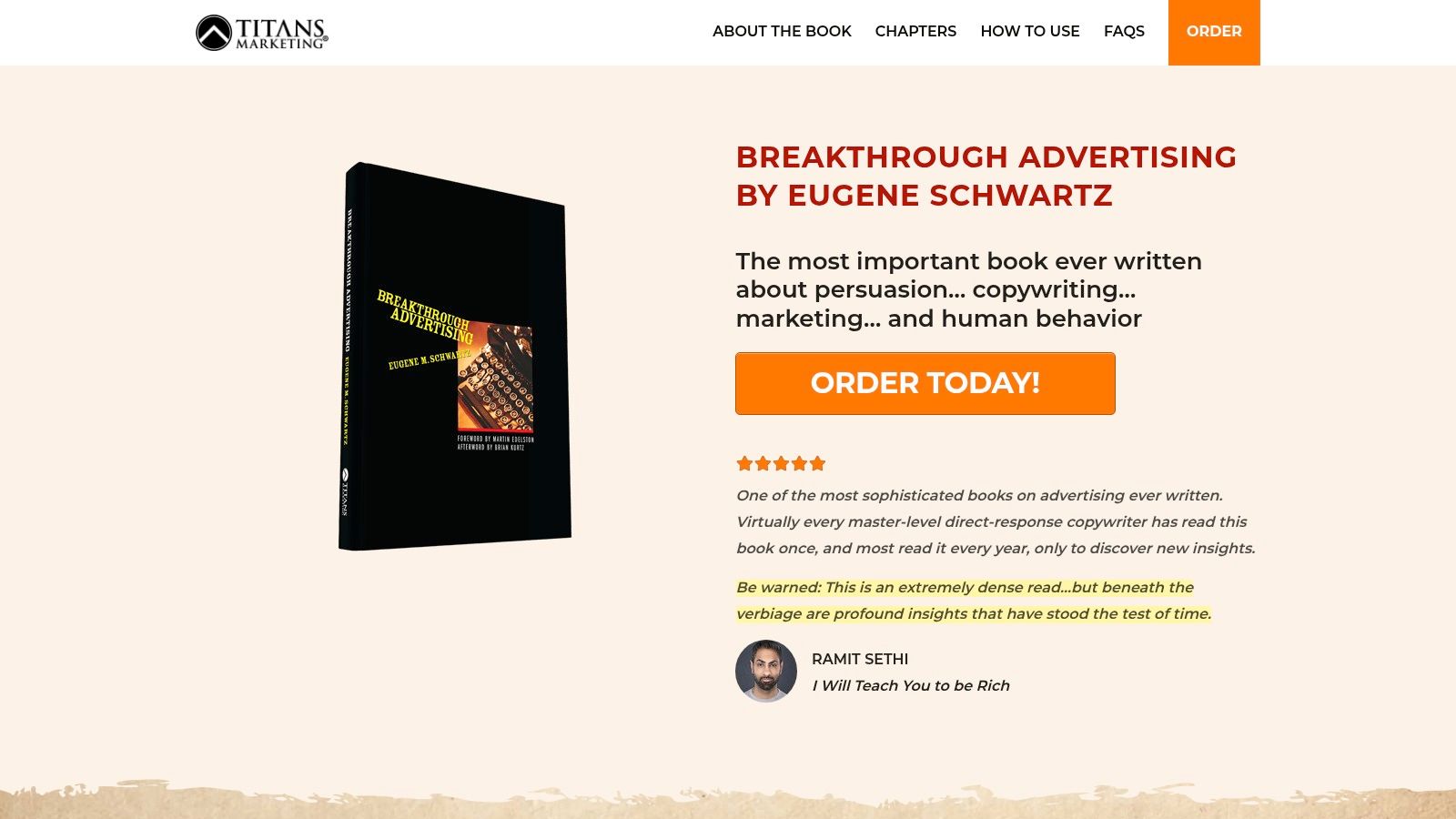
1. Breakthrough Advertising by Eugene M. Schwartz
A creator publishes a strong article, clips it into a thread, mentions it in an email, and still gets a weak response. At that point, the problem usually is not the writing. It is the match between message and market.
That is why Breakthrough Advertising belongs near the front of this reading path. Schwartz teaches market awareness, desire, and sophistication with more precision than almost any other copywriting book. He helps you diagnose why a solid piece underperforms before you start rewriting headlines or swapping calls to action.
For creators with a large back catalog, that matters a lot. A good webinar can fail as a landing page because the audience is colder. A thoughtful article can flop in email because the promise is too soft for an inbox. Schwartz gives you a framework for spotting those mismatches and fixing the angle before you touch the draft.
Where it helps most
Read this book when the content is strong but the packaging feels off.
The big questions Schwartz forces you to answer are the ones that change conversion rates:
- Awareness level: Does this audience need problem awareness, solution awareness, or a direct pitch?
- Desire source: Are you tapping into an existing want or trying to manufacture interest that is not there yet?
- Market sophistication: Has this audience seen the same promise too many times already?
- Angle selection: What claim feels fresh without becoming vague or inflated?
Those questions are practical, not theoretical. They help you turn an overlooked essay into a lead magnet with a sharper promise. They help you recut an old podcast episode into sales copy that meets the audience at the right stage of belief.
My rule with Schwartz is simple. Do not rewrite the body copy first. Rework the promise, the audience, and the level of awareness first.
He also pairs well with classic page structure frameworks. After you diagnose the message, a clear explanation of the AIDA framework for copywriting and marketing helps you organize the page so attention turns into action.
Trade-offs worth knowing
This book asks for effort. The prose is dense, the examples come from an earlier era of direct response, and you will not get modern swipe-file convenience.
That is the trade-off. You give up speed and get sharper judgment.
Use it if you are shaping offers, revising positioning, or mining older content for stronger hooks. Skip it as your first copywriting book if you still need help writing clean leads, useful bullets, or basic sales flow. Schwartz is best once you already write competently and need to understand why one message sells while another stalls.
The official edition is available at the Breakthrough Advertising book site.
If your content sounds smart but under-converts, this is one of the few books that can change how you frame the work, not just how you phrase it.
2. The Adweek Copywriting Handbook by Joseph Sugarman
You have a useful offer, a decent headline, and traffic arriving on the page. Conversion still stalls halfway down because the copy loses momentum. That is the problem Joseph Sugarman helps fix.
The Adweek Copywriting Handbook belongs early in the reading path because it turns copy into a controllable process. Schwartz helps you choose the right promise. Sugarman helps you carry a reader from the first line to the order button without dropping attention along the way.
His core lesson is simple and profitable. Every sentence should earn the next sentence.
That makes this book especially useful for creators who already publish regularly but need tighter sales execution. If you write launch emails, webinar pages, product descriptions, VSL outlines, or creator-led landing pages, Sugarman gives you a practical standard for sequencing ideas, handling objections, and building buying energy without sounding forced. The same logic also improves website copy that guides visitors toward action, especially on pages that get traffic but fail to convert.
What business problem this book solves
Sugarman is strong when the issue is not strategy but movement on the page. The offer may be fine. The reader just is not being carried forward with enough control.
Use this book to improve:
- Leads that stall: He shows how to open with enough curiosity and clarity to keep reading.
- Body copy that wanders: He teaches order, pacing, and how to stack proof without killing interest.
- Weak transitions: He is one of the best teachers of line-to-line momentum.
- Calls to action that feel abrupt: He shows how the close should feel like the next logical step, not a last-minute demand.
I have seen this book help newer writers make one important shift. They stop treating copy as a set of isolated parts and start treating it as guided attention.
What to watch for
The examples come from an older direct response era, so you have to translate the mechanics into modern channels. That is a real trade-off. You will get fewer SaaS homepage examples and more print-style promotions than a digital-first reader may want.
Still, the underlying discipline holds up because buyer psychology did not reset when channels changed. Curiosity still works. Specificity still works. Proof still works. Clean sequencing still works.
If you read this after Breakthrough Advertising, the progression makes sense. Schwartz sharpens what to say. Sugarman sharpens how to deliver it so the message keeps pulling the reader forward.
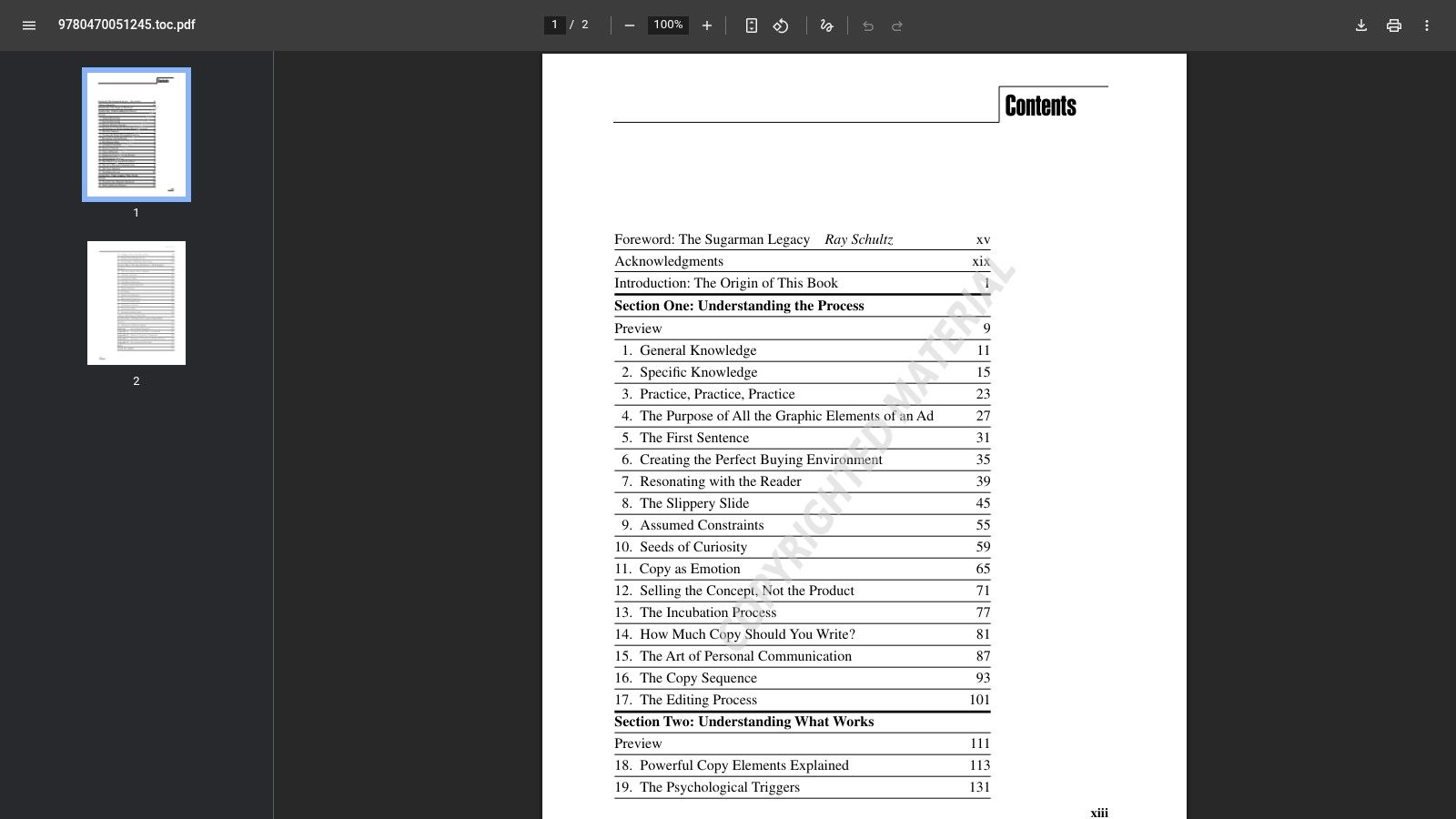
The publisher's table of contents is available through Wiley's Adweek Copywriting Handbook listing.
Read this one when your content already has ideas, authority, and traffic. What it lacks is sales momentum on the page.
3. The Copywriter’s Handbook 4th Edition by Robert W. Bly
A creator has a strong blog archive, a decent email list, and a homepage that still reads like a placeholder. Traffic comes in. Conversion stalls. Bly is the book I hand them when the problem is not ideas, but execution across formats.
His advantage is range. He covers ads, web pages, emails, landing pages, direct mail, brochures, and sales materials in a way that helps working marketers turn one message into several usable assets. That matters if you are building a content business from a library of posts, videos, newsletters, and product pages instead of writing each asset from scratch.
Why this belongs early in the reading path
Some copywriting books sharpen one muscle. Bly helps you build a reliable operating standard.
That makes him a strong third read in this list. After Schwartz gives you a better grasp of market desire and Sugarman teaches pacing on the page, Bly helps you apply copy principles to the actual assets a business has to publish every week. He is less about big creative leaps and more about getting the work into shape so it can sell.
Read this one when you need help with:
- Website copy that has a job: clearer homepages, service pages, and product pages
- Format switching: turning one core idea into email copy, landing page copy, and lead magnet copy
- Team consistency: giving writers and editors a shared baseline for what good promotional copy looks like
- Content monetization: converting educational content into commercial assets without making it sound forced
The book earns its shelf space with Bly's practical framework for adapting message, structure, and emphasis by format. If your archive includes useful long-form content, those lessons help you convert that material into stronger business assets. For a direct application of that process, this guide to copywriting for a website pairs well with Bly's approach.
The trade-off
Bly is a working manual. He is not the strongest choice if you want the deepest theory on desire, sophistication levels, or brand storytelling.
That is a real limitation, and also the reason I recommend it so often. A lot of creators do not need another book that makes copy feel more mysterious. They need one that helps them fix weak pages, train contributors, and produce cleaner drafts across channels.
Use it for: building repeatable standards, improving execution, and repurposing content into sales assets
Don't use it as: your only source for advanced persuasion theory
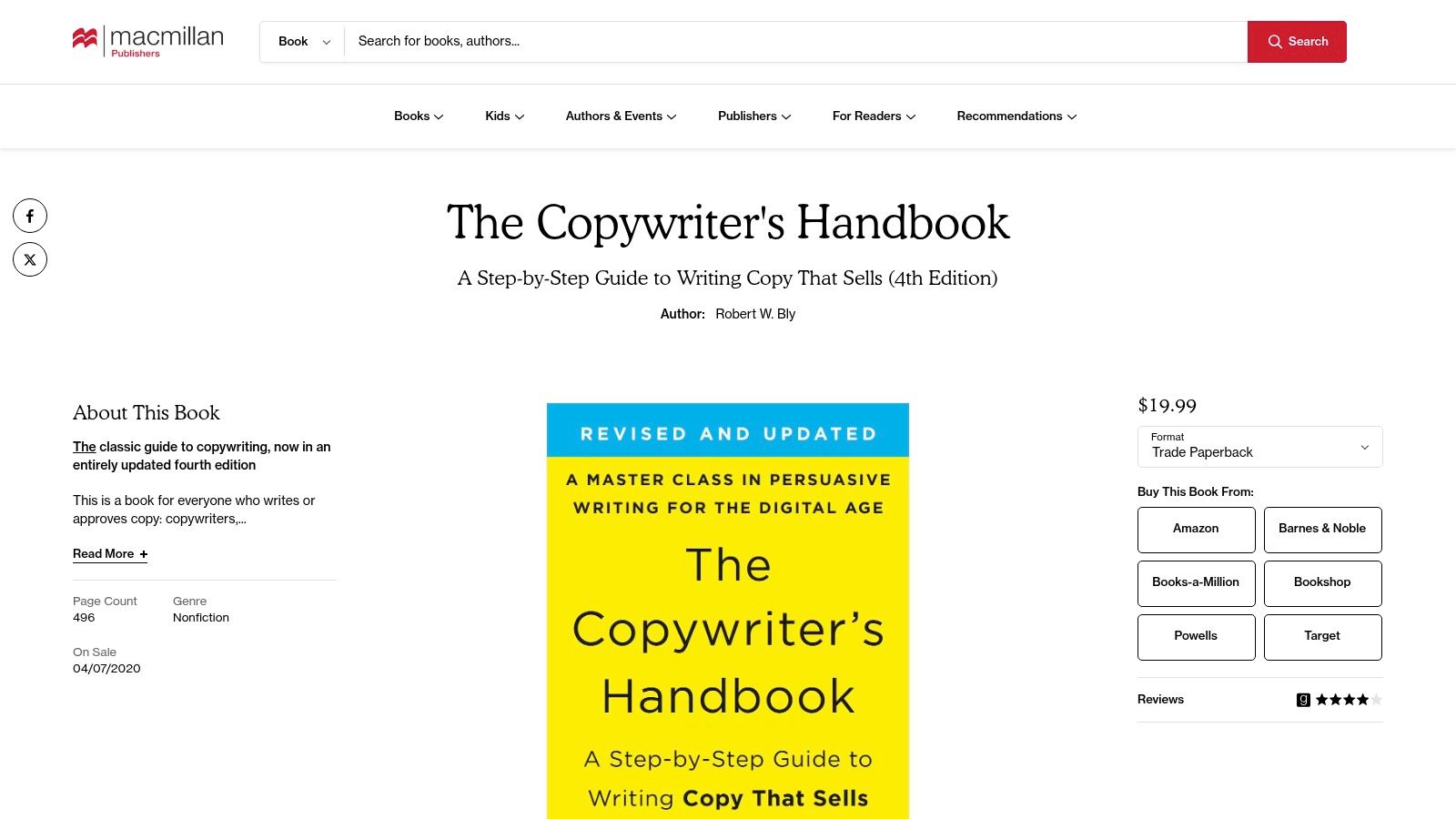
You can find the current edition on Macmillan's page for The Copywriter's Handbook.
If someone asks for one copywriting book that will improve the most business assets in the shortest time, this is usually my answer.
4. Ogilvy on Advertising by David Ogilvy
A creator has traffic, a healthy content archive, and a decent product. Revenue still lags because the message sounds polished without making a strong case to buy. Ogilvy on Advertising is the book I hand them when the problem is not volume of content, but weak commercial judgment.
Ogilvy trains a different muscle than Bly or Sugarman. He pushes you to ask better questions before you polish a line. What is the promise? What proof supports it? Which detail belongs in the ad because it sells, and which detail belongs in the trash because it only flatters the writer?
That shift matters if you already publish regularly. A large content library can create the illusion that the strategy is working. Often, the underlying issue is that the archive attracts attention without building desire, trust, or a clear reason to act.
Read this book if your next bottleneck is any of the following:
- stronger headlines rooted in a real claim
- sharper offers supported by research and specificity
- better judgment across campaigns, not just single assets
- clearer distinction between brand expression and sales communication
This is also one of the better books on the list for founders and editors who need a shared standard. Ogilvy gives teams a commercial filter. That filter helps when you are reviewing landing pages, ad concepts, sales emails, webinar promos, or sponsored content and need to decide what earns its place.
Some examples come from another era. The operating principles do not. Strong advertising still depends on a credible promise, useful research, clear benefit statements, and proof that reduces skepticism.
That is why this book belongs in a strategic reading path. Read Bly first if execution is messy. Read Ogilvy when execution is fine but the message lacks force. Then apply his standards to your existing library. Rework your top posts into stronger lead magnets, tighten claims on high-traffic pages, and audit whether your headlines create curiosity without losing the sale. If you are also sorting out where AI fits in that process, this guide on what AI copywriting is and where it actually helps pairs well with Ogilvy's insistence on human judgment.
If your content sounds respectable but does not sell with conviction, Ogilvy usually fixes the real problem.
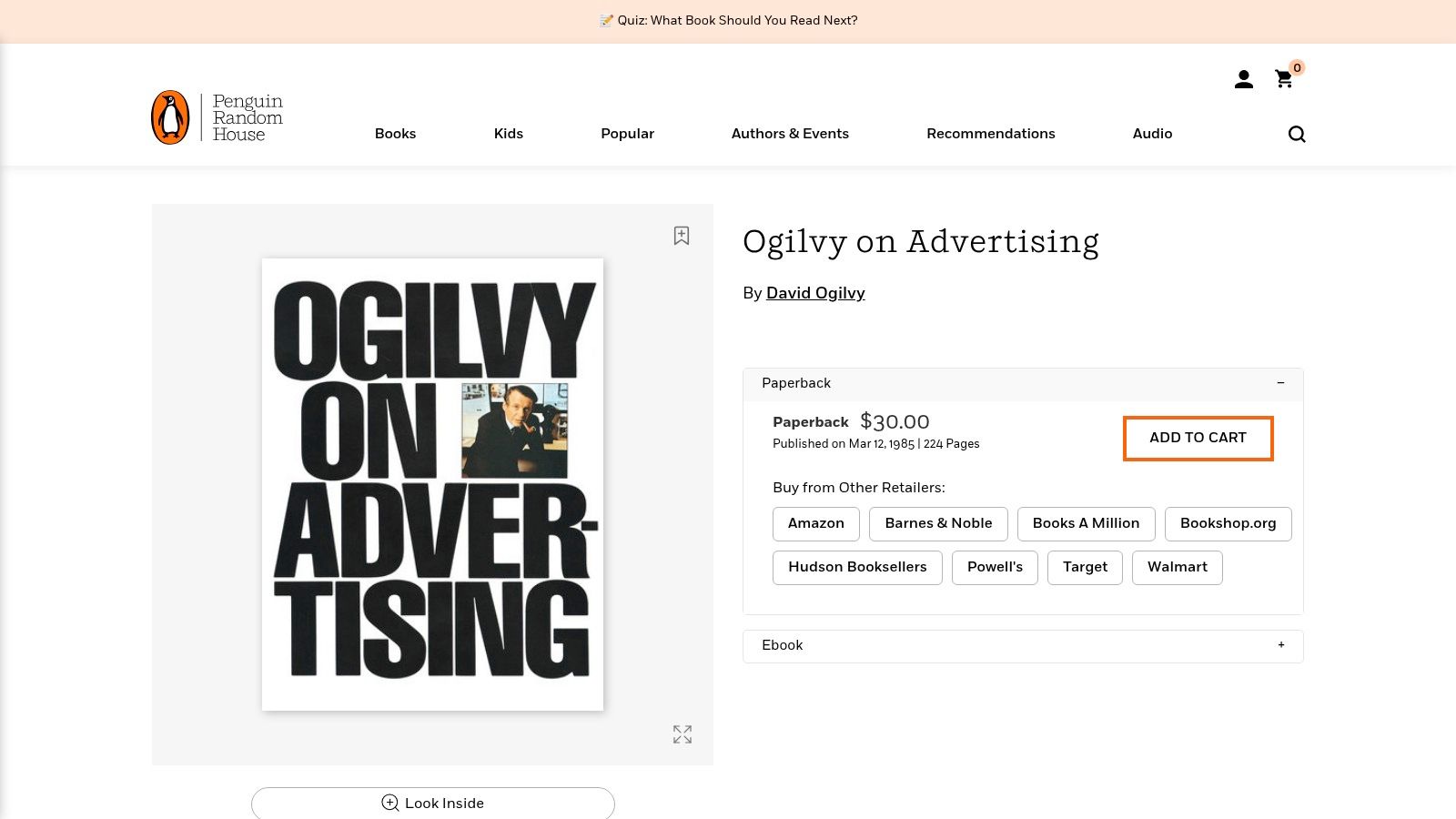
The official book page is available through Penguin Random House's listing for Ogilvy on Advertising.
Use Ogilvy to strengthen the commercial spine of your content. He helps you turn attention into intent, and intent into action.
5. Everybody Writes 2nd Edition by Ann Handley
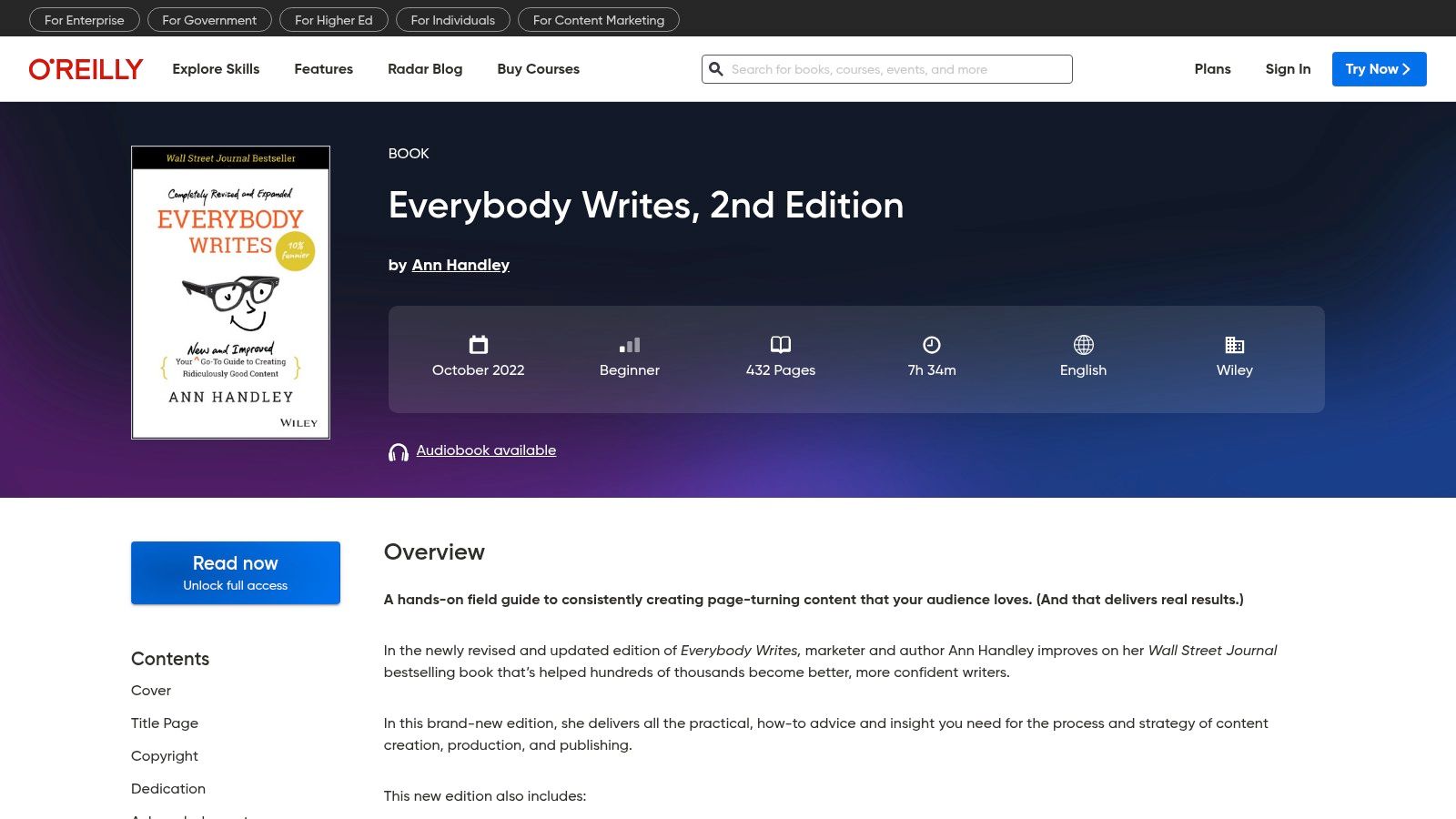
A team ships three blog posts, two landing page updates, a product email, and a week of social posts. Traffic holds steady. Conversions do not. The problem is often not persuasion. It is uneven writing quality across every touchpoint that shapes trust before the sale.
Everybody Writes belongs in this reading path because it fixes that operational problem. Ann Handley is not teaching classic direct response. She is teaching how to write clearly, consistently, and with a point when content passes through multiple hands and multiple channels.
This book earns its keep on busy teams. Shared docs, fast reviews, product launches, newsletter deadlines, homepage rewrites. Handley addresses the kind of work that rarely gets labeled "copywriting" even though it affects signups, retention, and brand credibility every day.
Who should read this one now
Read Handley after the fundamentals are in place and the next challenge is consistency at scale. This is the right pick for content marketers, newsletter operators, in-house teams, and founders who have built a meaningful content library but cannot keep the standard steady as output grows.
Her strongest lessons show up in practical work:
- Voice and tone control: Useful when several contributors need to sound like one brand.
- Editorial judgment: Strong on clarity, flow, word choice, and readability.
- Channel range: Applies well to blog posts, email, website copy, social posts, and product-adjacent writing.
- Team training: Easy to hand to subject-matter experts who write as part of their role, not as their full-time craft.
That matters in real businesses. Product managers write launch notes. Customer success leads write help content. Podcasters write episode descriptions. Growth teams write nurture sequences. Handley gives them a standard that improves the work without forcing everyone to become a full-time copywriter.
What problem it solves better than the others
Some copywriting books help you write a stronger promotion. Handley helps you run a cleaner content operation.
That is a different business problem. If your archive already brings in traffic, the next gain often comes from tightening intros, reducing friction in key paragraphs, improving calls to action, and making your voice more recognizable across old and new assets. This book is especially useful when your best content exists, but reads like it was written by five different people under five different deadlines.
If your team is also deciding where AI belongs in that workflow, pair this with a practical explanation of what AI copywriting is and where it actually helps. Handley's audience-first standard keeps the bar clear. AI can speed up drafts and variations. It cannot decide what your brand should sound like or which sentence earns trust.
Editorial note: Strong content systems need writing that stays clear after edits, approvals, and handoffs.
This book is available through O'Reilly's listing for Everybody Writes 2nd Edition.
If your challenge is not writing one great page but maintaining quality across dozens of pages and channels, this is the right book at the right point in the path.
6. The Boron Letters by Gary C. Halbert
Some books feel polished. The Boron Letters feels alive.
It's a collection of letters, and that loose structure is part of its value. Halbert doesn't teach from a distance. He talks through research, lists, offers, habits, and the direct-response mindset in a way that feels immediate. You can read a short section and go write something better the same day.
Why creators still pass this one around
This is one of the easiest books on copywriting to recommend to someone who resists "marketing books." The writing has energy. The lessons are direct. And because the entries are short, the book works well for daily practice.
What it does best:
- Research habits: It keeps reminding you that better copy starts before the draft.
- Offer thinking: It forces attention onto what people want.
- List awareness: It builds respect for audience quality and message fit.
- Writing routine: It treats discipline like part of the craft, not a personality trait.
For creators with a large content archive, that research emphasis matters more than it first appears. Before you repurpose old material, you need to know which audience segment it's right for, what pain point it answers, and whether the offer around it is sharp enough.
The unevenness is real
Because it was assembled from letters, the organization isn't as clean as a textbook. You don't read it for a neat curriculum. You read it for hard-earned instincts.
That makes it especially good as a second or third book. Once you already understand some basics, Halbert's candor lands harder. He pushes you to stop hiding behind "content" when what you really need is a stronger offer and clearer audience targeting.
Read Halbert when your writing sounds competent but your promotions still feel soft.
One more practical advantage. It's officially available online, which makes it easy to share with collaborators and junior writers. You can access it through The Gary Halbert Letter archive.
This is the book for creators who need to toughen their marketing instincts without losing their voice.
7. Ca$hvertising by Drew Eric Whitman
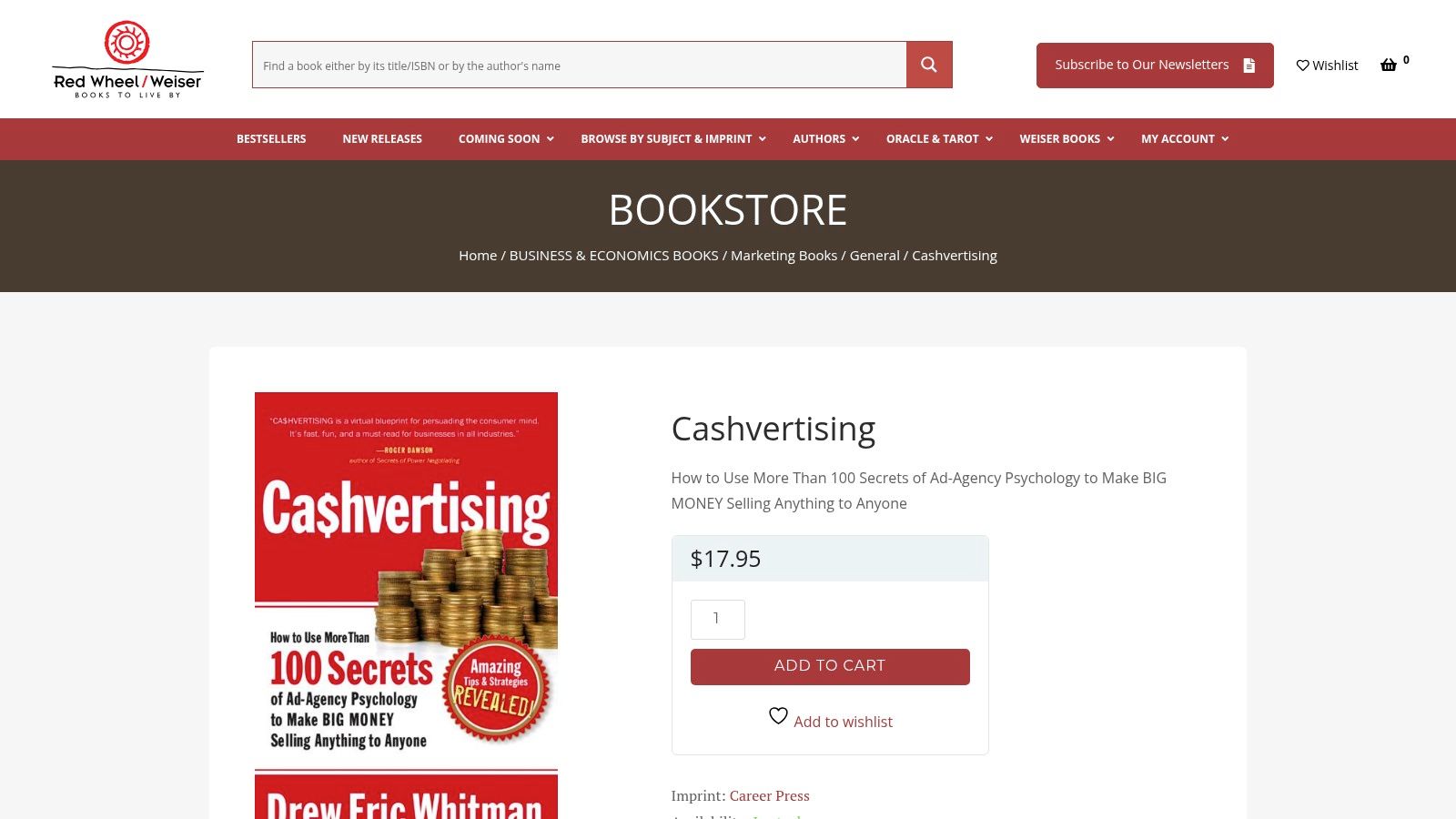
A launch is due at 4 p.m. The product is solid, the draft is flat, and the headline options all sound like placeholders. Ca$hvertising is the book I reach for in that situation because it gives you usable persuasion prompts fast.
Whitman organizes the material around buying motives, psychological triggers, and response patterns you can apply right away. That makes it especially useful when the problem is not "How do I write?" but "How do I make this offer sound more desirable by the end of the day?" You get headline angles, bullet ideas, curiosity devices, and stronger ways to frame benefits.
Best for conversion tuning
This book earns its place later in the reading path, after you already understand the basics of clear copy and audience fit. It is a tactical manual for improving response. Read it when you need to sharpen assets that are already in motion:
- Sales pages
- Email promotions
- Ads and advertorial-style copy
- Lead magnet landing pages
- Offer framing for existing content assets
That last use case is where many creators get real value from it. A content library often has more commercial potential than it appears to have at first glance. The problem is usually packaging. An old article can become a lead magnet with a stronger promise. A webinar can become an email sequence with better bullets. A useful tutorial can become a paid offer once the outcome is framed with more specificity.
That is the trade-off with Ca$hvertising. It gives you speed and promotional angles. It does not spend much time on voice, editorial depth, or long-term brand authority.
So I would not hand this to a writer who still needs fundamentals. I would hand it to a creator, growth marketer, or in-house copy lead who already has assets and wants more clicks, more opt-ins, or a stronger control version to test.
Read this when the draft is serviceable, but the promotion still lacks pull.
You can find it on Red Wheel Weiser's Ca$hvertising page.
For practical use, this is one of the better desk-reference books on copywriting. Keep it nearby for rewrites, testing rounds, and content repackaging.
Top 7 Copywriting Books Compared
| Title | Implementation complexity | Resource requirements | Expected outcomes | Ideal use cases | Key advantages |
|---|---|---|---|---|---|
| Breakthrough Advertising, Eugene M. Schwartz | High, advanced strategic concepts | Significant time and prior copywriting experience | Deep positioning frameworks, stronger offer and big‑idea development | Senior copywriters, archive mining, high‑stakes campaigns | Timeless models of market sophistication and awareness |
| The Adweek Copywriting Handbook, Joseph Sugarman | Moderate, structured, procedural | Moderate reading + practice; useful checklists and templates | Repeatable ad-to-landing processes and persuasive flows | Teams, direct‑response campaigns, training new writers | Step‑by‑step system with psychological triggers and examples |
| The Copywriter’s Handbook (4th Ed.), Robert W. Bly | Low–Moderate, practical how‑to | Low barrier; examples for rapid application across formats | Improved execution across ads, email, web and landing pages | Beginners, in‑house teams, desk reference for writers | Up‑to‑date examples and clear formulas for conversion copy |
| Ogilvy on Advertising, David Ogilvy | Moderate, principle-driven, example heavy | Study of historical examples and adaptation to modern media | Research‑aligned creative and campaign execution guidance | Agencies, creatives aligning work to commercial goals | Enduring principles and strong focus on headlines that sell |
| Everybody Writes (2nd Ed.), Ann Handley | Low, accessible, bite‑size lessons | Organization-level adoption for style and QA | Consistent, audience‑first content across digital channels | Content teams, product and non‑copywriter contributors | Modern guidance on voice, UX microcopy, and editorial process |
| The Boron Letters, Gary C. Halbert | Low, story‑driven lessons | Low; short letters suitable for quick study and practice | Foundation in list building, offers, and writing routines | Individuals learning direct‑response fundamentals | Digestible, practiceable lessons and freely available online |
| Ca$hvertising, Drew Eric Whitman | Low, checklist and tactic focused | Low; easy to mine for tests and experiments | Rapid, testable lift from headlines, layout and offer tweaks | Growth teams, conversion optimization, short‑term tests | Large set of persuasion techniques and reference‑friendly format |
From Reading to Doing Build Your Copywriting System
A good copywriting shelf saves you time. A working copywriting system makes you money.
That distinction matters because a lot of creators collect advice the way they collect tabs. A few highlighted passages. A stack of bookmarked frameworks. A vague intention to "get better at messaging." Meanwhile, the old blog posts, videos, newsletters, and podcast episodes keep piling up, and most of them never get a second pass.
The better move is narrower. Pick the one book on this list that solves your immediate bottleneck. If your messaging feels vague, read Schwartz. If your execution lacks structure, read Sugarman. If your team needs one practical reference across channels, start with Bly. If your operation is content-heavy and collaborative, Handley is probably the fastest win.
Then apply the lesson right away.
Rewrite one headline from an underperforming article. Tighten one product description. Rework the opening lines of your welcome email. Pull one strong idea from an old podcast and turn it into a cleaner landing page promise. The point isn't to finish the whole book before you act. The point is to turn reading into visible changes in assets you already own.
This matters even more if your business runs on a content library. Most creators don't have a content creation problem. They have a retrieval, packaging, and reuse problem. Valuable ideas are buried in transcripts, half-forgotten posts, episode notes, and campaign drafts. Without a system, those assets stay dormant. With the right system, they become headlines, lead magnets, nurture sequences, video scripts, sales pages, and refreshed distribution across platforms.
That's where copywriting knowledge compounds. When you understand headline writing, audience desire, offer framing, and message sequencing, you can return to old work with new eyes. A thoughtful essay becomes a webinar hook. A podcast archive becomes a searchable idea bank. A high-performing theme becomes a repeatable content series.
The strongest reading path is usually not the most academic one. It's the one that tracks your real business needs. Early on, you may need fundamentals and structure. Later, you may need better persuasion and sharper positioning. Once the library grows, you may need editorial consistency and a repeatable workflow that helps multiple people turn existing content into new commercial assets.
There is one caution worth keeping in mind. The industry still lacks strong comparative evidence on which copywriting books produce the best measurable improvement per hour invested. That gap is explicitly noted in research discussing the absence of ROI-based comparison across copywriting books and learning outcomes (research gap on copywriting book ROI). So don't wait for the perfect ranked formula. Choose based on the problem in front of you and judge the book by what it helps you ship.
A mature creator business combines two disciplines. First, it develops sharper copy so the value of the work becomes obvious to the audience. Second, it organizes the archive so strong ideas don't disappear after one publish cycle. When those two pieces work together, your back catalog stops behaving like storage and starts behaving like inventory.
If video is part of that system, this guide on how to write a YouTube video script is a smart next step. It helps bridge the gap between persuasive writing principles and actual content production.
The best books on copywriting won't do the work for you. They will, however, help you see your library differently. Not as finished output, but as raw material for better hooks, stronger offers, smarter repurposing, and more revenue from work you've already done.
If you're sitting on a growing archive of articles, podcasts, videos, or research, Contesimal helps you turn that library into something usable. It gives creators and teams a way to organize content, surface patterns, collaborate with AI and humans, and find the right assets to refresh, repackage, and monetize. That's a better match for copywriting growth than reading alone. You don't just learn better messaging. You build the system that lets you apply it across everything you've already made.