
Think of a podcast as your favorite talk radio show, but you're in charge. It’s ready whenever you are, available on-demand. This simple idea allows for deep-dive storytelling and personal connections that slide perfectly into daily routines like commutes, workouts, or even chores. You're turning otherwise dead time into an active learning or entertainment experience.
What Is a Podcast and Why Is Everyone Listening
At its core, a podcast is just a series of episodic audio files you can download or stream to your phone or computer. But unlike traditional radio, you have total control over what you listen to and when. This on-demand freedom has turned podcasting from a niche hobby into a global media powerhouse.
For any content creator—whether you're a YouTuber, blogger, or publisher with a library of content—understanding why this growth is happening is key. Podcasts offer an incredibly intimate way to connect with people. The human voice creates a direct, personal link that's tough to replicate with written text or even video, building a real sense of community and loyalty among listeners.
The Power of Audio Connection
The real magic of podcasting is that it feels like a one-on-one conversation. Listeners often feel like they're right there in the room with you, which leads to huge levels of trust and engagement. This unique relationship opens up a massive opportunity for:
- Brand Building: You can establish yourself as an authority in your niche just by consistently sharing what you know.
- Storytelling: It's the perfect format for crafting compelling stories that hold an audience's attention for a long time.
- Audience Engagement: You can build a dedicated community that feels personally connected to you and your message.
Podcasting's true strength is its portability and intimacy. It's a medium that accompanies listeners throughout their day, building a bond of trust and familiarity that few other content formats can achieve.
Understanding the Explosive Growth
The medium's popularity isn't just a feeling; the numbers back it up with a clear and steady climb. Global listenership just keeps growing, with forecasts showing a major expansion over the next few years.
Take a look at the projected growth in the global podcast audience from 2023 to 2027.
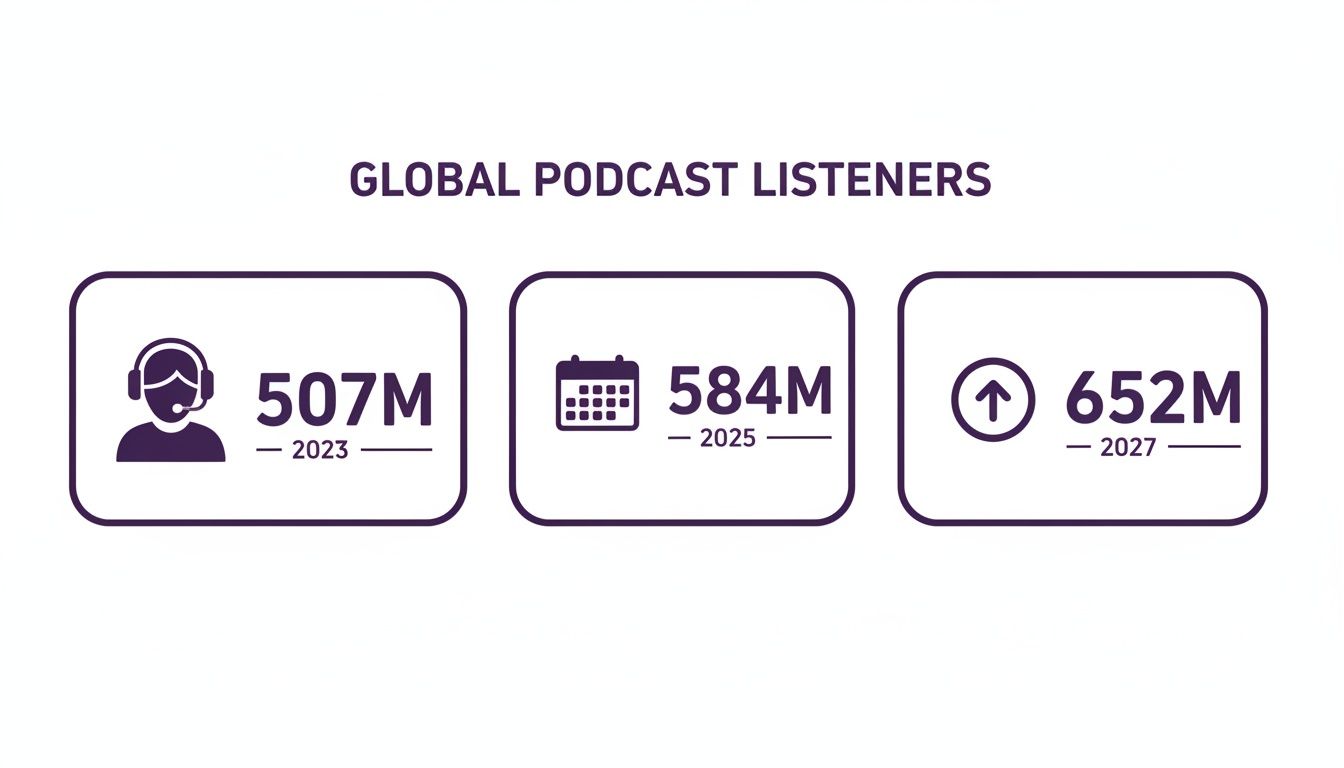
The data clearly shows a path from an already big base to a massive mainstream audience, making right now the perfect time for creators to get into the game. By 2025, the global podcast audience is expected to hit around 584.1 million monthly listeners, with that number jumping to over 651.7 million by 2027.
This growth isn't just about getting new listeners, either. Engagement is also getting deeper. A huge chunk of the audience now spends multiple hours a week tuning in, which shows a real shift toward more dedicated listening habits. You can dive deeper into the latest podcast listenership data from Backlinko to see the full picture.
Finding Your Voice With Common Podcast Formats
Every great podcast needs a blueprint. The format you choose is the vehicle that delivers your message, and it has a massive impact on how listeners connect with your show. Think of it like choosing to write a novel, a screenplay, or a short story—each structure serves a different purpose and reels in a different kind of audience.
Picking a format isn't about jamming your idea into a pre-made box. It’s about finding a structure that energizes you and makes your topic shine. Ask yourself what you actually enjoy. Do you thrive on deep, solitary research, or do you come alive when you're bouncing ideas off someone else? Your gut answer will point you toward a format you can stick with, one that won't lead to burnout.
The Solo Host Deep Dive
The solo host format is one of the most direct ways to build a connection with your listeners. It’s just you, a microphone, and the audience. You're the one sharing expertise, telling stories, or offering commentary. This style is perfect for subject matter experts, coaches, or storytellers who want to establish a strong personal brand and a direct line to their community.
It’s a fantastic way to build authority, and fast. The flip side? The pressure is entirely on you to carry the show. You’re responsible for every ounce of research, scripting, and energy from start to finish, which can be a heavy lift. To pull it off, you need to be super organized and wildly passionate about your topic to keep every single episode engaging.
The Dynamic Co-Hosted Conversation
Bringing on a co-host can completely change a podcast's energy. This format is all about the chemistry and banter between two or more hosts, making it feel like listeners are eavesdropping on a fun, insightful chat between friends. It's a killer choice for topics that get better with multiple perspectives, like comedy, pop culture reviews, or business breakdowns.
The biggest win here is the shared workload; you can split up research and hosting duties. That natural back-and-forth can also make for incredibly addictive content. The main challenge? Getting schedules to line up can be a headache, and it's absolutely crucial that you and your co-host have genuine chemistry. If it feels forced, listeners will know.
Your podcast format is the foundation of your content library. Choosing one that aligns with your strengths not only makes production easier but also creates a consistent experience that keeps listeners coming back for more.
The Expert Interview Show
The interview format is a powerhouse for delivering massive value to your audience by bringing in outside experts. As the host, your job is to ask the smart questions that unlock your guest's knowledge and stories. This is one of the most popular formats for good reason—it’s an amazing tool for networking and audience growth, since guests will often promote the episode to their own followers.
- Pros: You get fresh perspectives every episode and can tap into your guest's audience to grow your own.
- Cons: This format demands strong research skills, excellent outreach to book guests, and the ability to steer a conversation like a pro.
The Narrative and Scripted Story
This is the most production-heavy format, but it often delivers the most immersive experience. Scripted nonfiction or fiction podcasts are like movies for your ears, using sound design, music, and narration to tell a gripping story. Think of shows like Serial or historical deep dives that are meticulously crafted from beginning to end.
This style is perfect for investigative journalists, historians, and creative storytellers. While it offers unmatched creative freedom and can build a deeply devoted fanbase, it requires a huge amount of time for scripting, recording, and complex audio editing. It's a high-effort, high-reward approach to learning about podcasts from the creator's side.
Choosing Your Podcast Format
So, which path is right for you? It's not always an easy choice, but breaking down the options can help you see which one clicks with your personality, resources, and overall goals. This table should help you weigh the pros and cons side-by-side.
| Format Type | Best For | Pros | Cons |
|---|---|---|---|
| Solo Host | Experts, storytellers, and commentators building a personal brand. | Total creative control; builds strong authority and direct listener connection. | High pressure on one person; can be demanding to maintain energy alone. |
| Co-Hosted | Topics with multiple viewpoints, comedy shows, and review-based content. | Shared workload; dynamic and engaging conversations; natural banter. | Scheduling can be difficult; requires genuine host chemistry. |
| Interview | Networking, audience growth, and providing diverse expert insights. | Fresh content each episode; leverages guest audiences for promotion. | Requires strong research, outreach, and interview skills. |
| Narrative/Storytelling | Investigative journalism, historical deep dives, and audio fiction. | Highly immersive and engaging; builds a dedicated audience; high creative freedom. | Extremely time-consuming and resource-intensive; requires advanced production skills. |
Ultimately, the best format is the one you can produce consistently without losing your passion. Don't be afraid to experiment, either. You might start with a solo show and later decide to bring on a co-host or incorporate interviews. The key is to find a structure that lets your voice and your message be heard loud and clear.
Your Essential Podcasting Starter Kit
Jumping into podcasting often brings up intimidating images of complicated soundboards and eye-wateringly expensive microphones. Let's get one thing straight: that's not the reality. You can create fantastic-sounding audio without breaking the bank. The trick is to invest smartly in a few key pieces of gear that give you the biggest bang for your buck.
Forget the idea that you need a professional studio from day one. Your journey can start with a simple, effective setup that you build on as your show grows. The main goal is capturing clean, clear audio—and that’s something you can pull off on almost any budget. Let’s demystify the tech and break down exactly what you need to hit record.
Building Your Kit on Your Budget
Your ideal setup really just depends on your goals and what you're willing to spend. We can break down the essentials into simple, progressive tiers that let you start creating right away and scale up when you're ready.
- Scrappy Start (Under $100): This is the "no excuses" setup. The hero here is a quality USB microphone like the Samson Q2U ($70). It plugs straight into your computer, is incredibly easy to use, and offers a massive audio upgrade over your computer’s built-in mic. Grab any headphones you already own, and you're good to go.
- Aspiring Pro ($400+): When you're ready for more control and higher fidelity, it's time to move to an XLR microphone setup. This requires an audio interface (like the Focusrite Scarlett 2i2) to connect the mic to your computer. This combo delivers superior sound quality and the flexibility to record multiple people at once.
The single most important investment you can make for your podcast is a decent microphone. Good audio is non-negotiable for listeners, and even an entry-level USB mic will make your show sound significantly more professional.
Understanding Your Microphone Options
The microphone is the heart of your whole operation, but the two main types—USB and XLR—can be a bit confusing at first. Think of it like this: a USB mic is an all-in-one solution, while an XLR mic is a component in a more customizable system.
A USB microphone has a built-in audio interface, so it connects directly to your computer via USB. It’s the definition of plug-and-play and is absolutely perfect for solo hosts or beginners who just want simplicity and great value.
An XLR microphone, on the other hand, is the industry standard for professional audio. It requires a separate audio interface or mixer to process the sound before it ever reaches your computer. This gives you way more control over your sound levels and quality, but it definitely comes with a higher cost and a bit of a learning curve.
Choosing Your Recording and Editing Software
Once your hardware is sorted, you need software to actually record and polish your audio. The good news is there are incredible options out there, many of which are completely free. You do not need to spend a lot to get pro-grade tools.
Free Software Options:
- GarageBand (Mac/iOS): If you're an Apple user, this powerful and intuitive software comes pre-installed on your device. It’s more than capable for most podcasters just starting out.
- Audacity (Mac/Windows/Linux): A free, open-source audio editor that has been a favorite of podcasters for years. It has a steeper learning curve, but it’s packed with pro-level features once you get the hang of it.
Paid Software Options:
- Descript ($12+/month): This tool is a game-changer. It lets you edit audio just like a text document. It automatically transcribes your recording, so you can literally cut out mistakes by just deleting words from the transcript.
- Hindenburg Pro ($12/month): Designed specifically for spoken-word content like podcasts and journalism, Hindenburg simplifies the editing process with automated features that really smooth out your workflow.
Picking the right tools can feel overwhelming, but many modern platforms are built to make your life easier. To help you decide, check out our detailed comparison of the best editing software for podcasts to find the perfect fit for your needs and skill level. Your starter kit is the first step toward building a valuable content library, so pick the gear that empowers you to create consistently.
A Step-by-Step Podcasting Workflow
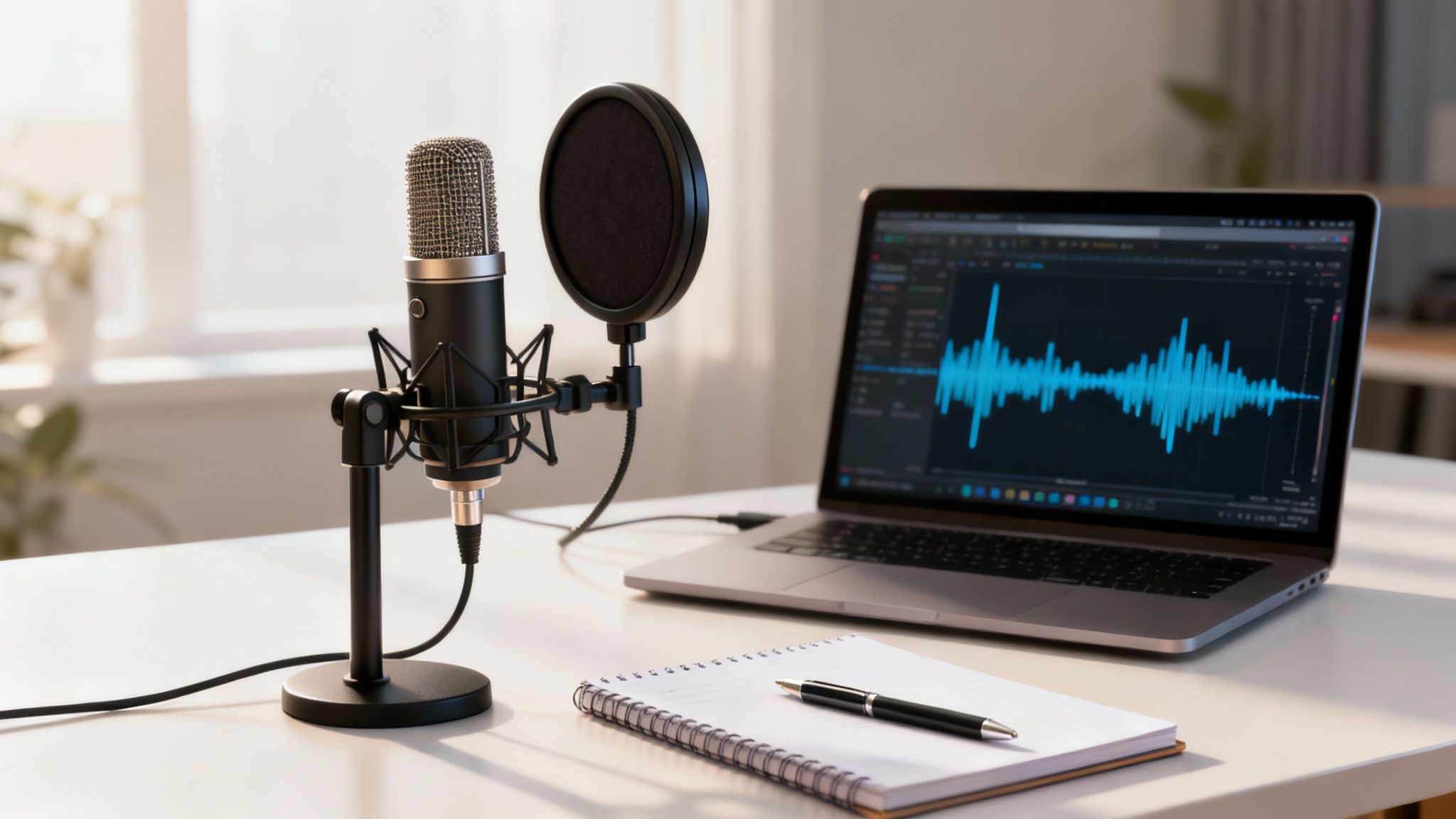
A fantastic idea and the right gear will only get you so far. The real secret to long-term success isn't just creativity; it's a reliable, repeatable process. A solid workflow is what separates the hobbyists from the pros, turning a chaotic passion project into a smooth-running content engine.
This kind of process makes sure every episode hits a high standard of quality, which is absolutely critical for building trust with your listeners. It also saves you from burnout by breaking a massive creative task down into smaller, predictable steps. Let's walk through the four core phases of a professional podcasting workflow.
Phase 1: Pre-Production and Planning
This is where every great episode is born. Pre-production is all the strategic groundwork you lay before you even think about hitting the record button. Honestly, it's the most important phase because it sets the direction and quality for the entire episode. A little bit of solid planning here saves you a mountain of headaches in the editing room later.
Your pre-production checklist should cover these bases:
- Topic Brainstorming: Get a list of potential episode ideas down on paper. Try to come up with at least ten so you know your concept has some legs.
- Outlining and Scripting: Even a simple bullet-point outline can make a world of difference in your episode's flow. It keeps you from rambling and ensures you're focused on delivering value.
- Guest Coordination: If you're running an interview show, this is when you'll handle outreach, scheduling, and sending prep materials to your guests. You want them to show up ready to shine.
To get a real handle on structuring your content, using a podcast episode planning template can give you a clear and effective framework for getting your ideas organized.
Phase 2: Recording Your Audio
With your plan locked in, it's time to capture the magic. The goal here is simple: record the cleanest, clearest audio you possibly can. That means paying just as much attention to your recording environment as you do to your microphone technique.
Find a quiet spot with soft surfaces—think carpets, curtains, or even a closet full of clothes—to absorb sound and kill any echo. Get your mouth about two to four inches from the mic for that warm, present sound. And always record a short test track to check your levels before you jump into the full episode.
Your recording environment is just as important as your microphone. A quiet room with minimal echo will do more for your audio quality than the most expensive gear in a noisy, empty space.
Phase 3: Post-Production and Editing
Here’s where you take your raw audio and polish it into a professional-sounding episode. The editing process can be as simple or as complex as you want, but it usually involves a few key steps. It's wild how far technology has come; modern tools even let you turn text into a podcast with AI, opening up new ways to create content without a traditional studio.
The core tasks in post-production look something like this:
- Content Editing: This is your first pass. You're chopping out the big mistakes, awkward pauses, and any fluff that doesn't serve the episode's main goal.
- Audio Polishing: On the second pass, you get technical. This means reducing background noise, leveling out the volumes so nothing is too loud or too quiet, and making sure the audio is consistent from start to finish.
- Adding Production Elements: Finally, you mix in your intro and outro music, drop in any sound effects, and add any ads or calls-to-action to create the final audio file.
Phase 4: Distribution and Publishing
Once your episode is edited, mixed, and exported, the last step is actually getting it to your audience. This is where a podcast hosting service comes in. A host is a specialized platform that stores your massive audio files and creates an RSS feed for you—that’s the special link that directories like Spotify and Apple Podcasts use to find your show.
You just upload your final audio file, title, show notes, and artwork to your hosting service. From there, your host pushes the episode out to all the major platforms automatically. This final piece of the puzzle makes sure all your hard work reaches your listeners' ears, bringing your idea full circle from concept to published reality.
Growing Your Audience From Zero to One Thousand
You hit ‘publish’ on your first episode. It’s a huge moment, but it’s just the starting line. Now the real work begins: getting your show into the ears of new listeners. Building an audience from nothing can feel like a massive uphill climb, but with the right strategy, it's totally manageable—even if you don't have a big marketing budget.
The key is to stop thinking of your podcast as just an audio file. It’s a whole package. Every single piece, from your cover art to your episode descriptions, is a tool for discovery. If you nail a few core fundamentals, you can create a magnetic presence that pulls in your first thousand loyal fans.
Mastering the Fundamentals of Discovery
Before you even think about spending money on ads, you have to make sure your podcast can actually be found. Think of directories like Apple Podcasts and Spotify as search engines for audio. When someone searches for a topic you cover, you want your show to be right there at the top. This is where a little basic optimization makes a world of difference.
- Magnetic Cover Art: Your artwork is your podcast’s first impression. Some industry data suggests 62% of new listeners are more likely to check out a show if they like the cover art. It needs to look professional, be readable as a tiny thumbnail, and tell people what your show is about at a glance.
- SEO-Rich Show Notes: Your episode titles and descriptions are prime real estate for keywords. Put yourself in your ideal listener's shoes: what words would they type into a search bar? Weave those terms naturally into your text. A great summary doesn't just convince people to listen; it helps the directories understand and rank your content.
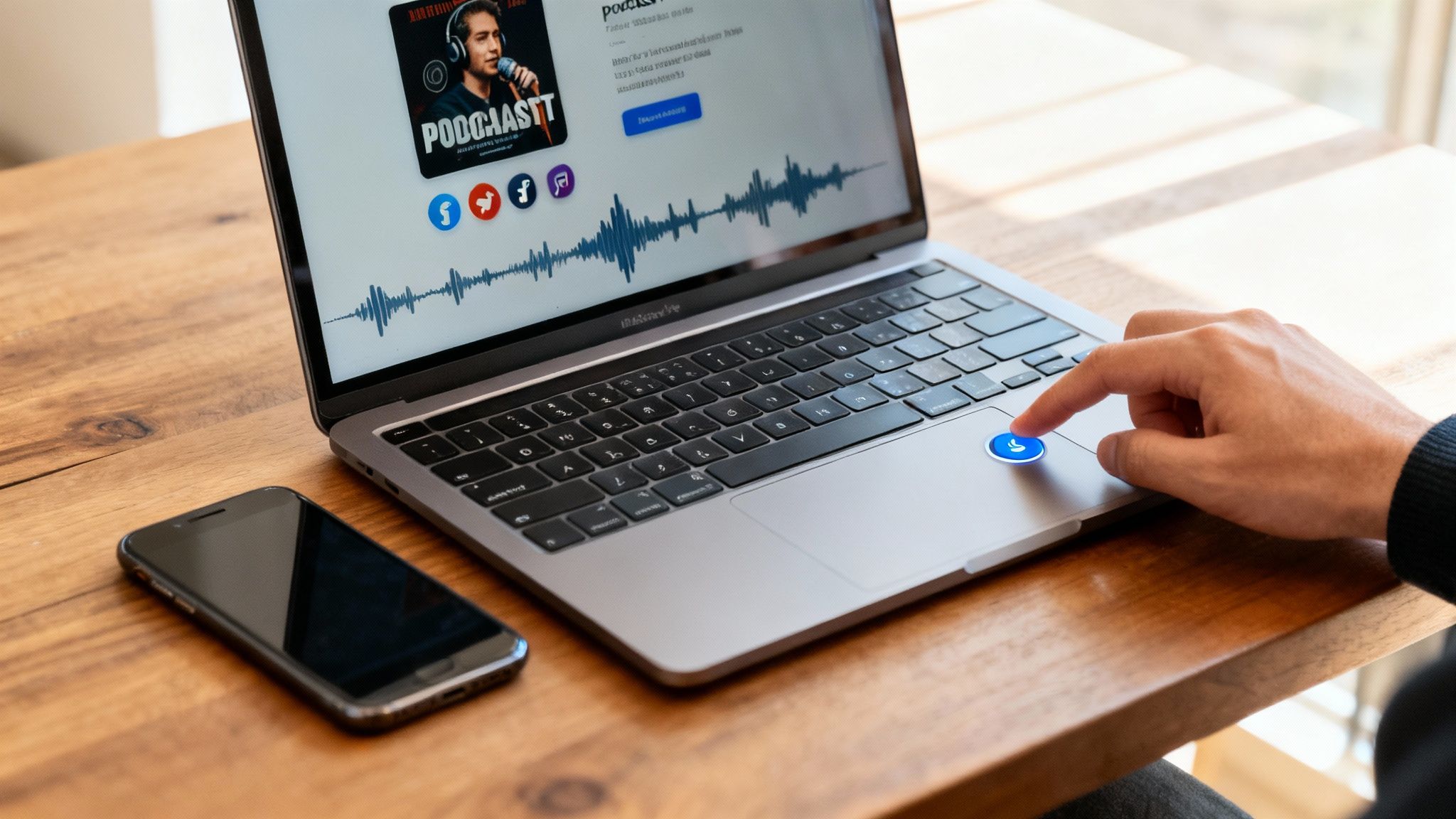
This screenshot of the Apple Podcasts homepage shows just how critical professional branding and clear titles are for standing out.
Look at how the top shows use compelling images and short, intriguing names. They grab your attention immediately in a very crowded space.
Powerful Promotional Tactics for Growth
With a solid foundation in place, it’s time to get out there and actively promote your show. The goal here is to create stuff that’s easy to share, making it simple for your current listeners to spread the word and for new people to find you.
One of the best ways to do this is with audiograms. These are short video clips that pair a snippet of your audio with a slick waveform animation and your podcast art. They're tailor-made for social media platforms like Instagram, TikTok, and LinkedIn, and they can turn a passive scroller into your next subscriber.
Collaboration is your growth accelerator. Partnering with another podcaster for a guest appearance or a cross-promotion puts your show directly in front of an engaged audience that already loves audio content.
And don't sleep on the power of community. Hanging out in places like Reddit or relevant Facebook groups can drive a surprising amount of traffic. The trick is to be a real person first—answer questions, join discussions, and then drop a link to a relevant episode when it genuinely helps.
Smart Content Repurposing for Maximum Reach
The most efficient way to grow is to stop seeing your podcast as a one-and-done audio file. Each episode you record is a goldmine of content that can be chopped up and repurposed across a dozen different platforms. One recording session can easily become a full week’s worth of marketing material. This is how you upcycle your content library and bring it to life.
This approach gets your message out to a much wider audience and meets them wherever they hang out online. For example, a single one-hour interview can be transformed into:
- A full-length blog post that hits all the key takeaways.
- A series of five punchy audiogram clips for social media.
- An insightful email newsletter for your subscribers.
- A visually appealing infographic for Pinterest.
- A set of slick quote graphics for Instagram and Twitter.
This method not only saves you a ton of time but also builds a strong, consistent brand presence everywhere you show up. To really dig into these tactics, our guide on how to promote a podcast is packed with more actionable tips to expand your reach.
How to Monetize Your Podcast and Content Library
So, you're moving from hobbyist to pro. Turning your passion project into something that actually pays the bills is a huge milestone for any creator. Monetization isn't just about making a quick buck; it's about building a sustainable business that lets you keep showing up and creating great stuff for your audience.
The good news? There are more ways than ever to generate real revenue from your podcast. By organizing your content library, you can create new value and ultimately make money with it.
These methods usually fall into one of two buckets: direct income from the podcast itself, and indirect strategies that use your show as a marketing engine for other ventures. The real magic happens when you blend both, creating a resilient business that isn't leaning on a single source of income.
Direct Podcast Monetization Methods
Direct monetization is exactly what it sounds like—earning money straight from your audio content. These are the classic methods most people think of, and they get more powerful as your audience grows.
Here are the most common paths:
- Sponsorships and Advertising: This is where brands pay you to talk about their products or services on your show. These can be host-read ads (where you voice them yourself) or programmatic ads inserted automatically by your hosting provider.
- Affiliate Marketing: Instead of getting a flat fee, you earn a commission every time someone makes a purchase using your unique link or promo code. This works best when you’re promoting products you genuinely use and believe in.
- Listener Support and Memberships: Platforms like Patreon or Apple Podcasts Subscriptions give your most loyal fans a way to support you with a recurring monthly payment. In return, you can offer them bonus content, early access, or other exclusive perks.
Indirect Monetization and Your Content Library
While direct methods are great, the real long-term value is often hiding in indirect monetization. This is where you leverage your podcast’s authority to promote your own products and services. Your show becomes the friendly face at the top of your sales funnel, building trust and gently guiding listeners toward a purchase.
This is also where your entire back catalog—all those old episodes—transforms from a simple archive into a sleeping financial asset. Seriously. Your content library is a goldmine of expertise just waiting to be tapped. By organizing that library, you can create new, high-value products that make you money long after the original episodes went live.
Your past episodes are not just old content; they are the building blocks for new revenue streams. By organizing your library, you can repurpose your best work into premium products that serve your audience and grow your business.
Turning Your Library into Lasting Value
Think about all the evergreen knowledge locked away in your old episodes. With a system to organize and make sense of it, you can bring it back to life to create something entirely new. Organize. Understand. Take Action.
For example, you could:
- Develop a Premium Course: Group episodes around a specific theme, add some worksheets or video lessons, and sell it as a complete online course.
- Create a Paid Knowledge Hub: Build a searchable, members-only library of your best stuff, all neatly organized by topic for easy access.
- Launch Coaching or Consulting Services: Use your podcast to prove you know your stuff and attract high-ticket clients for one-on-one work.
This approach ensures that every single piece of content you create keeps working for you, day in and day out. The podcast industry is booming, with some analysts expecting the global market to hit around $39.6 billion by 2025. The opportunity is massive, but sustainable success comes from building multiple income streams.
Ready to dive deeper into the nuts and bolts? A great next step is learning how to monetize a podcast with specific, actionable strategies.
Answering Your Biggest Podcasting Questions
Jumping into podcasting feels exciting, but it almost always comes with a few nagging questions that can stop you in your tracks. Let's clear up some of the most common hurdles new creators face so you can get started with confidence.
How Much Does It Really Cost to Start a Podcast?
Here's the great news: you can get a podcast off the ground with almost any budget. It's so easy to get distracted by shiny, expensive gear, but all you truly need are a few basics to capture clean, quality sound.
A simple, solid setup can cost as little as $70 to $100. For that, you’re looking at:
- A quality USB microphone (something like the Samson Q2U is perfect) that plugs right into your computer.
- A pair of headphones, which you probably already have.
- Free editing software like Audacity or GarageBand.
You absolutely don't need a professional studio to start. The only thing that really matters is clear audio, and this minimalist setup gets the job done surprisingly well.
What Is the Ideal Episode Length?
Honestly, there’s no magic number here. The best length for your show depends completely on your content and what your audience wants. If you look at the data across thousands of shows, you'll see about 31% land in the 20 to 40-minute range, which makes it a popular sweet spot.
But don't get hung up on that. Some killer shows are under 10 minutes, while others pull in huge audiences with episodes well over an hour.
The golden rule is simple: make your episode as long as it needs to be, and not a second longer. Just focus on delivering value without dragging it out with filler.
How Do I Come Up with Enough Episode Ideas?
That fear of running out of topics? Totally normal. But a little bit of planning can give you a bottomless well of ideas. Before you even think about hitting record, try to brainstorm ten potential episode titles. If that comes easily, you know your topic has enough fuel to get going.
Another great trick is to think in "buckets" or series. For example, you could have a recurring segment for interviews, another for your own solo deep dives, and maybe a third for answering listener questions. This creates a repeatable framework that takes the pressure off brainstorming from scratch every single time.
Ready to turn your podcast episodes into a searchable, valuable content library? Contesimal helps you organize your entire back catalog, making it easy to discover new ideas, collaborate with your team, and create new value from the content you've already made. Reignite your content library by visiting https://contesimal.ai.