
Turn Your Content Library from Archive to Active Asset
You've spent years recording episodes, publishing videos, writing articles, and chasing the next upload. Now your folders are crowded, your channels are fragmented, and a lot of strong work is buried under newer releases. That's where most creators get stuck. They keep producing, but they don't know what to evaluate inside the library they already own.
That's a costly habit, especially when you're moving from hobbyist to professional. Your old podcast interview might contain five short clips worth posting this week. A forgotten article might answer the same audience question your team keeps rewriting from scratch. A past series might be the foundation for a paid product, a newsletter sequence, or a cross-platform campaign.
A smart content audit fixes that. It helps you organize, understand, and take action. It also gives AI tools a real chance to help, because AI works far better when your archive has structure, context, and clear signals.
Content analysis gives useful discipline here. Columbia Mailman School describes content analysis as a systematic, objective, and quantitative method for measuring the presence, meanings, and relationships of words, themes, or concepts within qualitative data, turning unstructured media into data you can interpret statistically through coding and sampling in a defined process (Columbia content analysis overview).
Get the audit right, and your archive stops acting like storage. It starts acting like inventory.
1. Content Library Organization and Accessibility
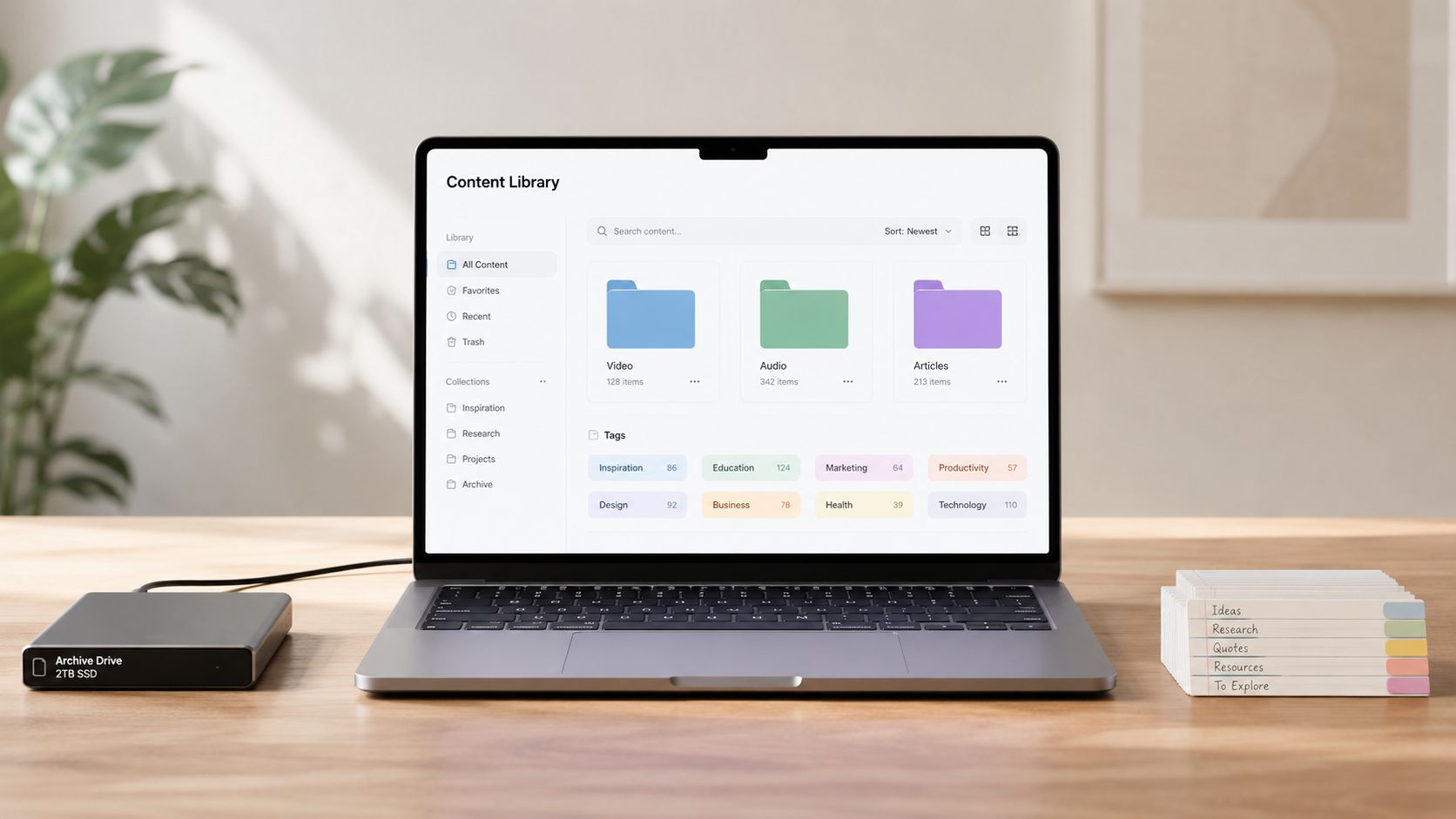
A messy library kills reuse before it starts. If your team can't find the original episode, transcript, guest quote, or visual asset in minutes, nobody will repurpose it consistently. They'll just make something new and ignore the archive.
That's why organization is the first thing I'd evaluate. Not aesthetics. Retrieval. If a YouTuber runs educational playlists, those playlists should line up with recurring themes, audience problems, and series concepts. If a podcast network tags episodes by topic, guest, and format, editors can pull clips for cross-promotion without listening to every file from scratch.
What good organization looks like
The strongest libraries usually share a few traits. They use consistent naming conventions, searchable transcripts, and tags that reflect both production details and audience intent. A publisher might file articles by author, date, subject, and recurring franchise. A video team might pair technical metadata with labels like beginner, advanced, objection handling, or behind the scenes.
If you're rebuilding your system, start with the assets you already reuse most often. That gives you a practical taxonomy instead of an academic one. Teams comparing systems for this kind of work usually look at digital asset management software options because central search, structure, and metadata discipline matter more than adding another random folder.
Practical rule: If a new editor can't find a relevant clip, quote, or source file without asking you, the library isn't organized yet.
A few strong habits make a big difference:
- Name assets consistently: Use titles that include topic, date, format, and version, so search results stay clean.
- Tag for people, not just systems: Add audience-facing terms like beginner guide, case study, common mistake, or sponsorship fit.
- Document your taxonomy: New collaborators shouldn't have to guess what your labels mean.
Quarterly review helps too. Search behavior changes, teams evolve, and your taxonomy should reflect how people retrieve content, not how you hoped they would.
2. Engagement and Audience Reach Metrics
Reach without response doesn't tell you much. A creator can post widely and still have no clue which ideas deserve a sequel, a short-form edit, or a product extension. The useful question isn't just “What got seen?” It's “What made people react, stay, share, or come back?”
TCC Group's media evaluation framework is useful here because it ties measurement to intent across design, development, distribution, and reflection, and it recommends tracking engagement through the full funnel with signals like likes, comments, shares, website traffic, bounce rate, and average time on page, while also judging quality through tonality, prominence, message inclusion, and article volume (TCC Group on measuring media outcomes).
That matters for creators across formats. A podcaster might find that guest episodes drive shares, but solo episodes drive subscriptions. A publisher might notice that one topic brings traffic while another topic brings newsletter signups. A YouTuber may discover that mid-length explainers outperform polished mini-documentaries in watch depth, even if the documentaries look better.
What to compare instead of chasing vanity metrics
The biggest mistake is comparing raw numbers across unlike formats. A short clip, a long interview, a carousel, and a newsletter issue don't behave the same way. Look at relative performance inside each platform first, then compare patterns across platforms.
Useful ways to evaluate include:
- Segment by topic: Which themes consistently drive comments, saves, replies, or return visits?
- Segment by format: Tutorials, interviews, opinion pieces, and behind-the-scenes content serve different jobs.
- Segment by audience action: Views are top-funnel. Replies, signups, and repeat consumption show deeper value.
If you want a practical workflow, a lot of teams pair platform analytics with a simple content labeling system, then review their content performance analysis process every month. That's usually enough to spot your repeat winners.
For a broader measurement mindset, VideoLearningAI's guide to L&D tracking is also worth reading because it pushes you to define what success looks like before you open the dashboard.
Don't just mark your best-performing post. Mark the reason it performed, so you can reuse the logic, not just admire the outcome.
3. Content Quality and Production Value
A creator records a strong interview, then opens the footage and realizes the guest mic clipped, the camera drifted soft, and the transcript is full of errors. The ideas are still there, but turning that session into clips, quotes, articles, and sponsor-ready assets now takes far more effort than it should. That is the cost of weak production. It limits reuse.
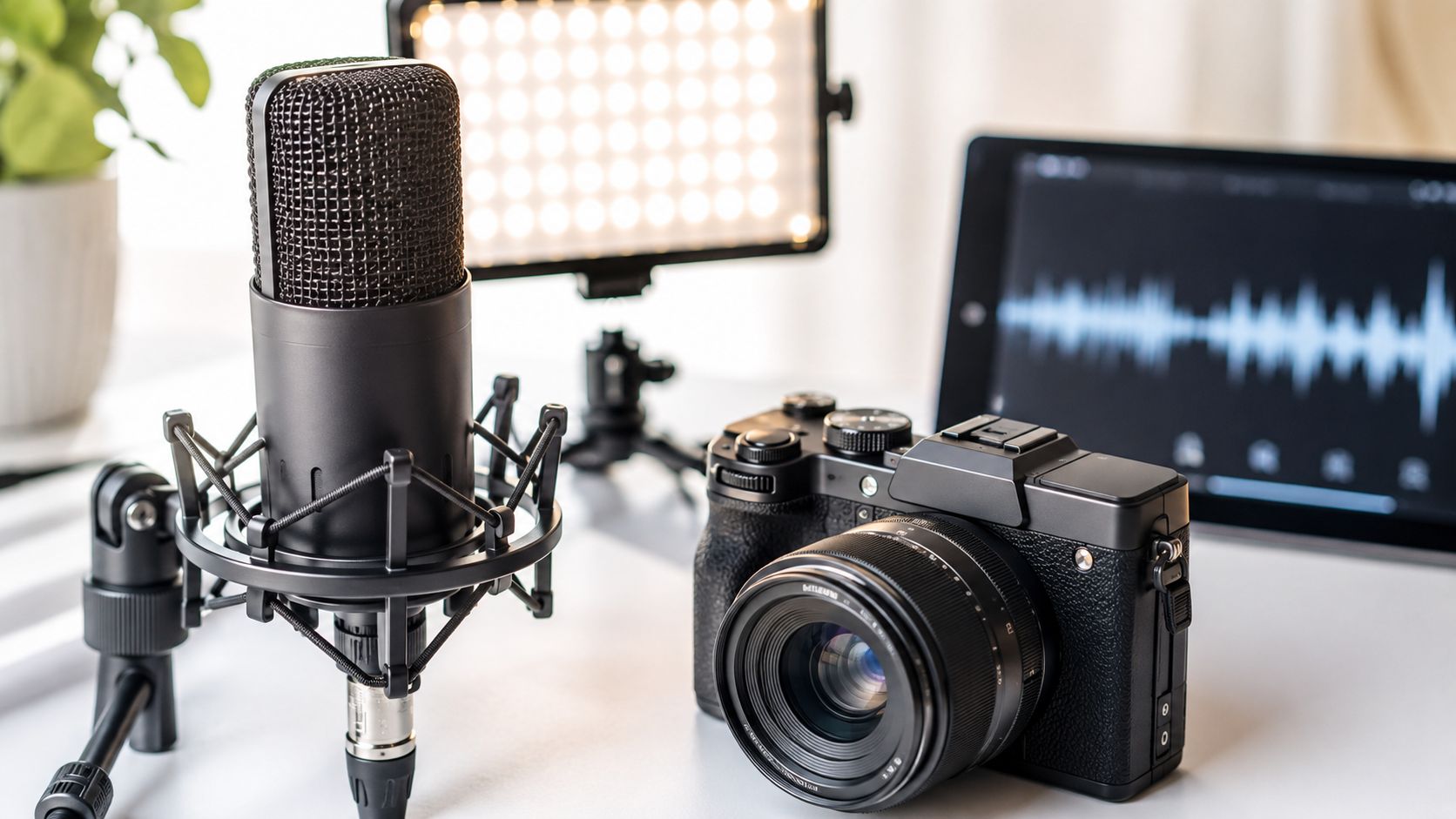
Creators moving from hobbyist to pro often miss this point. Production value is not about making every asset look expensive. It is about creating source material your team, your collaborators, and your AI tools can work with quickly. Clean inputs give you better transcripts, cleaner cuts, stronger summaries, and fewer revision rounds in Contesimal or any other workflow.
Audio usually decides whether a piece stays usable.
If I am auditing a content library, I check sound before almost anything else. Bad audio weakens retention, slows editing, and makes derivative assets harder to trust. The same principle applies to written content. If the structure wanders, the tone shifts mid-piece, or formatting is inconsistent, the asset loses value long before the topic becomes outdated.
A practical quality review should cover three layers:
- Capture quality: Clear audio, stable framing, readable visuals, and source files that do not need rescue work.
- Editorial quality: A sharp opening, logical flow, clean transitions, and an ending that gives the audience a clear takeaway.
- System quality: Consistent naming, templates, brand elements, and production standards your team can repeat without guessing.
That third layer matters more than many creators expect. A single beautifully edited video does not build a revenue-producing library. Repeatable quality does. Teams that grow well set production tiers on purpose. A flagship YouTube episode can justify heavier editing. A weekly podcast needs cleaner turnaround. Daily shorts need speed, consistency, and clear brand signals more than cinematic treatment.
This is also where AI becomes practical, not decorative. AI can help score transcript quality, flag filler-heavy sections, identify weak hooks, and suggest trim points. But it performs best on clean source material. If your archive is disorganized and your footage is messy, the tool spends its time compensating for preventable problems instead of helping you publish faster.
For discoverability, quality extends past the asset itself. Titles, descriptions, transcript cleanliness, on-page structure, and metadata all affect whether strong content gets found and trusted. That is why comprehensive content SEO insights are useful during evaluation. They connect editorial quality with search presentation and help teams spot where production issues turn into distribution issues.
This short breakdown is a good prompt if you're reviewing your standards with a team:
The goal is not identical polish across every format. The goal is a library full of assets that are clear, credible, easy to repurpose, and reliable enough for collaborators, sponsors, and publishing systems to build on.
4. Platform-Specific Performance and Adaptation
The same idea can work on five platforms and still need five different executions. That's normal. What fails is posting a horizontal YouTube segment everywhere and calling it repurposing.
YouTube usually rewards depth, session time, and a strong thumbnail-title match. TikTok and Reels need a faster hook and a cleaner payoff. LinkedIn needs a sharper professional angle. Email needs a stronger reason to open and keep reading. A long podcast segment may become a useful clip, but only after you reshape the opening, pacing, and captioning for the platform where it's going.
Adapt the message, not just the file
Creators who make this shift well usually build from one core asset outward. A filmmaker cuts a trailer for broad reach, a behind-the-scenes piece for loyal followers, and a director commentary for the deepest audience segment. A publisher reframes the same reporting into an article, social quote cards, and a newsletter note with a more personal angle.
That doesn't mean every platform deserves equal effort. Some platforms produce attention. Others produce subscribers, buyers, or stronger community response. Evaluate which channel brings the desired audience, not just the easiest views.
A practical review often includes questions like these:
- Does the opening fit the platform? A podcast intro rarely works as the first seconds of a short.
- Does the format fit the feed? Vertical, square, audio-first, text-led, and long-form each need different editing decisions.
- Does the call to action fit user intent? A LinkedIn reader might want insight. A YouTube viewer may want the full episode. An email subscriber may be ready for an offer.
The archive becomes more valuable when each strong idea has more than one native expression.
I'd also evaluate whether your team uses platform-specific templates. Native captions, short-form opening hooks, newsletter excerpt blocks, and social post variants save time. They also stop your content from feeling copied and pasted. That's usually the difference between being present on multiple platforms and effectively performing on them.
5. Audience Demographics and Psychographics
A creator publishes for a year, grows views, builds a respectable archive, then tries to sell a workshop, membership, or service. The offer falls flat. The problem usually is not content volume. It is audience fit.
Clicks can hide a mismatch. A library can attract people who are curious, entertained, or passing through, while your business depends on people who need results, budget approval, or ongoing support. That gap is why demographic data alone rarely gives enough direction. Age, role, and location matter. Motives matter more. You need to know what your audience is trying to solve, what they believe, what they resist, and what kind of proof earns their trust.
That becomes especially important when an archive starts functioning like a business asset instead of a personal body of work. A hobbyist can afford broad appeal. A professional creator needs signal. If the audience around your tutorials wants execution help, that points toward services, cohorts, or premium products. If the audience around your essays wants perspective and identity, that points toward community, sponsorship, or media products.
Start with behavior you can observe.
- Survey for intent, not vanity traits: Ask why they came, what they are trying to improve, and what would make them come back.
- Study comment language and replies: Repeated wording often gives you better positioning than brand brainstorming ever will.
- Separate audience clusters by asset type: The people saving how-to content often behave differently from the people sharing opinion pieces or behind-the-scenes posts.
- Track conversion by segment: Newsletter signups, consult requests, watch time, and product clicks reveal different levels of buyer readiness.
This is also where AI can sharpen judgment instead of flattening it. Contesimal can help classify themes across your existing library, group content by audience intent, and surface patterns a manual review misses. Used well, that gives a small team the kind of audience reading larger media operations build with researchers and strategists. The trade-off is straightforward. AI can organize patterns quickly, but it still needs a human editor to tell the difference between a casual fan and a future customer.
One practical test I use is simple. Pull your top-performing pieces, then ask which audience each one attracts and what that audience is likely to do next. Subscribe? Share? Buy? Ask for help? If the answer changes wildly from piece to piece, the library may be growing attention without building a coherent market position.
A fuzzy audience profile creates fuzzy packaging, fuzzy repurposing decisions, and weak offers. Clear audience insight gives your archive more than reach. It gives it commercial direction.
6. Content Performance Lifecycle and Longevity
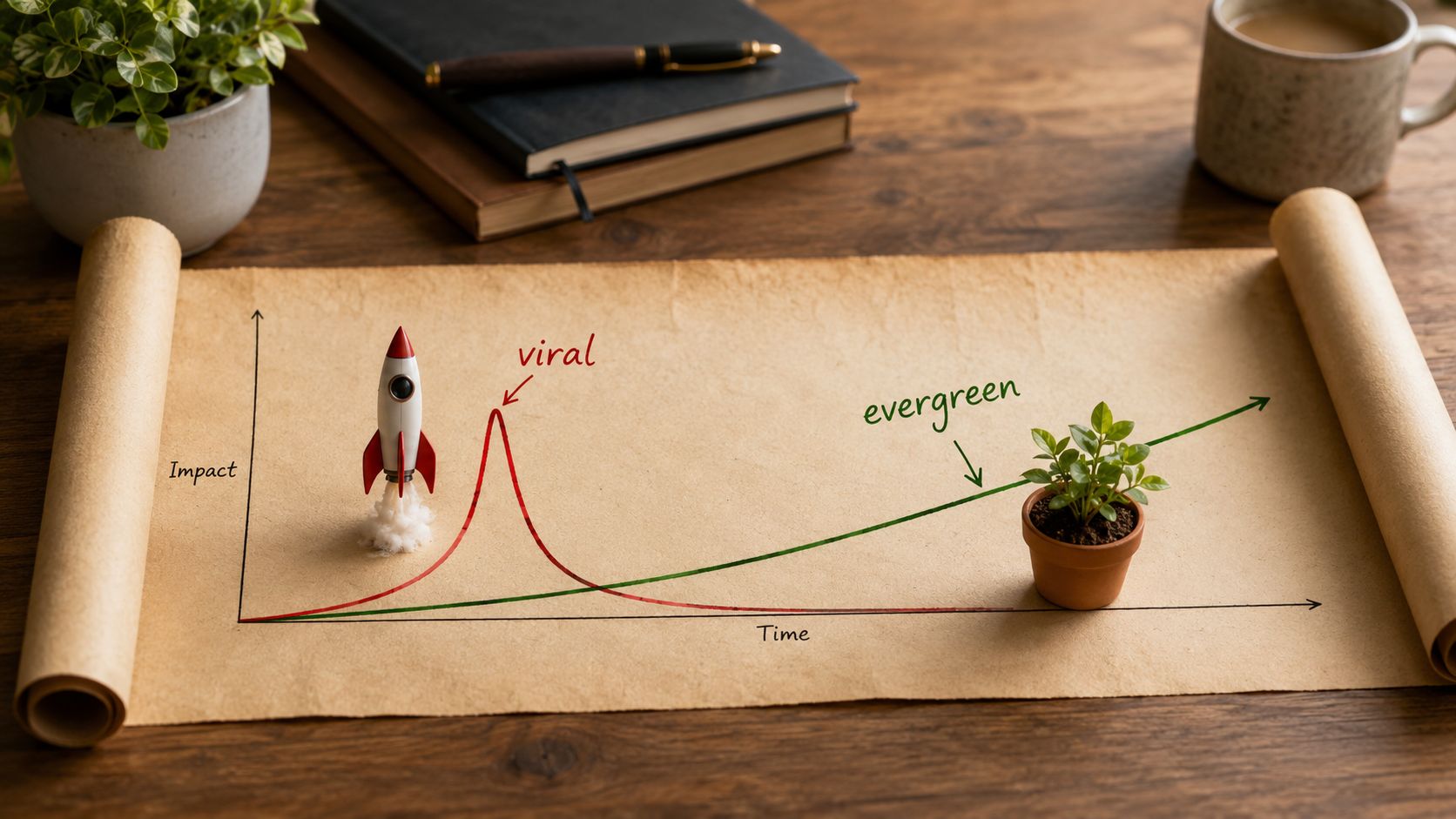
Not every asset should be judged on launch week. Some pieces spike fast and disappear. Others accumulate value gradually for months. If you don't separate those patterns, you'll delete useful formats from your strategy just because they weren't immediate winners.
That's why lifecycle review matters. A news reaction video might be strong for one cycle, then become archive material. A tutorial, reference post, or interview with timeless insight can keep earning attention long after publication. A seasonal article may wake up every year and still deserve updates.
Find the sleepers, not just the spikes
One of the biggest missed opportunities in content operations is archival value. Guides usually focus on current traffic, current conversion, and current engagement. They rarely help teams price the hidden value of old podcasts, videos, and documents that no longer rank but still contain reusable insight.
That gap matters because an estimated 60-80% of content organization libraries are dark content, meaning historical assets were never systematically analyzed for reuse potential (GW Content on content gap analysis). If you run a large archive, that should get your attention.
A solid lifecycle review asks:
- What peaks fast and fades? News, reactions, trends, and launch-driven pieces.
- What compounds slowly? Tutorials, reference guides, explainers, interviews with durable lessons.
- What returns seasonally? Holiday content, planning cycles, annual trends, educational calendars.
Old content doesn't become useless just because the platform stopped surfacing it. It often becomes raw material.
Once you know the lifecycle pattern, your repromotion strategy gets sharper. Fast content can feed clip distribution immediately. Slow content deserves periodic refreshes, better titles, improved thumbnails, and inclusion in themed collections. Seasonal content needs a calendar reminder, not a rewrite from zero.
7. Collaboration Efficiency and Team Alignment
A team records a strong interview on Monday. By Friday, the editor has one cut, the writer has drafted an article from a different transcript version, the social manager clipped the wrong moment, and nobody can tell which headline the team approved. The content is good. The workflow is what breaks.
That is the shift from hobbyist to professional operation. Once a library starts feeding multiple people, evaluation has to cover coordination, context, and speed, not just output quality. If the handoff system is weak, your archive stays expensive to maintain instead of becoming a shared asset that produces revenue across channels.
Clear teams win because decisions travel with the content. Notes, approved angles, audience context, brand language, and next actions need to stay attached to the source file. Tools like Contesimal help here because the same asset can support transcript review, clip selection, metadata, and reuse planning in one working environment instead of scattering decisions across docs, chats, and folders.
I look at collaboration through a few operational checks:
- Can each role see the same source context? Editors, writers, producers, and social leads need shared access to the transcript, highlights, and approved framing.
- Are handoffs specific? “Turn this into posts” creates rework. “Cut three clips from sections 2, 4, and 6 for founders on LinkedIn” gives the next person something usable.
- Is the workflow documented well enough for a new hire or freelancer to follow it? If not, the system depends on memory.
- Does the tool stack reduce switching costs? If people have to hunt for files, approvals, and past decisions, collaboration slows down even when everyone is competent.
This matters even more for teams producing from an existing archive. Daily AI use for content creation is already common, as noted earlier, so the bottleneck is rarely idea generation alone. It is getting clean inputs, fast approvals, and shared context into a process the whole team can trust.
A podcast network with organized guest briefs, transcript highlights, assigned distribution tasks, and naming rules will usually outperform a more creative but inconsistent team over a quarter. I have seen this repeatedly. The stronger system cuts revision rounds, reduces duplicated work, and makes it much easier to turn one source asset into a coordinated package. If your team is actively planning how to repurpose content across formats, this is the section to audit before you scale output.
Use delays as your diagnostic. If publishing stalls, ask where context gets lost, where approvals pile up, and where ownership becomes fuzzy. Those are the friction points that keep a content library from acting like a real business asset.
8. Repurposing Potential and Format Adaptability
A creator records a strong 45 minute interview, publishes it once, then moves on. A pro looks at the same asset and sees a month of output, a sales enablement piece, partner-ready clips, and a new entry point into the library.
That difference usually comes down to structure. Content with clean sections, specific examples, repeatable advice, and clear audience intent can travel. Content that relies on in-the-moment energy or loose conversation usually takes more editing than it is worth.
Evaluate range, not just reach
Repurposing potential is not just about whether a piece performed well in its original format. It is about how many useful versions you can produce without diluting the idea or burning too many production hours.
Use a few practical questions to judge that range:
- Does the asset contain clear segments, chapters, or standalone moments? Strong breakpoints make clipping, rewriting, and packaging faster.
- Can the main idea hold up in text, audio, short video, and visual formats? If the message only works in one medium, reuse options shrink quickly.
- Does it address a recurring audience problem or objection? Repeated pain points justify turning one source asset into several distribution formats.
- Is there enough specificity to create derivative assets with a clear job? A good source piece can become a how-to post, an email lesson, a sales follow-up, or talking points for a collaborator.
- How much editing does adaptation require? A raw livestream with one useful minute is less valuable than a well-framed tutorial with six reusable segments.
AI starts paying for itself in a very practical way. As noted earlier, teams already report stronger ROI from AI-assisted drafting and content workflows. Its primary advantage is not volume alone. It is the ability to review transcripts, identify reusable segments, rewrite for channel fit, and turn an existing archive into a working asset library.
For creators shifting from hobbyist publishing to professional operations, that distinction matters. A content library should help you publish faster, collaborate better, and create more revenue paths from work you already funded. Tools like Contesimal help teams assess old assets with that lens, then map each piece to formats that suit the idea instead of forcing every asset into the same template.
If you want a sharper filter for deciding what should become clips, threads, emails, carousels, or lead magnets, this guide on how to repurpose content across formats is a strong next read.
The strongest creators record with adaptation in mind from the start. They ask better questions, leave cleaner transitions, state key takeaways plainly, and capture examples that can stand on their own later. That habit turns a content archive into something much more useful than a backlog. It becomes a collaborative system for consistent output and repeatable growth.
8-Point Content Evaluation Matrix
| Criterion | Implementation complexity | Resource requirements | Expected outcomes | Ideal use cases | Key advantages |
|---|---|---|---|---|---|
| Content Library Organization and Accessibility | High initial setup; moderate ongoing effort | DAM/software, taxonomy design, migration, staff training | Faster retrieval, scalable archive, improved repurposing discovery | Large multi-format archives; teams scaling operations | Enables AI insights, reduces search time, supports collaboration |
| Engagement and Audience Reach Metrics | Medium, integrate analytics & dashboards | Tracking tools, cross-platform data aggregation, analyst time | Data-driven content decisions, identification of high-impact pieces | Growth optimization, A/B testing, prioritizing content to expand | Objective performance evidence, better resource allocation |
| Content Quality and Production Value | Medium–high, establish standards and QA | Equipment, skilled editors, production time and budget | Higher trust, better algorithmic placement, longer shelf-life | Brand building, sponsorships, premium content offerings | Higher monetization potential, repurposing flexibility, stronger brand |
| Platform-Specific Performance and Adaptation | High, require platform expertise and multiple versions | Format-specific editing, native tools, testing resources | Optimized reach and conversions per platform | Multi-platform distribution, targeting distinct platform audiences | Strategic repurposing, platform-tailored growth |
| Audience Demographics and Psychographics | Medium, data collection and segmentation work | Surveys, analytics/CRM data, privacy compliance, analysis | Targeted content, improved sponsorship fit, informed product decisions | Monetization negotiations, targeted campaigns, persona-driven content | Precise targeting, better advertiser alignment, smarter content choices |
| Content Performance Lifecycle and Longevity | Medium, needs long-term tracking and analysis | Historical analytics, lifecycle dashboards, time to gather data | Identify evergreen vs. fast content, schedule re-promotions | Archive activation, SEO-focused content, seasonal planning | Maximizes long-term ROI, informs update and repromotion timing |
| Collaboration Efficiency and Team Alignment | Medium, process design and tool integration | Collaboration platforms, documentation, role definitions, training | Faster production, fewer bottlenecks, consistent brand voice | Multi-person teams, remote workflows, scaling operations | Scales productivity, reduces rework, institutionalizes knowledge |
| Repurposing Potential and Format Adaptability | Medium, requires modular planning up front | Templates, supporting assets, transcriptions, adaptation skills | Multiplied outputs, lower per-impression cost, broader reach | Multi-format strategies, batch production, content-first growth | Expands reach, amortizes production effort, supports multi-channel campaigns |
Your Next Step: From Evaluation to Action
A content library audit isn't busywork. It's how creators, publishers, and marketing teams stop guessing and start operating like a business. When you know what to evaluate, you can see which assets deserve better organization, which formats deserve expansion, which topics deserve a sequel, and which old pieces still have commercial life left in them.
That shift is important for anyone moving from hobbyist output to professional growth. At the hobby stage, it's normal to focus on the next upload. At the professional stage, you need systems that make the whole library useful. That means finding your best source material, understanding why audiences respond, and giving your team a reliable way to turn one strong idea into many strong assets.
The eight areas above work together. Organization makes retrieval possible. Engagement data shows what resonates. Quality tells you which assets can travel well. Platform review keeps you from copying and pasting blindly. Audience insight helps you shape offers and sponsorship alignment. Lifecycle analysis reveals sleepers in the archive. Collaboration systems prevent chaos. Repurposing potential turns all of that into actual output.
The exciting part is that AI can now help with more of this operational work, especially in large archives. The challenge is using it with enough structure to produce good judgment instead of more noise. That's why creators need both sides of the equation. Human editorial instincts decide what matters. AI helps classify, search, connect, and accelerate the process. For teams working across podcasts, videos, documents, and articles, a platform such as Contesimal can fit naturally into that workflow because it's built around organizing and extracting value from existing libraries.
Don't treat this audit as a one-time cleanup. Treat it as a repeatable operating habit. Review what people are responding to. Refresh old winners. Flag reusable moments while content is still fresh. Tighten taxonomy when search gets messy. Let your team work from the same source of truth. That's how an archive starts generating new reach, new products, and new revenue.
If you need inspiration for the distribution side after your audit, this guide on how to repurpose content for social media is a practical next read.
Your old content isn't dead weight. It's undeveloped value. Evaluate it well, and you'll stop asking, “What should we make next?” You'll start asking a much better question. “What do we already have that can work harder?”
If you're ready to organize your archive, uncover reusable ideas, and turn past content into new output, take a look at Contesimal. It's built to help teams classify, search, and work with large libraries of podcasts, videos, documents, and articles so repurposing becomes a system instead of a scramble.