
Being asked to write a recommendation letter feels good for about ten seconds. Then reality hits. You're on deadline, the candidate deserves more than boilerplate, and the letter carries your name, judgment, and reputation with it. For creators, publishers, educators, managers, and anyone juggling a serious workload, this isn't admin fluff. It's a high-stakes content asset.
That's why a good letter of recommendation maker matters. Used well, it helps you protect your time, preserve your voice, and avoid the worst trap in professional correspondence: vague praise that sounds copied from a template. Used badly, it gives you generic filler that weakens the endorsement and makes your brand look lazy.
The best tools don't replace discernment. They remove blank-page friction, give you a workable structure, and help you turn rough notes into something clear, specific, and credible. That's a familiar pattern for anyone managing a content library. You're taking material you already have, organizing it, refining it, and publishing it in a form that creates value. The same mindset shows up in other AI-assisted workflows too, including these top AI resources for Model UN.
A recommendation letter can change outcomes. One NBER paper found that receiving a letter increased the likelihood of employment by over 3 percentage points in the following year, with gains also appearing over a cumulative two-year period and in earnings for recipients in the NBER working paper on recommendation letters and labor market outcomes.
1. QuillBot – AI Letter of Recommendation Generator
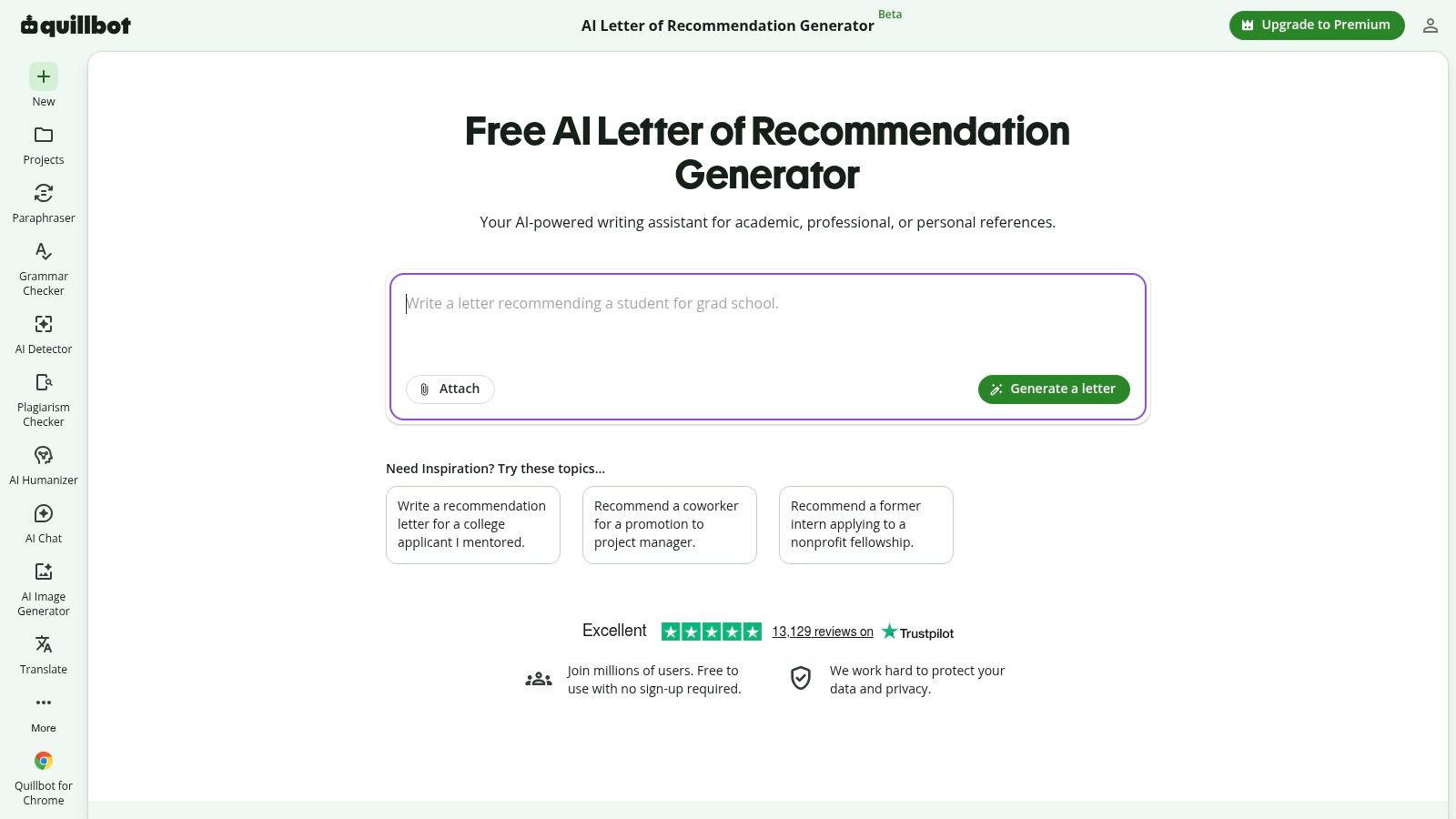
QuillBot is one of the easier picks when speed matters and you know you'll need revision passes after the first draft. Its dedicated generator asks for the relationship, the candidate's achievements, and the context, then turns that into a full letter that already feels closer to a usable document than a loose paragraph blob.
That matters because most recommendation writing doesn't fail at opening a blank page. It fails during cleanup. QuillBot's advantage is that drafting and polishing live in the same environment, so you can generate, rewrite, tighten, and adjust tone without bouncing between tools. If you already think in workflows, that makes it a practical fit for professional creators building repeatable systems, much like the broader stack covered in these best AI tools for content creators.
Where QuillBot Works Best
For managers, editors, and creators who write a few letters per month, QuillBot is usually enough. You can get a first pass quickly, then use the rest of the suite to strip out repetitive phrasing and overblown adjectives.
- Best use case: Fast first drafts when you already have strong notes or bullet points.
- Big advantage: Editing tools sit beside the generator, so refinement is fast.
- Main limitation: Thin inputs produce thin letters.
Practical rule: If you only give QuillBot a role, a timeline, and “hardworking,” it will return something serviceable but forgettable. Feed it one concrete anecdote and one specific accomplishment.
If you want a companion prompt workflow for getting better raw inputs before drafting, pair this with an AI prompt creation tool.
You can try QuillBot directly at the QuillBot AI Letter of Recommendation Generator.
2. Jotform – AI Recommendation Letter Generator
A common failure point in recommendation writing happens before the draft starts. The requester sends a loose email, key details arrive in fragments, and the final letter has to be rebuilt from follow-up messages and half-remembered context. Jotform is useful because it fixes that intake problem first.
That makes it a strong option for schools, HR teams, scholarship committees, and creator-run businesses that get recurring recommendation requests. Instead of treating each letter like a one-off favor, you can treat it like a documented professional workflow. For anyone managing a content business, that matters. Recommendation letters are still reputation assets, and better inputs protect both your time and your brand.
Jotform's edge is structure. You can collect role details, relationship length, achievements, deadlines, and supporting examples through a form, then turn that material into a draft without chasing people for missing context. Teams building repeatable systems will recognize the pattern from broader work in human and AI collaboration for content workflows.
Where Jotform Fits Best
Jotform works best when consistency matters more than prose style on the first pass. It gives administrators and busy professionals a cleaner way to gather the facts that make a letter credible.
- Strong fit: Recurring recommendation requests with the same approval or review steps
- Best advantage: Structured intake reduces vague drafts and unnecessary follow-up
- Main limitation: Distinctive voice still requires hands-on editing
The trade-off is straightforward. Jotform helps you get organized, not original. If the goal is a polished, highly personal endorsement for a standout applicant, plan to revise the AI draft so it sounds like a real person with direct knowledge of the candidate. If the goal is getting from request to usable draft without administrative drag, Jotform does that well.
Good recommendation letters usually need enough substance to cover context, evaluation, and a clear closing endorsement. Jotform's form-first setup helps you collect that material before the writing begins, which lowers the odds of producing a thin, generic note.
You can use it at the Jotform AI Recommendation Letter Generator.
3. Venngage – AI Letter of Recommendation Generator
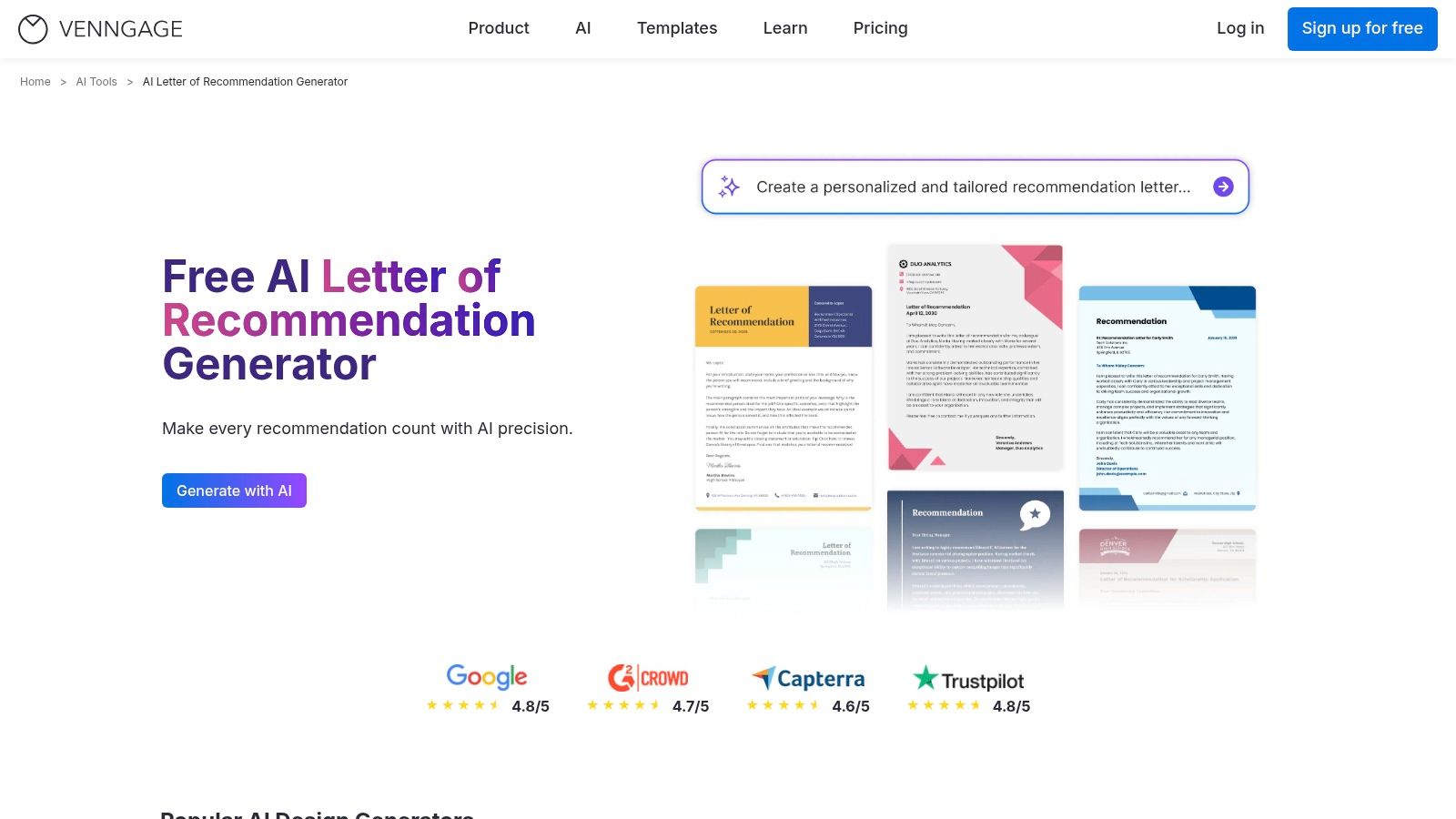
Venngage is the visual person's recommendation tool. If your professional brand depends on polished presentation, branded stationery, and export-ready PDFs, Venngage gives you a cleaner path than most text-only generators.
That doesn't mean design should overshadow substance. It means the final document can look like it belongs to a real organization instead of a rushed Word file from ten years ago. For publishers, agency leads, and content executives, presentation is part of trust. A recommendation letter is still content, and format shapes how seriously it's received.
Best for Brand-Conscious Professionals
Venngage is more useful when the letter is part of a polished external communication package. Think scholarship recommendations on branded letterhead, executive references, or publisher correspondence where visual consistency matters.
A well-designed letter won't rescue weak content, but poor presentation can undermine a strong endorsement.
Its writing depth is lighter than a dedicated long-form workspace, so expect to bring your own specificity. Where it shines is in turning a decent draft into a professional artifact. That's especially relevant for teams thinking seriously about human and AI collaboration, where AI handles draft velocity and humans handle judgment, tone, and final polish.
- Use Venngage when: Brand consistency and export quality matter.
- Skip it when: You want the deepest writing assistance inside the drafting environment.
- Nice bonus: PDF-friendly output is straightforward.
Try it at the Venngage AI Letter of Recommendation Generator.
4. LetterWise
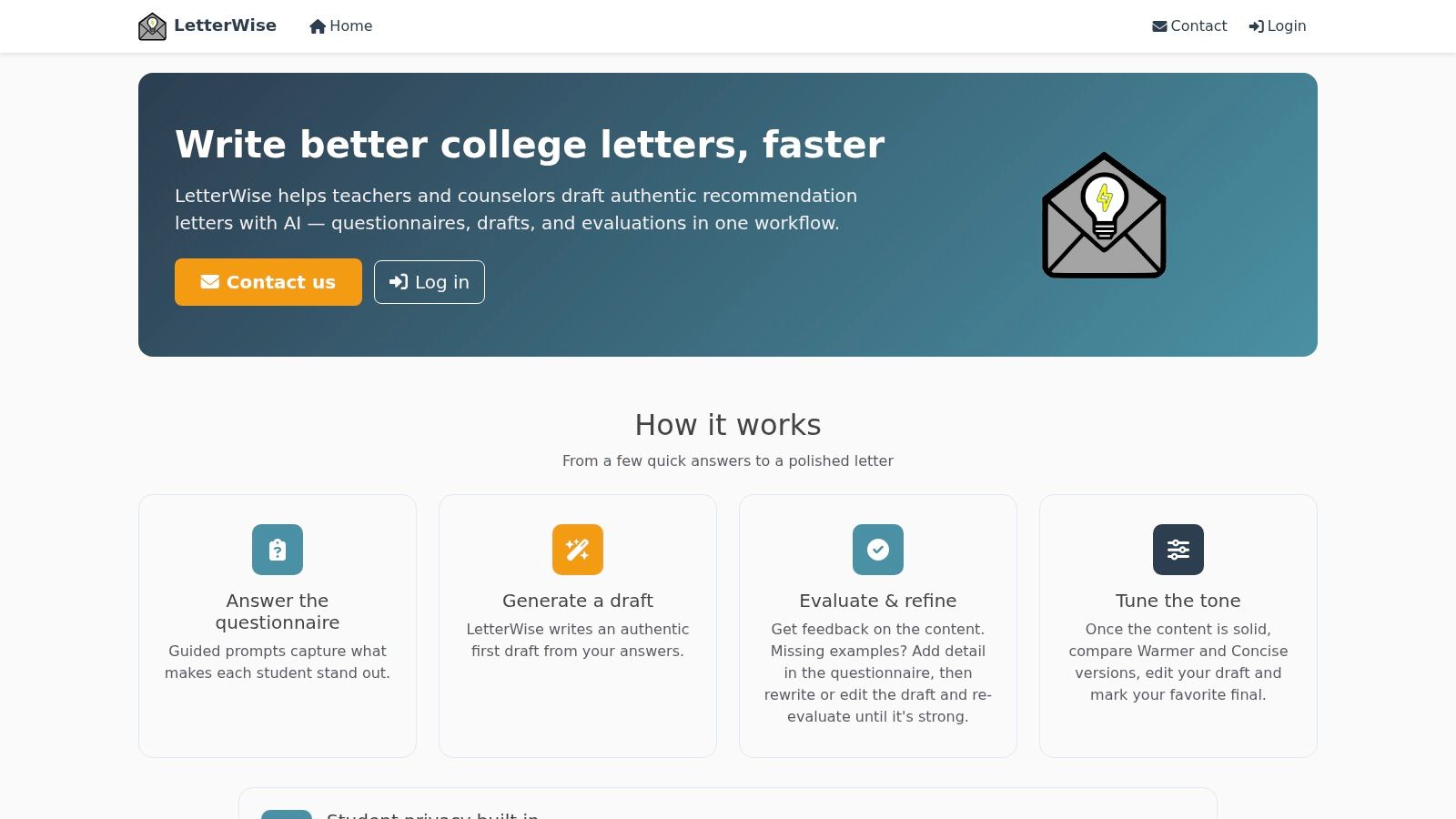
LetterWise is narrow by design, and that's exactly why some people will prefer it. It focuses on U.S. teachers and counselors writing college and scholarship recommendations, which means the prompts, tone controls, and workflow are built around education-specific reality rather than generic business correspondence.
That focus helps in a category where context matters a lot. Academic letters often need a different rhythm than workplace references. They need room for classroom observation, character, fit, and endorsement without slipping into résumé summary mode.
Why Educators May Prefer It
The most interesting part of LetterWise is its effort to preserve the recommender's voice while also using privacy-conscious handling during AI processing. For schools and counselors, that isn't a side feature. It's a core trust issue.
This tool isn't the one I'd hand to a startup founder writing a quick referral for a former contractor. It is the one I'd look at if I were managing a stack of student letters and wanted a system aligned with school expectations instead of generic AI copy habits.
- Best fit: Teachers, counselors, and college advising workflows.
- Standout feature: Educator-focused questionnaires and tone controls.
- Trade-off: Less versatile outside education.
If your recommendation work is mostly academic, the specialization is a strength. If your letters span employees, clients, collaborators, and students, the narrow focus may feel limiting.
You can explore it at LetterWise.
5. Brisk Teaching – AI Letter of Recommendation Generator
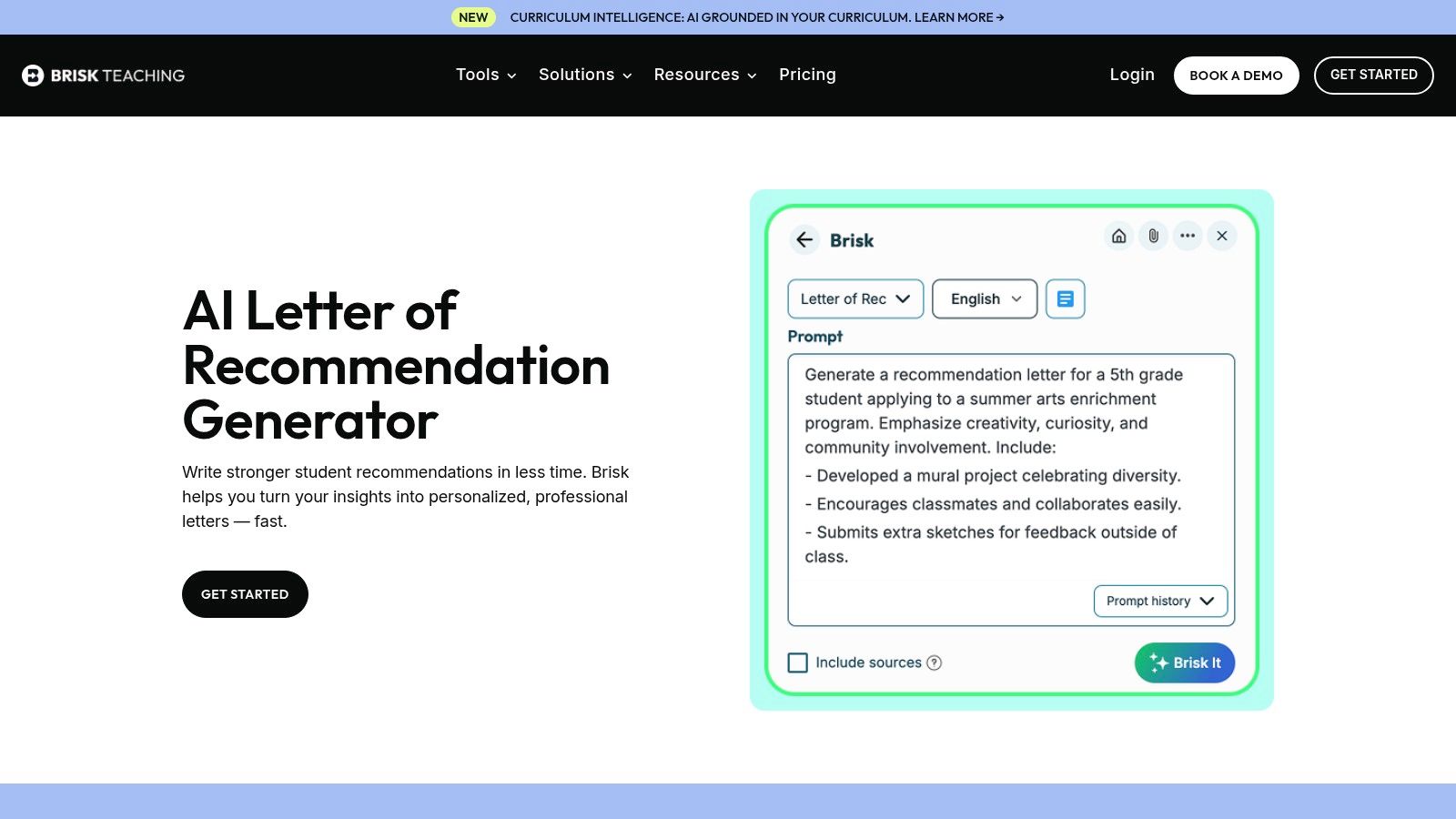
A teacher gets three recommendation requests in the same week, each for a different program, each needing a slightly different angle. That is the kind of workload Brisk Teaching is built for.
Brisk handles recommendation letters like a repeatable school workflow, not a one-off writing task. The guided prompts reduce the time lost to blank-page starts, and the education-specific framing helps teachers produce letters that still sound grounded in real classroom observation. For creators and professionals who treat correspondence as part of their broader content system, that matters. A recommendation letter still reflects your judgment, your standards, and your personal brand.
Built for Throughput, With Teacher Context
Brisk is strongest in environments where volume is the primary problem. A single strong letter is manageable in any doc editor. Ten letters during admissions season is where process starts to matter.
Its value is less about fancy prose and more about controlled drafting. The step-by-step flow helps the writer cover the details that make a letter persuasive: how long they have known the student, what the student did well, and what kind of opportunity they are being recommended for. That structure protects quality when time is tight.
It also solves a coordination problem for schools. If a department wants more consistency across letters without forcing everyone into the same stiff template, Brisk gives them a middle ground. Teachers keep their voice, but the workflow nudges them toward stronger coverage and cleaner organization.
Workflow note: Brisk works best when the writer already has a clear example, a specific strength, and a real basis for endorsement. If those inputs are weak, the draft will sound generic no matter how good the tool is.
- Best use case: K through 12 educators and school teams handling recurring recommendation requests.
- Advantage: Guided drafting helps protect time and keeps letters structurally sound.
- Constraint: The product is tuned for education workflows, so it is less useful for client references, executive endorsements, or general business correspondence.
If your recommendation letters are part of a repeat process, Brisk can save meaningful time without turning your writing into canned copy. You can test it through the Brisk Teaching recommendation letter generator.
6. Template.net – Free AI Recommendation Letter Generator
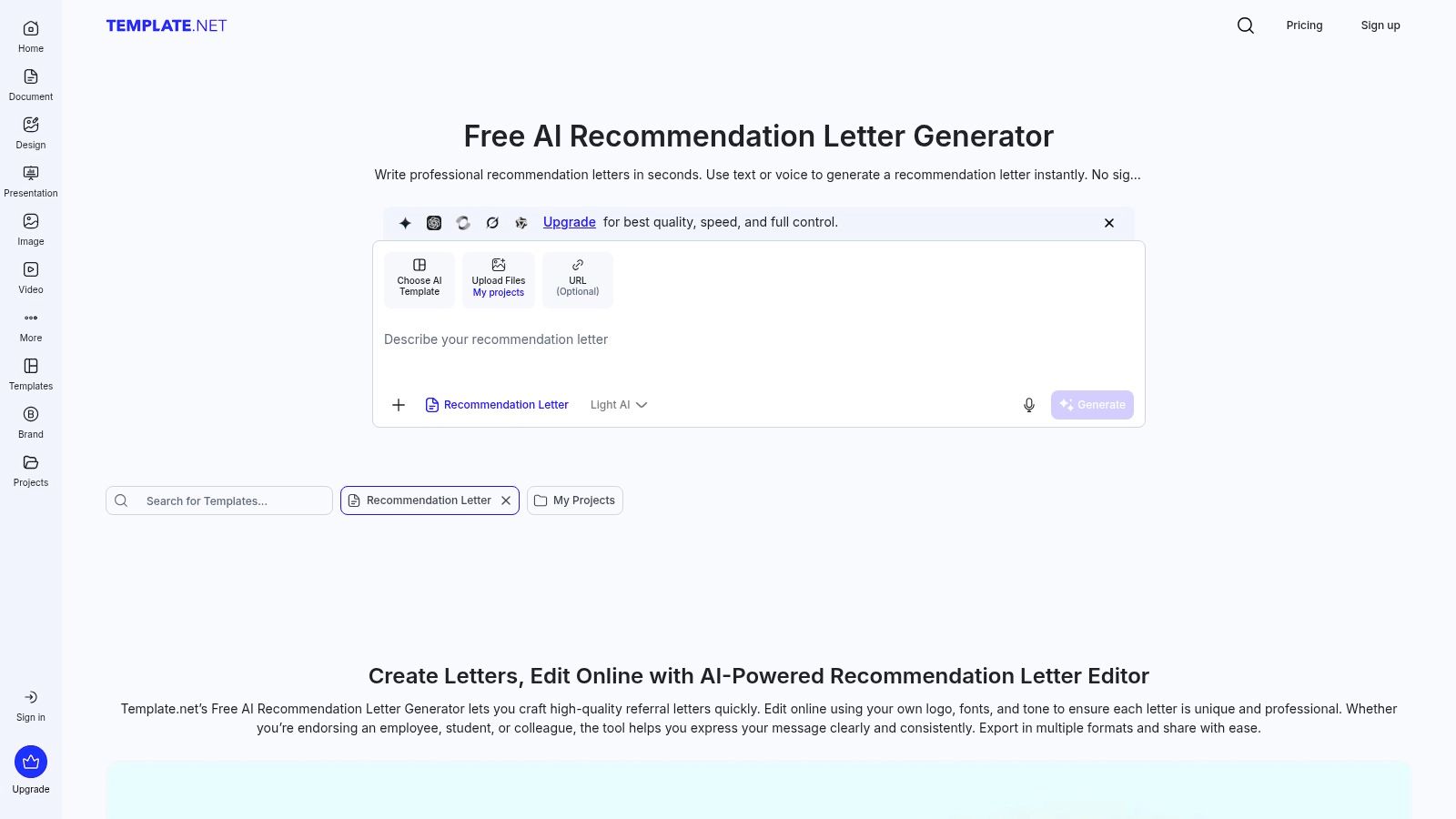
A recommendation request often lands at the worst time. You have enough context to support the person, but not enough time to draft from a blank page. Template.net fits that situation well. It gives you a usable draft fast, along with templates that cover common academic and workplace scenarios.
That makes it a practical tool for creators, consultants, managers, and educators who treat professional correspondence as part of their brand. A recommendation letter is still published writing. It reflects your judgment, your standards, and the quality of the relationships you build. If you need to protect time without sending out sloppy copy, speed matters, but so does control.
Strong for Speed, Average on Substance
Template.net's value is straightforward. The prompts get you into a familiar letter structure quickly, and the template library reduces formatting friction. For occasional recommendation requests, that is often enough.
The trade-off is obvious after the first draft. Template.net can organize a letter, but it cannot supply the evidence that makes the endorsement credible. If your inputs are vague, the result will sound vague. That is the risk with any fast generator, but it matters more here because the product is optimized for convenience first.
I would use it for one-off requests, simple references, or situations where the relationship is clear and the facts are easy to summarize. I would not rely on it for a high-stakes letter tied to admission, promotion, or a selective opportunity without a careful editing pass.
- Best for: Occasional recommendation letters under deadline.
- Helpful feature: Ready-made templates across school and work use cases.
- Weak spot: The final quality depends heavily on the specificity of your prompt and edits.
A good draft from Template.net usually needs one more pass to sound like you. Add one concrete example, name the context of the relationship, and tighten the closing so the endorsement feels earned rather than formulaic. That small edit is where you protect your reputation and turn a generic output into professional content worth signing.
Use it at the Template.net AI recommendation letter generator.
7. Docaro AI – Free AI Letter of Recommendation Generator
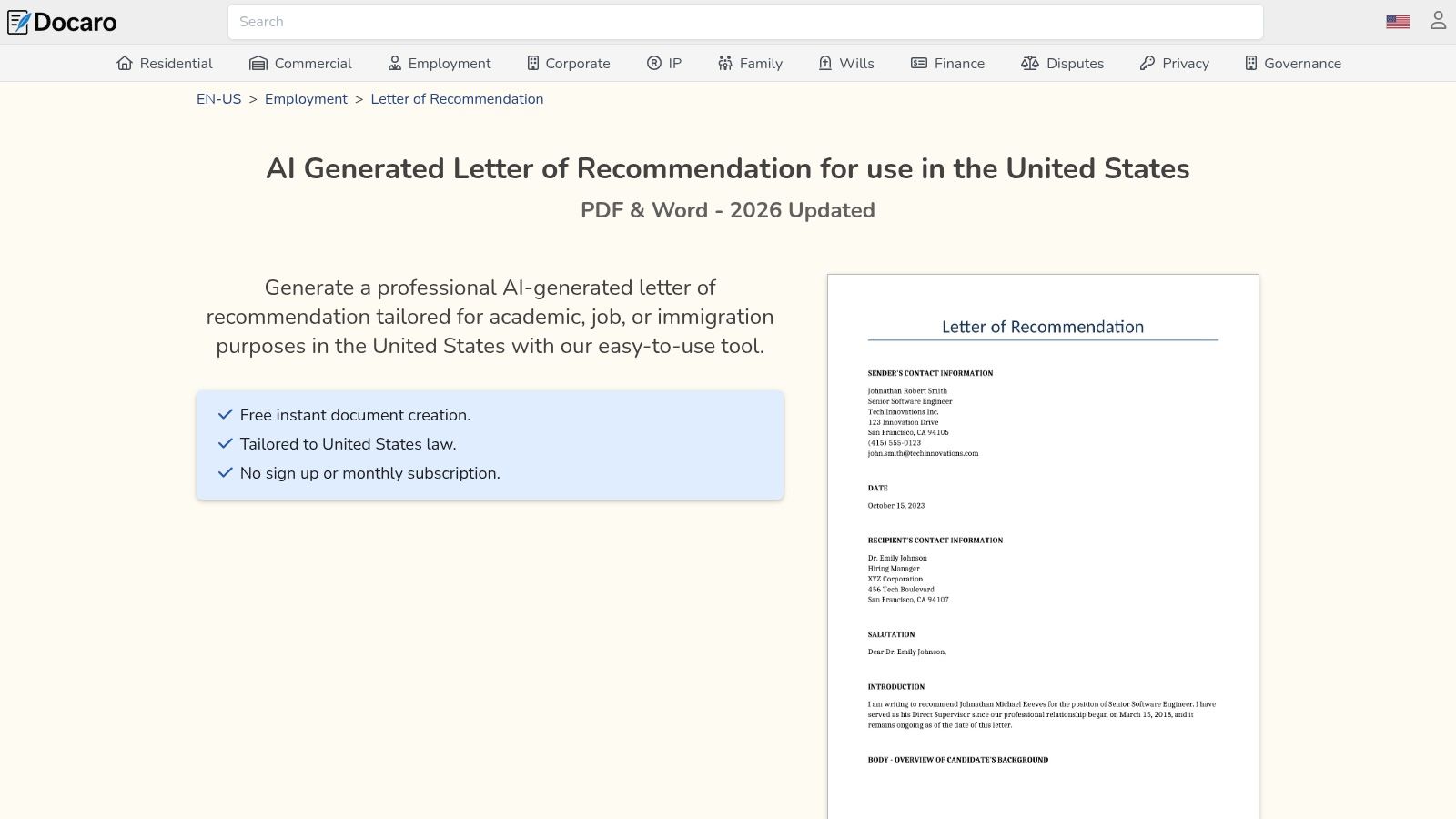
Docaro feels more like a document system than a writing assistant. That's not a criticism. In formal contexts, especially where wording, completeness, and export format matter, a form-like interface can be a benefit instead of a drag.
This is one of the better fits for users who want a structured recommendation process with multiple export options and a more formal, U.S.-oriented document mindset. Immigration references, official attestations, or formal employment recommendations often benefit from that approach.
Strong on Structure, Less Strong on Voice
Docaro's prompts help users move section by section, which reduces omissions. If you've ever received a recommendation request with scattered notes and half the context missing, that structure will feel useful.
The trade-off is creative flexibility. Narrative, voice-rich letters usually need a second editing pass elsewhere. If your letter depends on warmth, story, and highly personal phrasing, Docaro can feel constrained.
- Best fit: Formal references with export needs and structured drafting.
- Why choose it: Multiple file formats and section-by-section completion.
- Why skip it: It's less natural for highly expressive letters.
For many users, that's still a fair trade. In high-stakes formal documents, completeness often matters more than flair.
You can access it at the Docaro AI U.S. letter of recommendation tool.
8. InstantDocsAI – Recommendation Letter Generator
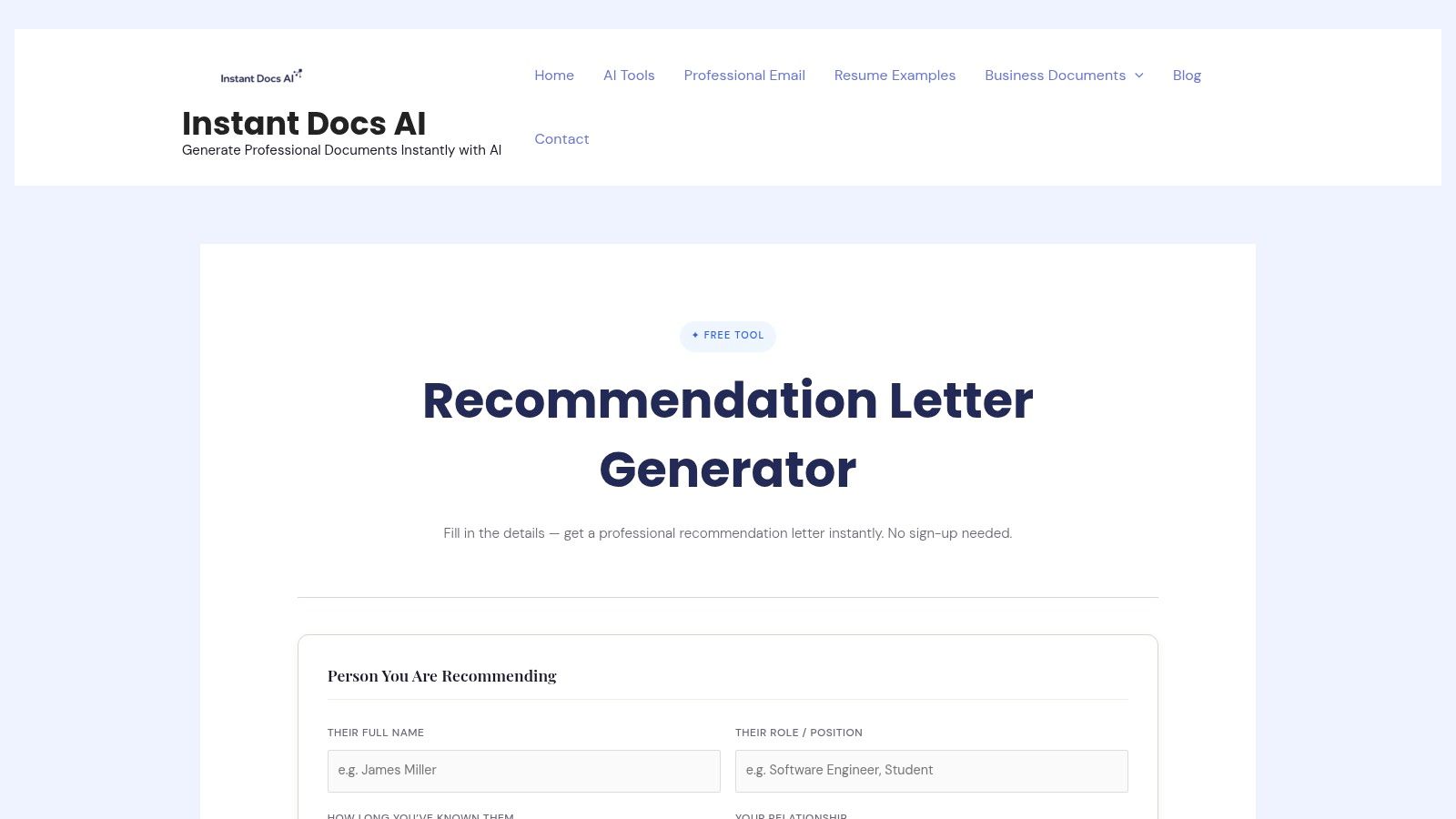
InstantDocsAI is for low-friction drafting. Open the page, enter the prompt, pick the scenario, and get a draft. No ecosystem, no elaborate setup, no heavy workflow logic.
That simplicity is the appeal. If you're helping with a quick internship reference, a student recommendation, or a short employee endorsement, it can move you from nothing to editable text in minutes. For occasional users, that's enough.
What You Gain by Keeping It Simple
The tool stays out of your way. That's useful when the alternative is procrastination or writing from scratch in a blank doc.
Keep your prompt specific. Name the relationship, the length of time you've known the candidate, one achievement, one character trait, and the opportunity they're pursuing.
The downside is obvious. Minimal controls mean the draft quality rises or falls based on your prompt. There isn't much built-in support for deeper revision, tone shaping, or brand consistency. If you're writing on behalf of an organization, you may want to generate here and edit somewhere more capable.
Try it at the InstantDocsAI recommendation letter generator.
9. Copy.ai – Letter of Recommendation Templates with AI
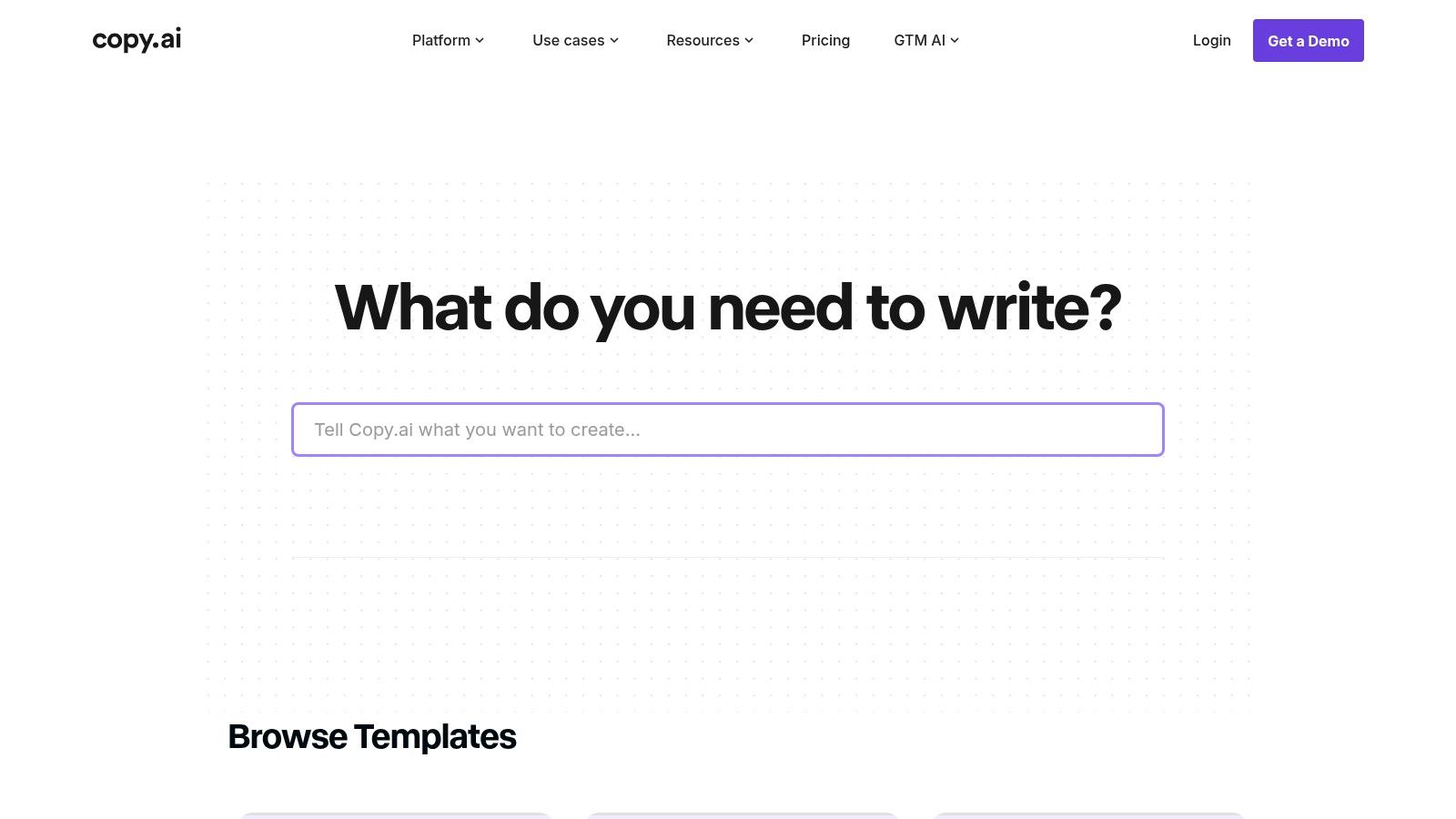
Copy.ai earns its place here for teams, not just individuals. If your organization already uses it for brand messaging, emails, bios, or campaign copy, adding recommendation letters into that same workspace can make operational sense.
That's the unique angle. A recommendation letter isn't isolated from the rest of your communication system. It reflects the same voice standards, editorial habits, and approval process as other professional content. Copy.ai handles that kind of cross-asset workflow better than narrow single-purpose generators.
Best for Teams with Content Operations
Copy.ai's templates accelerate the first draft, but the bigger value is standardization. Teams can create variants, keep shared references, and collaborate without building every document from scratch in disconnected tools.
- Best use case: Teams already using Copy.ai for broader content production.
- Key strength: Shared content environment for related assets.
- Main drawback: It lacks the niche recommendation guidance of educator-first tools.
There's also a broader behavioral lesson here. Conversational AI interfaces have shown strong adoption and conversion gains in some AI content settings, including a reported 4X increase in conversion rates and improvements reaching up to 150% in adoption scenarios in Envive's discussion of AI recommendation and conversational interfaces. That doesn't prove every letter tool will perform the same way, but it does explain why many users prefer AI drafting systems that feel interactive rather than rigid.
You can browse it at Copy.ai templates.
10. AI Letter Writer – Reference and Recommendation Letter Maker
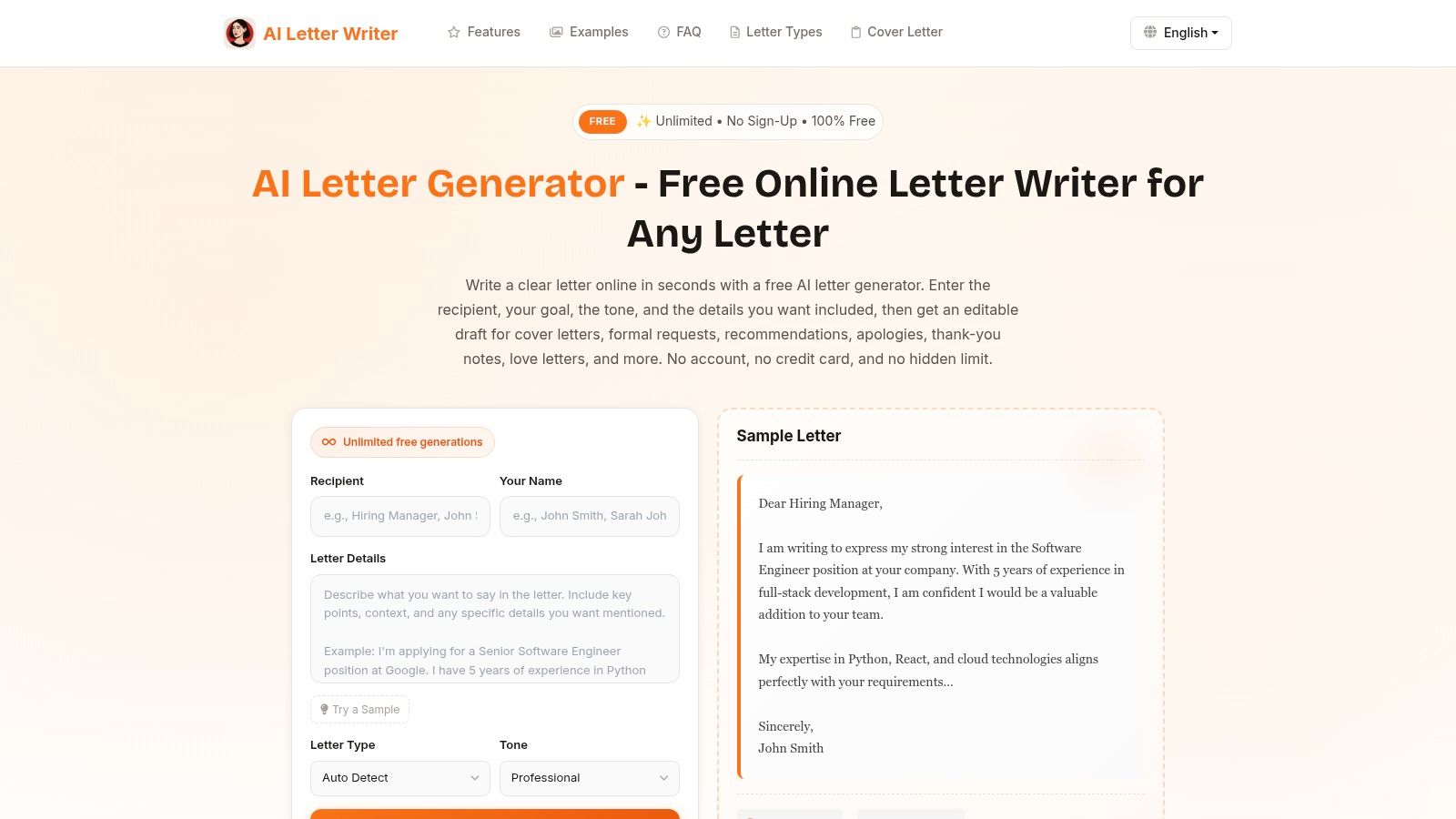
AI Letter Writer is a straightforward utility tool. It has a dedicated recommendation and reference mode, avoids sign-up friction, and gives you a structured starter without trying to become your whole writing workspace.
That makes it useful for simple situations. A former colleague needs a reference. A student asks for a basic endorsement. A client wants a character or professional note and you need a draft fast. This tool handles that entry-level use case well enough.
A Good Starter, Not a Finished Product
What I like about tools in this category is honesty. They don't pretend to replace judgment. They help you get moving. That's often all you need.
The limitation is also clear. You must personalize the output. If you send the first draft with generic praise still intact, the letter weakens your endorsement instead of strengthening it.
- Use it for: Fast starter text and low-friction drafting.
- Don't rely on it for: Deep nuance, institutional standards, or strong voice fidelity.
- Best next step: Edit the draft in your normal writing environment before sending.
For simple recommendation requests, that's often a perfectly reasonable workflow. Start fast, then humanize aggressively.
You can use it at AI Letter Writer.
Top 10 Letter of Recommendation Generators, Feature Comparison
| Tool | Target audience | Core features | UX / Quality | USP & Price |
|---|---|---|---|---|
| QuillBot – AI Letter of Recommendation Generator | General writers, professionals | Guided inputs, full formatted letters, in-suite rewriting & tone tools | Fast first drafts; outputs can be generic if inputs are sparse | Strong polishing/editor tools; Premium required for advanced features |
| Jotform – AI Recommendation Letter Generator | Teams using forms; HR/academia workflows | Scenario-specific prompts, structured capture, form+doc integration | Good for standardized workflows; less deep editorial control | Best for automated form-to-letter workflows; some automations require paid plans |
| Venngage – AI Letter of Recommendation Generator | Creators needing branded outputs | Quick LOR drafts, export to PDF, integrates with design suite | Simple interface; lighter writerly depth | Branded PDFs and stationery export; some design/export features paywalled |
| LetterWise | U.S. teachers & counselors | Educator questionnaires, tone controls, privacy redaction | Authentically preserves voice; education-aligned | Deep K–12/college alignment + privacy-first design; no public pricing listed |
| Brisk Teaching – AI Letter of Recommendation Generator | K–12 teachers & districts | Step-by-step flow, tone matching, admin controls | Structured for admissions expectations; district-ready | Forever-free Educator plan; district features paid/require buy-in |
| Template.net – Free AI Recommendation Letter Generator | One-off users needing quick drafts | Prompt/voice input, large template library, editable formats | Fastest route for passable draft; limited personalization | Free/no-signup starter drafts; export/edit features may be limited |
| Docaro AI – Free AI Letter of Recommendation Generator | Users needing structured/legal-style letters | Step-by-step prompts, DOCX/PDF/TXT/HTML exports, 30-day permalinks | Form-like interface; strong for formal contexts, less narrative | Multi-format legal-aware exports; suited for immigration/formal refs |
| InstantDocsAI – Recommendation Letter Generator | Students, interns, employees (quick use) | Single-screen prompts, scenario presets, no account needed | Very low friction; minimal in-tool editing controls | Extremely fast, no-signup drafts; quality tied to prompt detail |
| Copy.ai – Letter of Recommendation Templates (with AI) | Content teams & scale users | Templates, AI rewriting, tone/length adjustments, team libs | Good for standardized bulk creation; less LOR-specific guidance | Best for teams/scale; full collaboration features on paid plans |
| AI Letter Writer (ailetterwriter.org) – Reference/Recommendation Letter Maker | Casual users wanting starter text | Purpose-built LOR flow, tone/structure emphasis, no signup | Frictionless starter drafts; needs manual personalization | Simple, free starter drafts; few advanced controls |
Turn an Obligation into an Opportunity
A letter of recommendation maker is valuable for the same reason any smart content system is valuable. It reduces friction around work that matters. You still need judgment, memory, honesty, and specifics. But you don't need to waste hours rebuilding the same structure every time someone asks for your support.
That's the key shift. Stop treating recommendation letters as one-off interruptions and start treating them as repeatable professional content. They carry your voice, your standards, and your brand. When you use the right tool, you protect all three while freeing up time for the work only you can do.
The best choice depends on your context. QuillBot is strong for quick drafting plus in-place editing. Jotform is useful when intake and workflow matter as much as the final prose. Venngage helps when presentation is part of the value. LetterWise and Brisk Teaching are stronger when education-specific expectations drive the process. Template.net, InstantDocsAI, and AI Letter Writer are fine for low-friction first drafts. Docaro suits formal documentation better than expressive writing. Copy.ai makes more sense when recommendation letters sit inside a broader team content operation.
What doesn't work is handing everything to AI and calling it done. Readers can spot generic praise fast. A strong recommendation needs at least one real detail, a clear relationship, and a conclusion that sounds like a person willing to stand behind the candidate. That's where the tool ends and your responsibility begins.
There's also a bigger operational lesson here for creators, publishers, and professional teams. Recommendation letters are just one category of recurring content that tends to live in inboxes, scattered docs, and ad hoc workflows. When you organize those knowledge assets, build reusable prompts, and create cleaner collaboration between people and AI, you don't just save time. You gain an advantage.
That's why this topic connects so naturally to a broader content business strategy. The same discipline that helps you write better recommendation letters also helps you revive old interviews, repurpose research, standardize editorial systems, and turn archived material into new output. If you're already thinking this way, you'll probably appreciate adjacent professional guidance like this ATS-compatible resume reference advice.
Use the tool that matches your workflow. Keep the human specifics. Protect your credibility. That's how a recurring obligation becomes an opportunity to help someone else while keeping your own operation sharp.
If you're building a serious content business, recommendation letters are just one small example of a larger problem. Valuable knowledge gets trapped in old documents, emails, recordings, and scattered drafts. Contesimal helps creators, publishers, and teams organize that library, collaborate with AI in a practical way, and turn existing assets into new value across platforms. If you're moving from hobbyist output to a real revenue engine, it's a smart way to organize, understand, and take action on the content you already own.