
Every single podcast episode you’ve ever recorded is a goldmine of untapped content. Seriously. But if it only exists as audio, it’s basically invisible to search engines and a total nightmare to repurpose. The simple truth is that Spotify podcast transcripts are a strategic asset—not just some text file you generate and forget.
Unlock Your Podcast's Hidden Potential
With millions of podcasts out there, transcripts give you a powerful edge in discovery and audience engagement. It’s time to stop thinking of your audio library as just a collection of old episodes. Instead, see it for what it is: a deep well of expertise, stories, and data just waiting to be organized and understood so you can create new value.
When your content is locked away in an audio file, its value is fleeting. It only exists for the listener in the moment they press play. The second you convert that audio to text, everything changes.
This guide will walk you through how turning your spoken words into searchable text can skyrocket your visibility, make your content accessible to a wider audience, and build a content library that becomes the foundation for endless new projects. You’ll see how this one simple shift helps you organize, understand, and monetize your entire back catalog, reigniting your content library and bringing it to life.
Why Transcripts Are a Creator's Best Friend
For any podcaster serious about moving from hobbyist to professional, transcripts are non-negotiable. They are the bridge connecting your audio content to the text-based world of search engines and social media. This is especially true if you're a content marketer trying to align your message across multiple platforms.
Here’s how they completely change your workflow:
- Boost Your SEO: Let's be real—Google can't listen to your podcast. But it can crawl text like a champ. Putting a full transcript on your website for each episode makes every single word you've spoken searchable, pulling in new listeners who are searching for the exact topics you cover.
- Enhance Accessibility: Transcripts immediately open up your content to a much wider audience. This includes individuals who are deaf or hard of hearing, but also non-native speakers who find it much easier to read along than to follow fast-paced audio.
- Simplify Content Repurposing: Ever tried to find that one perfect quote for a social media graphic? Or that key statistic you mentioned for a blog post? It’s painful. Instead of scrubbing through hours of audio, you can just hit CTRL+F on a text file. Game-changer.
For the modern content creator, a transcript is the blueprint of your audio. It allows you to deconstruct an episode into its most valuable parts—quotes, key ideas, and memorable stories—and rebuild them into new forms of content.
Ultimately, this whole process is about creating infinite value from the work you've already done. By using a tool built to manage and analyze your content, like Contesimal, you can transform your archive from a passive storage unit into an active, revenue-generating machine. It lets you organize, collaborate, and take action on your content in a way that was never possible with audio alone.
How to Find Transcripts Directly on Spotify
Let's start with the most direct route—getting a transcript straight from the horse's mouth. Spotify has been slowly rolling out native transcriptions, a feature that automatically generates text for podcast episodes as they play. It's a fantastic move for accessibility and making content more discoverable, but its availability often feels hit-or-miss.
When the feature is there, finding it is pretty simple. On both mobile and desktop, just head to an episode's page. If a transcript is available, you'll see it by scrolling down past the show notes. It usually shows up as a card you can expand or a button that says "Read transcript."
Here’s what it looks like in the wild on the Spotify mobile app:
You can see how the text highlights as the audio plays, which is a really slick experience for listeners. But this is also where the dream ends for most creators.
Knowing the Limits
The hard truth is that most podcasts on Spotify simply don't have this feature, and it’s not something you can just flip a switch to enable. The rollout is currently limited to a handful of shows, mostly Spotify Originals and Exclusives. If you have your own podcast, don’t expect to see an auto-generated transcript pop up anytime soon.
This isn't Spotify being lazy; it's a matter of scale. With over 6 million podcasts on the platform in 2026, implementing a feature like this across the board is a massive technical lift. They're definitely invested, though. Spotify's own research, where they analyzed 5,000 episodes with auto-generated transcripts, proves they're serious about the power of text. You can dig into the full research about these podcasting trends on talks.co.
So, what does this mean for you, the creator?
- You Can’t Upload Your Own: There is currently no way to manually upload a transcript you've worked hard to create and have it show up in the Spotify app.
- Accuracy Can Be Shaky: The transcripts are all AI-generated. They’re often decent, but they can easily get tripped up by multiple speakers, strong accents, or industry jargon. You definitely wouldn't want to copy-paste one directly to your website without a thorough edit.
- You Have Zero Control: Since it’s all automated on their end, you have no say in the final transcript or whether your show gets one at all.
Spotify’s native transcripts are a nice perk for listeners, but they are not a reliable tool for creators looking to repurpose their content. Think of it as a bonus for your audience, not a pillar of your content strategy.
If your goal is to build a searchable archive, boost your SEO, or chop up your back catalog into new content, you can't sit around waiting for Spotify. You need a more direct and dependable way to get your hands on accurate text. This is exactly where dedicated transcription services and platforms like Contesimal come in, giving you the control you need to truly own your content library.
Choosing the Right Transcription Toolkit
So, you've hit a wall with Spotify's native transcripts. Maybe they're not there, or maybe the quality just isn't cutting it. It happens. Relying on inconsistent, built-in features isn’t a real strategy if you're serious about building a content engine.
To truly take command of your Spotify podcast transcripts, you need a dedicated toolkit. This usually means looking at third-party transcription services, which break down into two main camps: AI-powered platforms and human-powered services. This isn't just about picking a tool; it's a strategic decision that shapes your workflow, budget, and the final quality of the transcript itself.
AI Speed Versus Human Precision
AI transcription tools are blazing fast and pretty easy on the wallet. You can upload an audio file and get a full transcript back in minutes. If you're a solo creator who just needs a "good enough" draft to pull quotes or find specific segments, this can be a perfect solution.
The trade-off? Accuracy. These automated systems can get tripped up by multiple speakers talking over each other, niche jargon, or heavy accents. You'll likely end up with a text file that needs a fair bit of cleanup.
Human transcription, on the other hand, is all about precision. A professional transcriber can easily navigate complex conversations, correctly identify who's speaking, and pick up on the nuance that AI often misses. That level of quality comes at a higher price and takes longer—think a 24-48 hour turnaround. This is the way to go if you're a publisher wanting to grow the value of your content or using the text for research where every word counts.
This decision tree gives you a simple way to think through your transcription needs, from checking for native options to picking an outside service.
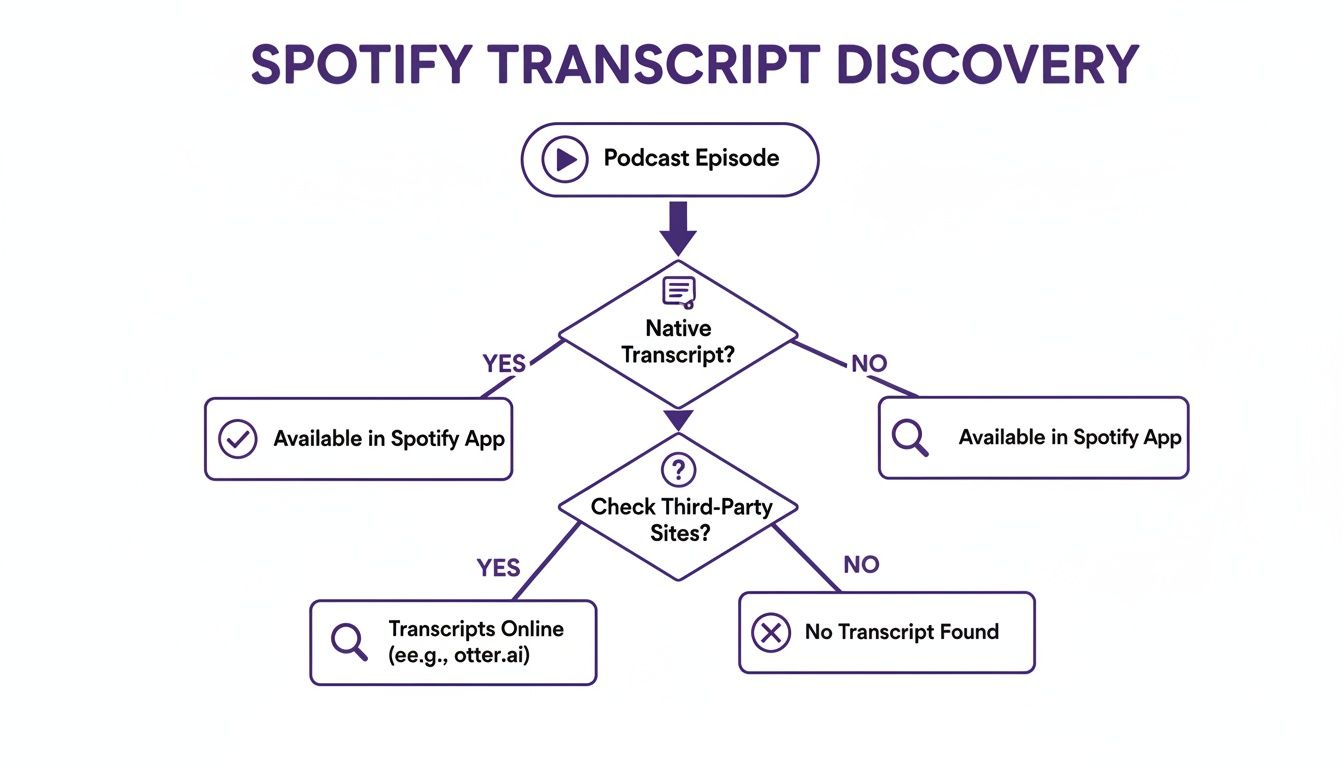
As you can see, if the built-in transcripts don't work out, your choice really boils down to how much accuracy you need versus what your budget and timeline look like.
When you're trying to figure out the best way to get your podcast episodes transcribed, you have a few solid options. Each one has its own set of pros and cons, especially when it comes to accuracy, cost, and speed.
Comparing Podcast Transcription Methods
A comparison of key features, costs, and best-use cases for different transcription methods, helping creators choose the right option for their needs.
| Method | Typical Accuracy | Cost | Turnaround Time | Best For |
|---|---|---|---|---|
| Spotify Native | 80-90% | Free | Instant | Quick, informal text versions for accessibility. Not ideal for repurposing. |
| AI Services | 90-95% | $0.10-$0.25/min | Minutes | Solo creators on a budget, internal content mining, first drafts. |
| Human Services | 99%+ | $1.25-$2.50/min | 24-48 hours | Polished blog posts, multi-speaker interviews, technical or legal content. |
| Hybrid (AI + Human Edit) | 99%+ | Varies | Hours-Days | A balanced approach for high-quality content without the full human cost. |
Choosing the right method really just depends on your goals for that specific piece of content. There's no single "best" answer—only what's best for your immediate needs.
Making the Right Investment
Your choice ultimately comes down to what you plan to do with the transcript.
Are you building a searchable archive inside a platform like Contesimal where you and your team can collaborate? A decent AI transcript is probably good enough. Are you turning the episode into a pillar blog post for your website? Investing in a human review is definitely worth it. When evaluating options, consider using a professional transcription service to guarantee both accuracy and efficiency.
Here’s a quick way to think about it:
- For quick content mining: A low-cost AI service will let you scan episodes fast to find quotes, clips, and ideas for social media.
- For public-facing content: Start with an AI transcript to get the bulk of the work done, then have an editor (or yourself) clean it up before you hit publish.
- For maximum accuracy: Go with a reputable human transcription service, especially for complex interviews or episodes heavy on technical topics.
Many creators land on a hybrid approach. They use AI for speed and initial drafts, then invest in a human touch-up for their most important episodes. To see how transcription fits into a broader strategy, check out our guide on the best AI tools for content creators.
From Raw Text to a Polished Content Asset
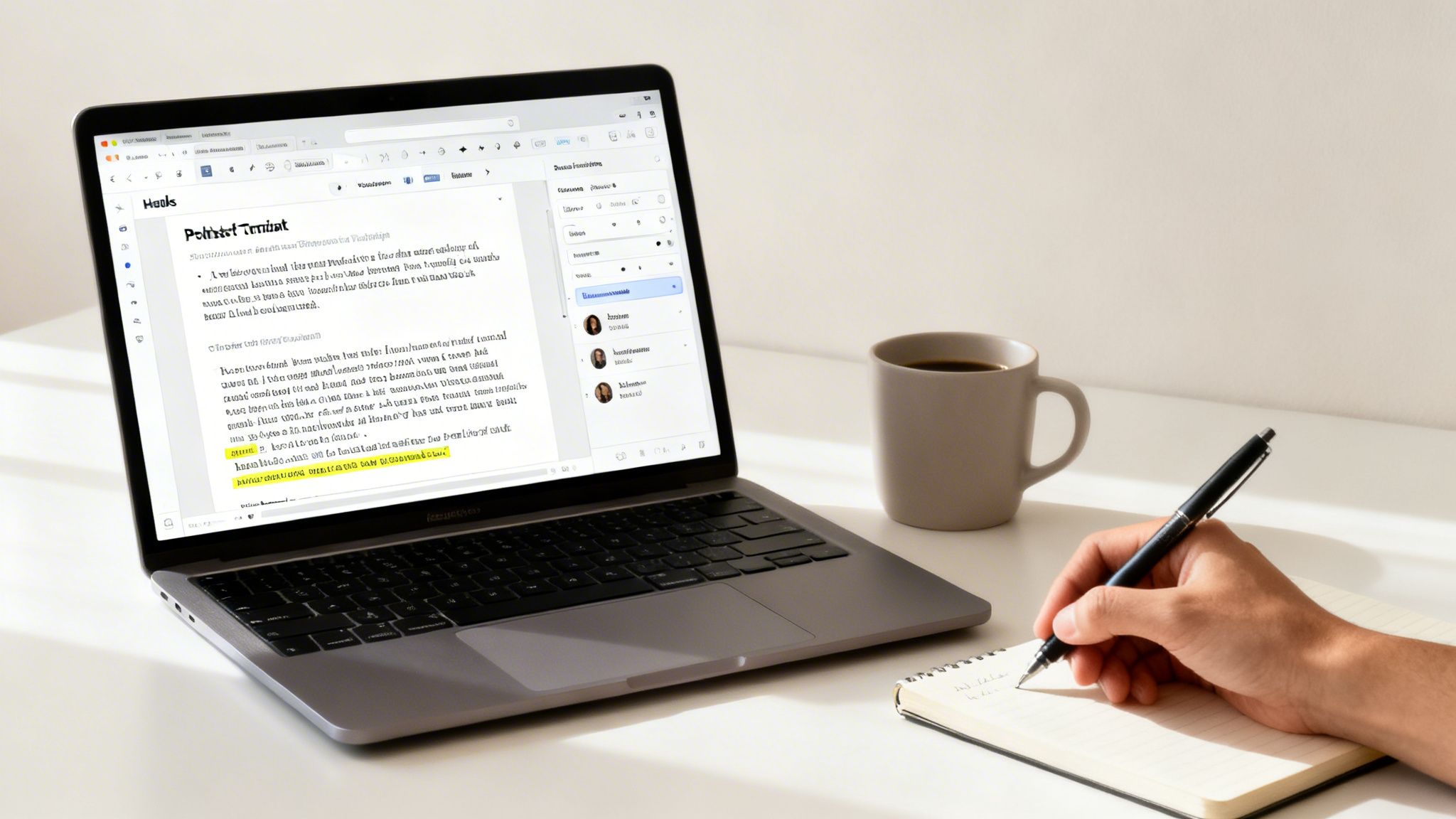
Getting your hands on a transcript is really just the starting line. The real magic happens when you transform that raw, often chaotic, stream of text into a polished and purposeful content asset. Let’s be real: an unedited, AI-generated transcript is rarely ready for the spotlight. It's a rough draft, not a final product.
Think of it this way: automated tools are incredible at capturing what was said, but they almost always miss the how. You’ll find punctuation errors, awkward sentence fragments, and jumbled speaker labels that can totally muddy the meaning of your conversation. This cleanup process isn't just about fixing typos; it’s about restoring the natural flow and clarity of the original audio.
The end goal is to get this content ready for your website, where it can pull its weight for SEO and give visitors a great experience. A messy, hard-to-read wall of text will only frustrate people and send them bouncing, which definitely won't help your search rankings or generate engagement.
Structuring Your Transcript for Readability
Your first editing pass should be all about structure and readability. Most AI transcripts land in your lap as a dense block of text, which is a huge turn-off for any reader. The key is to break it down into scannable, digestible pieces.
Start by adding descriptive subheadings every few paragraphs. This doesn’t just make the content easier to follow; it also gives search engines clear signposts about the topics you're covering. Look for those natural transition points in the conversation where the topic shifts—these are perfect spots for an H3 heading.
Next, attack the paragraph length. Keep them short and punchy, ideally no more than two or three sentences. This creates that all-important white space, making the page feel less overwhelming and much more inviting to read on a screen.
Finally, dive into the dialogue itself:
- Correct Speaker Labels: Make sure every speaker is clearly and consistently identified. Misattributing quotes is confusing and looks sloppy.
- Fix Punctuation: Sprinkle in the commas, periods, and question marks needed to create proper sentences that flow naturally.
- Remove Filler Words: Edit out the "ums," "ahs," and repetitive phrases that don't add any real value to the text.
Editing isn't just about grammar; it's about translating the rhythm of spoken conversation into a format that works for written text. The aim is to preserve the speaker's voice while making the content effortlessly readable.
Adding Value Beyond the Text
Once your transcript is clean and well-structured, you can start layering in extra value. This is where you elevate a simple text file into a comprehensive resource that truly serves your audience and your brand. For instance, you could link out to relevant articles, define key terms, or even embed related videos right in the text.
Going beyond a simple transcript, you can transform the text into concise assets like podcast summaries, which can seriously boost their value and reach, no matter where they live. The more you enrich the transcript, the more it becomes a central hub of knowledge for that episode's topic.
This whole process is a core part of turning your old content into new money-makers. When you learn a few effective content repurposing strategies, you start to see how one polished transcript can become the foundation for dozens of new content pieces.
Putting Your Transcripts to Work
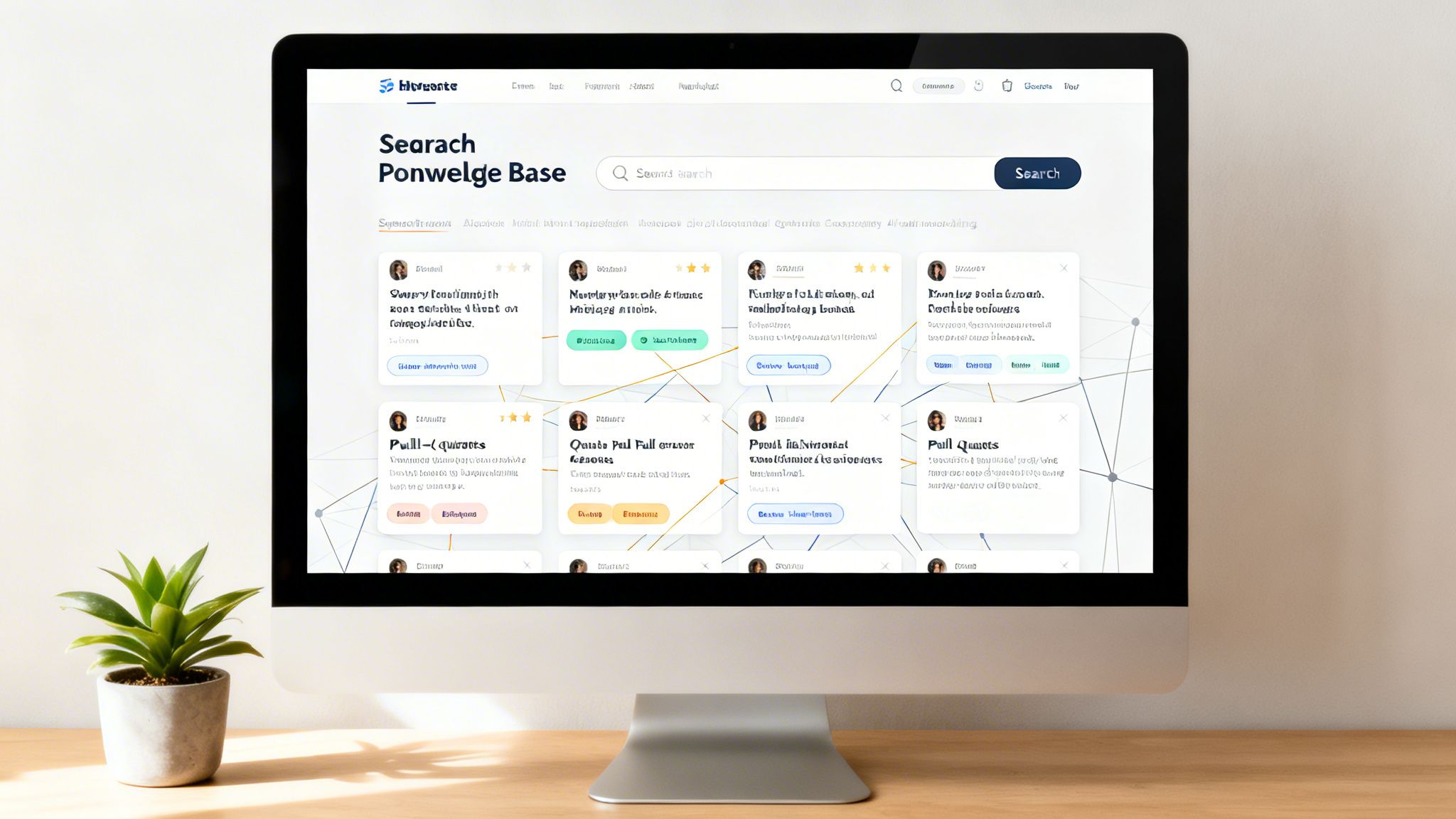
Alright, you’ve got a clean, polished transcript in hand. Now what? This is the moment your content library shifts from a passive archive into an active, intelligent part of your business. A raw transcript is just a document; an activated transcript is a searchable, monetizable asset ready to work for you.
This isn't just about storage. It's about making your content work smarter. Forget scrubbing through hours of audio to find that one perfect quote. With the right tools, you can let humans and AI collaborate seamlessly, turning you from a creator into the architect of your own valuable knowledge base.
Build a Searchable Home for Your Expertise
First things first, you need to get those polished Spotify podcast transcripts into a central hub. A platform like Contesimal is built for exactly this—it lets you create a unified library of your own expertise. Once everything is in one place, you can start asking it questions.
Ever needed to remember every single time you mentioned a specific guest, a product, or even just a concept across hundreds of episodes? Instead of racking your brain, you can run a quick search and get instant answers, complete with timestamps and context.
This is huge, especially now. The podcasting world is crowded, with Spotify hosting nearly 7 million podcast titles as of early 2026. If you have a deep back catalog, you're sitting on a massive, untapped goldmine. Indexing these old episodes makes them searchable, turning a dormant archive into an engine for growth and revenue.
Uncover Hidden Themes and Fresh Ideas
With a searchable library, the real fun begins. AI-powered tools can scan your entire collection and reveal patterns you didn't even know were there.
- Spot Recurring Themes: Pinpoint the core topics you naturally gravitate toward. This is gold for planning your next video or experimenting with new content.
- Pull Shareable Quotes: Instantly grab the most powerful, tweet-worthy lines from any episode. No more manual searching.
- Find Compelling Data: Isolate every statistic or data point you've ever cited. Suddenly, your own archive becomes a research tool for new blog posts or videos.
When you treat your transcript library like a dataset, you stop guessing what to create next. You move from reactive content creation to a proactive, data-informed strategy.
Real-World Content Repurposing in Action
Let’s make this practical. A searchable library makes repurposing almost effortless.
Think about it: one 60-minute podcast can be sliced and diced into a dozen smaller assets. You could easily find a killer 3-minute story to turn into an audiogram for Instagram, pull five key takeaways for a LinkedIn post, or even stitch together related segments from multiple episodes for a "greatest hits" compilation.
This process—organizing, understanding, and acting on your own content—is what separates hobbyists from revenue-generating creators. It’s how you reignite your content library and bring it back to life. For a deeper dive into making your content more discoverable, check out our guide on optimizing content for search engines.
A Few Common Questions About Podcast Transcripts
Once you start using transcripts in your content strategy, a few questions always seem to come up. Digging into the world of audio-to-text can feel a little technical at first, but the core ideas are pretty simple. Here are some straight answers to the questions I hear most often from creators.
Can I Get Transcripts for Any Podcast on Spotify?
No, at least not directly through Spotify’s own features. The platform has been slowly rolling out auto-generated transcripts, but for now, it's mostly for their own shows—think Spotify Originals and Exclusives.
This means for almost every other show out there, including your own, you'll need to generate the transcript yourself with an outside service. This is a must-do for any creator who wants real control over their content archive.
How Accurate Are Spotify's Auto-Generated Transcripts?
They’re a decent starting point, but they’re far from perfect. Spotify’s automated transcripts are fine for casual listeners who just want to follow along, but they often stumble over accents, multiple speakers, or any kind of specialized jargon.
You’ll almost always need to do a thorough manual edit before you’d ever want to publish one on your site as a blog post or pull quotes from it. For high-quality content you can actually repurpose, a dedicated transcription service is still the way to go.
Think of a raw AI transcript as a rough draft. It gets the words down, but it takes a human touch to fix the errors, restore the natural flow, and make sure it truly represents your brand before it goes public.
What Is the Best Way to Use Transcripts for SEO?
Hands down, the most effective move is to publish the full, cleaned-up transcript as a blog post on your website, right there with the embedded audio player for the episode. Just doing that one thing makes every single word you said in that episode crawlable by search engines.
You instantly create a rich, long-form piece of content packed with long-tail keywords related to your topic. Make sure to treat it like any other blog post: give it a strong title, a good meta description, and use descriptive subheadings to break up the text. This is how you turn an audio file into an SEO powerhouse.
Can I Use a Content Platform for Transcripts from Other Sources?
Yes, absolutely. A good content platform is source-agnostic—it doesn't care where your content comes from. This is where you really start to see the value of building out a proper content library.
You can pull in transcripts from any audio or video you own, whether it’s from Apple Podcasts, a YouTube video, a webinar recording, or a private audio file. This flexibility lets you bring your entire content history into one unified, searchable knowledge base. It's the key to organizing your expertise and finding new ways to monetize your whole back catalog.
Ready to stop letting your valuable conversations fade away? Contesimal is the platform that helps you organize, understand, and act on your entire content library. It's time to turn scattered podcast episodes into searchable, evergreen assets that actually drive growth. See what's possible at https://contesimal.ai.