
You've got the guitar on your lap, a half-finished track open in your DAW, and a phone full of notes about the “right” way to grow as a musician. The problem isn't finding advice, it's finding advice that helps you write better songs, record cleaner takes, and market your work without burning out. That's where the best podcasts for musicians earn their place, because the right show can become a working part of your creative process, not just background noise.
The musician podcast world is no tiny side corner either. Major directories already show a broad ecosystem, with 66 musician podcasts listed on Feedspot in 2026, 100 musician podcasts ranked by MillionPodcasts in the U.S., and Top 100 music-podcast lists surfaced by Podchaser and Goodpods, where rankings are based on listens, ratings, comments, subscriptions, and shares, according to the directory descriptions and curation pages tied to the Feedspot musician podcast roundup. Spotify's artist-facing curation also treats podcasts as part of career development, not just entertainment, through its musician podcast recommendations.
The trick is to listen with a purpose. Some shows sharpen songwriting, some make production decisions clearer, some help with release strategy, and some change how you think about your career. If you want to compare podcast formats and editing workflows while you build your own media library, you can also compare AI podcast editors.
1. Song Exploder
Song Exploder is the cleanest listen on this list if you want to understand how finished songs get built. Hrishikesh Hirway invites artists to take apart one track at a time, which makes the show a strong fit for producers, arrangers, and writers who learn by hearing decisions in context.
The best part is the granularity. You hear how a song moved from idea to arrangement, and that makes it easier to notice small choices around stems, sound design, and structure in your own sessions. It's not a classroom lecture, which helps, because the stories stay human and the episodes stay digestible.
Practical rule: If you're trying to improve one creative skill at a time, use each episode to isolate a single takeaway, then put it in your own show notes system.
Why it works for musicians
The show's format makes it easy to extract usable lessons without getting buried in jargon. That matters for musicians who want insight, not a technical tutorial that assumes a certain studio level or a specific DAW.
- Strong for arrangement: The episode focus on one song helps you hear how sections are stacked and why they land.
- Useful for sound design: Original creators often explain the texture choices that give a track its identity.
- Easy to revisit: Because the show stays centered on one record at a time, you can come back to a favorite episode when you need a creative reset.
The trade-off is obvious. This isn't a step-by-step production course, and the release cadence can vary, so it works best as a reference library rather than a weekly habit. If you want to turn those listening notes into reusable content, the show notes template is a smart place to organize what you hear into something you can act on.
2. Switched On Pop
A lot of musicians hear a hit and move on. Switched On Pop slows that reaction down and shows you what the song is doing. Charlie Harding and Nate Sloan break down contemporary tracks in plain language, so you get theory, production, and songwriting insight without sitting through a classroom tone.
That translation is the main reason this show earns a place in a working musician's queue. It connects melody, harmony, production, and cultural context to real creative choices, which makes the episodes useful when you are shaping a chorus, deciding how much space to leave in a verse, or choosing the sounds that define a track.
It also stays tied to current releases and current habits in listening. That matters if your work sits anywhere near pop, commercial songwriting, or sync-friendly production, because you can hear how familiar ideas are being refreshed right now.
Where it fits best
Use this show as research when you want a fast, practical takeaway before your next writing or production session. It is strongest for musicians who want to borrow what works in pop without copying it outright.
- Hook writing: You can hear why certain melodic turns stick and why some choruses feel immediate.
- Arrangement thinking: The episodes show how pacing, density, and payoff shape the arc of a track.
- Trend awareness: You get a clearer read on how current hits recycle familiar formulas in fresh ways.
The upside is the polish. The episodes are well edited, the analysis is clear, and the hosts have enough credibility to make the breakdowns worth trusting. The trade-off is focus. If your music lives in jazz, metal, experimental, or classical spaces, the pop center of gravity can feel narrow. Still, for musicians who want listening notes they can turn into better songwriting decisions, Switched On Pop does that job with very little wasted time.
3. Broken Record
Broken Record is built for perspective. With hosts such as Rick Rubin, Malcolm Gladwell, Bruce Headlam, and Justin Richmond, the show leans into long-form conversation about process, career arcs, and the mindset behind durable creative work.
That makes it especially good for musicians who feel stuck between inspiration and consistency. The show's interviews don't just celebrate success, they trace the decisions, habits, and values that keep artists moving over time. You won't always get a mixing lesson, but you will hear how serious creators think about longevity.
What you get out of it
The back catalog is large and well organized, which matters if you want to search by artist or era instead of sampling randomly. The curation also gives the show a sense of range, because the guest list includes current artists, major producers, and legendary names.
Some shows teach you a trick. Broken Record teaches you how top artists frame a career.
That's the main appeal. If your own work has started to feel tactical in the worst way, this show can reset your perspective without drifting into empty motivation. The trade-off is that the episodes often favor reflection over instruction, so it's not the best pick if you want exact studio moves or a quick marketing playbook.
4. Strong Songs
A song can sound simple on first listen and still be built on a lot of careful choices. Strong Songs is the show for hearing those choices clearly, because Kirk Hamilton breaks down form, groove, and arrangement from a musician's point of view. For intermediate and advanced listeners, that makes it one of the most useful podcasts on this list.
The episodes are detailed, but the detail has a job to do. Hamilton explains theory in plain language, then uses re-performed examples so you can hear why a section lands, why a chord move works, or why a rhythm feels locked in. If your goal is to improve your ear, write with more intention, or make better decisions about voicings, the show gives you material you can test against your own work.
Best use cases
Use it like a reference library, not background noise. The seasonal structure and episode index let you jump straight to a song you already know, which is better than waiting for a random episode to line up with your needs.
- Ear training: You hear what sits under the surface of a track, not just the finished polish.
- Composition: It gives you concrete ways to think about form, contrast, and payoff.
- Arrangement: You can study how parts are layered and why the arrangement holds together.
The trade-off is time. These episodes ask for attention, and some reward a second or third listen more than a quick pass. That makes Strong Songs less useful if you want fast studio tips or short promotional takeaways. If you want to study how songs are built, section by section, it works like active practice for your listening muscles.
5. Sodajerker On Songwriting
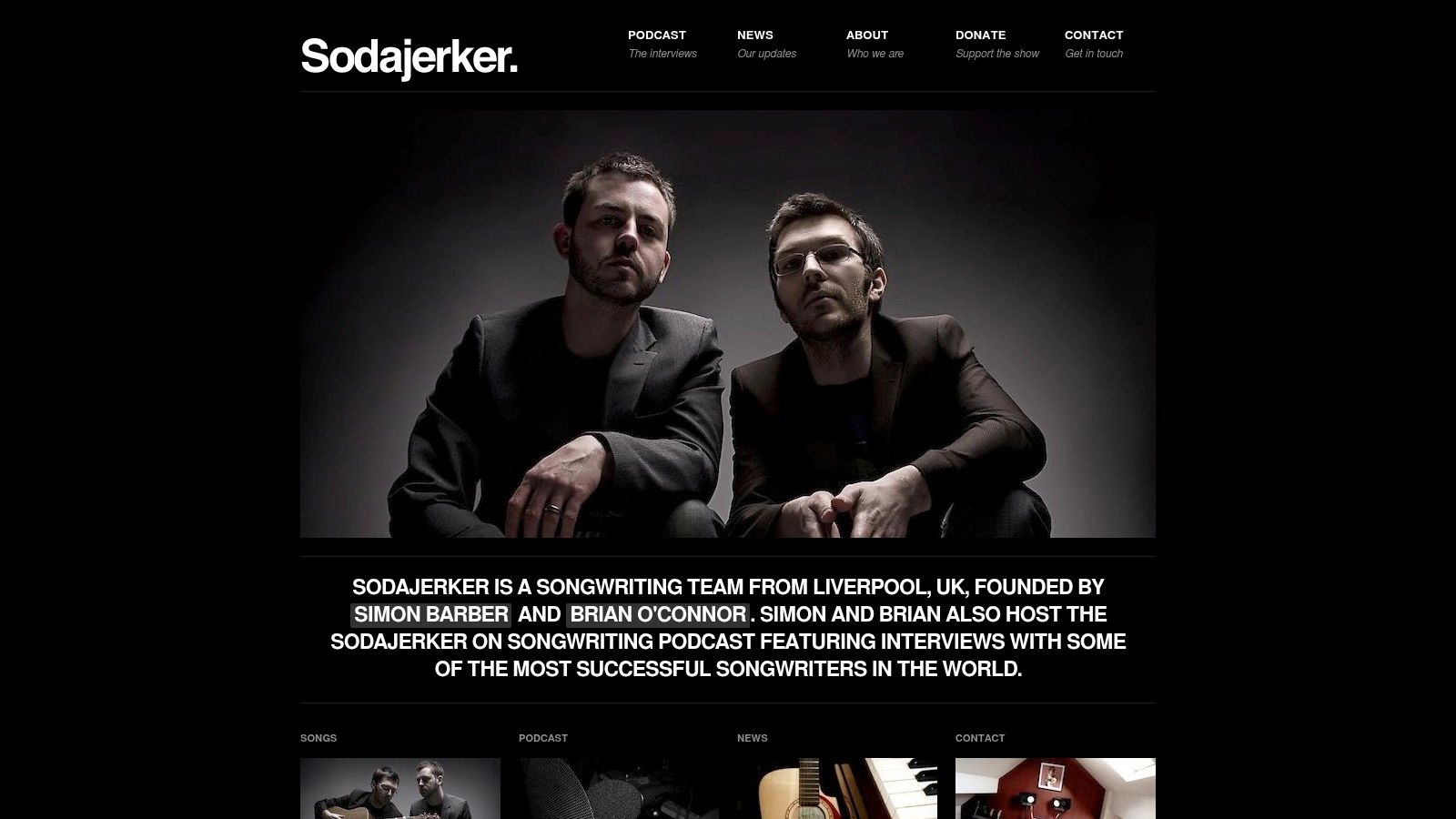
Sodajerker On Songwriting is a masterclass archive for anyone who cares about craft. Simon Barber and Brian O'Connor have built a huge body of interviews with major songwriters, and the range of guests gives the show a lot of practical value across genres and eras.
The tone matters here. It's conversational rather than flashy, and that makes it easier to focus on the actual decisions behind lyrics, melody, and collaboration. If you're a writer, there's a lot to mine from hearing how experienced artists talk about the mechanics of creating a song.
Why writers keep coming back
The catalog is deep enough that you can search by songwriter, topic, or theme, which is ideal when you're studying a particular craft problem. The ad-light flow also helps the episodes feel focused.
Useful filter: Start with guests whose writing approach already overlaps with yours, then use the archive to branch outward into unfamiliar methods.
The limitation is that the show doesn't spend much time on recording or mixing. It's a songwriting podcast first, and it stays there. That's not a flaw if your priority is lyric writing, collaboration, or melodic decision-making, but it does mean you'll want another show on this list if you need more studio-specific advice.
6. DIY Musician Podcast
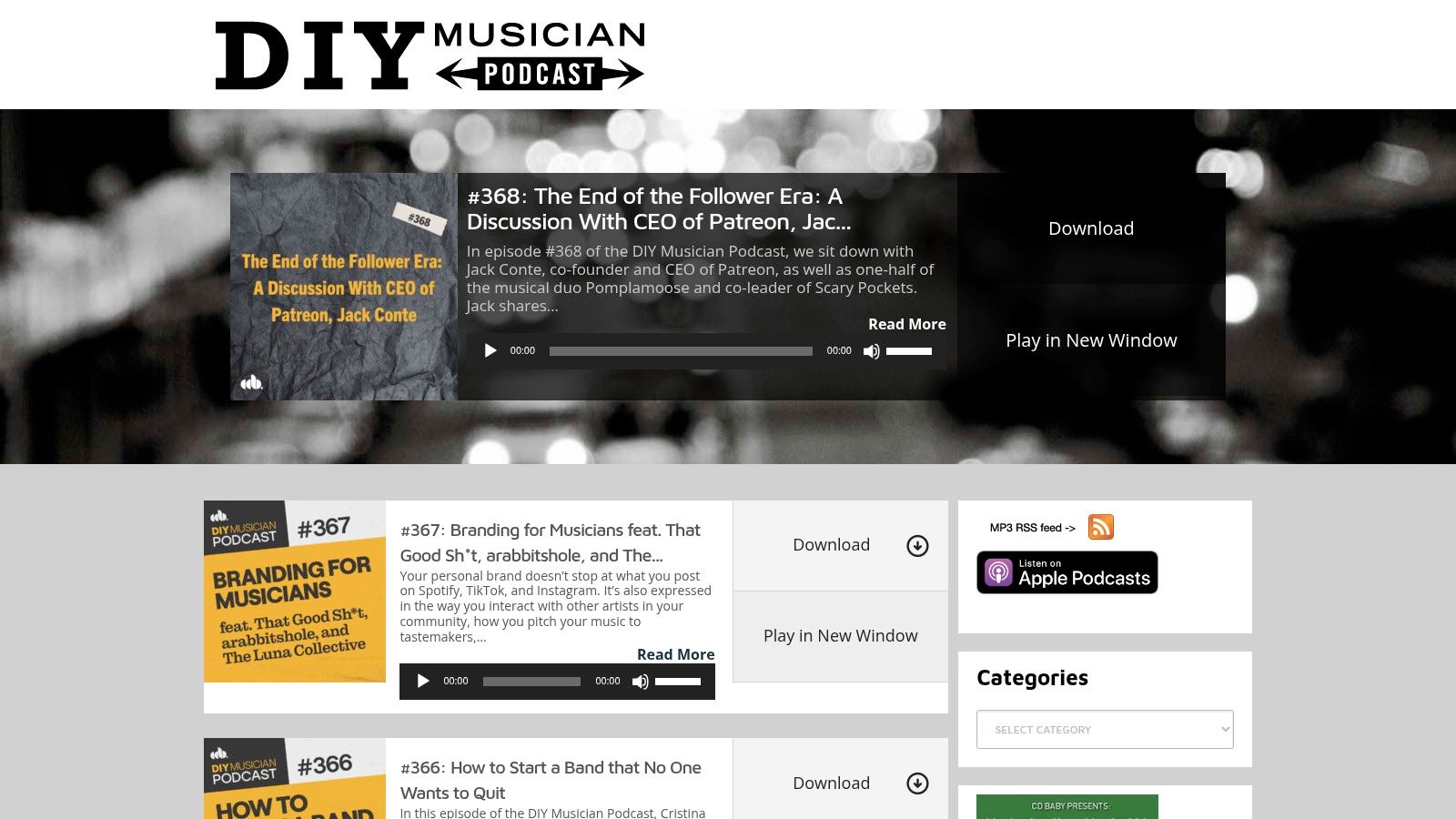
If you're self-releasing music, DIY Musician Podcast is the most directly career-focused show in this list. It covers release strategy, marketing, royalties, touring, social media, and indie workflows, so it gives independent musicians advice they can use right away.
A real advantage here is how operational the show feels. It spends less time on inspiration alone and more time on the mechanics of growing an audience, handling income streams, and making decisions without waiting for a label to step in. For musicians moving from hobby mode into a more professional routine, that kind of guidance is easy to act on.
What it helps you improve
The value is in how quickly the lessons turn into next steps. Listen with a notebook open, pull out one or two ideas, and test them against your next release cycle or campaign.
- Release planning: Useful for sequencing launches and mapping the basic rollout.
- Audience growth: Helps when you're trying to build momentum across platforms.
- Indie operations: Useful if you need a clearer view of royalties, touring, and platform updates.
There is a trade-off. Some advice naturally fits the CD Baby ecosystem, so not every recommendation will match your setup exactly. It also stays light on advanced audio engineering, which is fine because that is not the point of the show. If your priority is promotion, pair the episodes with a simple workflow for notes, follow-ups, and content decisions, and use this podcast promotion guide to turn the ideas into a repeatable system. If you need help setting up the recording side of that workflow, this guide to the equipment needed for a podcast is a useful place to start.
7. Tape Op Podcast
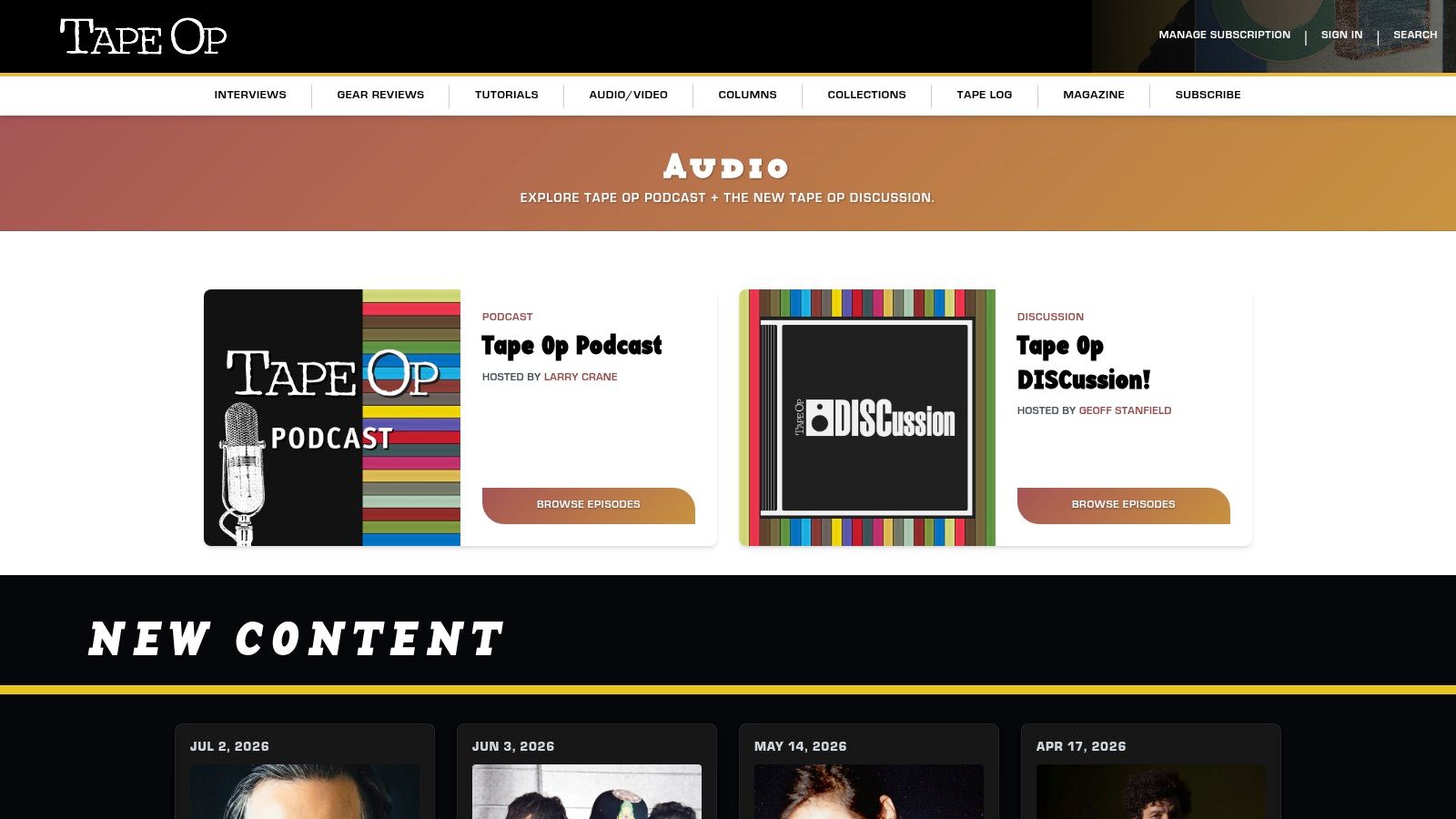
Tape Op Podcast fits musicians who spend real time thinking about the studio, whether they record at home, work with engineers, or just want a clearer picture of how records come together. It grows out of Tape Op recording magazine, and that background comes through in interviews that focus on techniques, sessions, and studio philosophy without drifting too far from the work itself.
A strong episode gives you usable studio language. You hear signal flow, mic choices, tracking decisions, and mix thinking in a way that maps onto real sessions, not abstract advice. If you need to speak more clearly with engineers or make better calls before you hit record, that practical vocabulary matters.
Why it earns a place here
The genre range helps because you are not stuck inside one recording culture. A metal producer, a folk engineer, and an indie mixer may solve problems differently, and hearing those differences makes your own decisions sharper. The connection to the magazine archive also gives the show extra depth if you like moving between listening and reading, then comparing how the same ideas are discussed in print and on mic.
Practical rule: Use this show when you are making studio decisions, not when you are looking for broad inspiration.
The trade-off is clear. Some episodes assume you already know the recording terms, and the level of detail changes with the guest. That makes it less beginner-friendly than some of the other picks here, but it is still one of the better shows for hearing how working professionals approach tracking and mixing. If you are turning those lessons into a repeatable content routine, keep notes, tag the ideas you want to test, and pair them with reviewing AI video generators when you want to turn a studio concept into a visual asset. For setup help, the equipment guide for podcasting is a useful companion resource.
Top 7 Podcasts for Musicians, Comparison
| Podcast | Implementation complexity | Resource requirements | Expected outcomes | Ideal use cases | Key advantages |
|---|---|---|---|---|---|
| Song Exploder | Low–Medium (conceptual insights, not step-by-step) | Minimal to apply; DAW/stems if recreating | Clear view of arrangement and sound-design choices for a single track | Learning creative decision-making and arrangement inspiration | Direct deconstructions by creators; focused single-song format; wide genre range |
| Switched On Pop | Low–Medium (theory made practical) | Minimal; basic music-theory knowledge and DAW for application | Improved hooks, melody/harmony choices and trend awareness | Pop writers/producers targeting contemporary markets | Plain-language theory + production; trend and release tie-ins |
| Broken Record (Pushkin) | Low (big-picture, long-form conversations) | Minimal; time for longer episodes | Perspective on career arcs, creative philosophy, and studio stories | Musicians seeking longevity, perspective, and artistic context | In-depth interviews with major creators; strong editorial curation |
| Strong Songs | Medium–High (detailed musical analysis) | Instrument proficiency and music-theory background | Enhanced ear training, voicings, form and arrangement skills | Intermediate/advanced musicians focused on composition and analysis | Re-performed examples; deep, musician-first theory mapping |
| Sodajerker On Songwriting | Low–Medium (craft-focused interviews) | Minimal; practice instruments for application | Practical melodic and lyrical decision-making techniques | Songwriters studying craft, collaboration, and hit-making | Extensive archive of top-writer interviews; high-caliber guests |
| DIY Musician Podcast (CD Baby) | Medium (action-oriented business steps) | Platforms, marketing tools, distribution services (often CD Baby-centric) | Concrete release strategies, audience growth and monetization tactics | Independent artists planning releases and building careers | Actionable next steps; indie-first mindset and case studies |
| Tape Op Podcast | Medium–High (technical studio topics) | Studio gear, familiarity with recording terminology or engineer collaboration | Practical tracking, mixing workflows and gear-based techniques | DIY recordists, producers and engineers seeking studio insight | Engineer/producer-centric technical discussions; practical studio tips |
From Listener to Creator
Your podcast queue can do more than fill quiet time between sessions. Used well, it becomes a research library for your next song, your next release, and your next content idea. The best podcasts for musicians aren't just entertaining, they give you language for what you already do in the studio, and that language makes it easier to repeat what works.
The true advantage comes from capture and reuse. When you listen with intention, you start building a library of patterns, phrases, workflow ideas, and creative references. That's where tools matter, because if those notes stay scattered across apps and notebooks, they never turn into assets you can revisit, share, or build on.
Contesimal fits that exact problem. It's built to help creators organize a content library, collaborate across long-form ideas, and turn old material into new value, which is useful whether you're a musician, podcaster, blogger, or publisher. The same system that helps you track a great podcast takeaway can also help you shape it into a post, a script, a newsletter idea, or a reusable research note.
The best move is simple. Pick two shows from this list, one for craft and one for career, then start logging the insights you'd use in your own work. Over time, that habit turns passive listening into an active content engine, and that's how inspiration starts paying rent.
If you're ready to turn podcast insights into organized, reusable content, visit Contesimal and start building a library that works as hard as you do. It helps you capture what you learn, connect the dots across projects, and repurpose ideas into real assets for your music career.