
You've got the idea, but you can't find it. It's somewhere in years of video files, podcast transcripts, articles, research papers, or script drafts, buried under filenames that tell you almost nothing. A keyword search may find the exact phrase you remember. A semantic search example shows what happens when the system understands the meaning behind your request instead.
Search for “the episode where the guest explains why small teams struggle with changing priorities,” and you may surface relevant moments even when nobody used those exact words. That shift turns a content library from storage into a working creative partner.
The eight examples below move from discovery to production, analysis, collaboration, franchise development, and monetization. Each one shows a practical query, what discovery looks like before and after, the implementation pattern, the trade-off, and the next repurposing action.
The operating model is simple: Organize. Understand. Take Action. Organize your assets and relationships. Understand the themes, people, patterns, and gaps inside them. Then take one focused action, such as creating a new episode, building a bundle, inviting a collaborator, or turning an overlooked archive into revenue. Contesimal is relevant to this workflow because it helps classify, organize, and explore document, podcast, video, and article libraries through searchable knowledge and AI-assisted collaboration.
1. Multi-Platform Content Repurposing for YouTubers Scaling to Professional Status
A creator preparing to move from hobby uploads to a professional operation may already have the raw material for several series. A productivity video, a career-change discussion, and a time-management tutorial can address the same audience need, even when their titles share no words. Semantic search connects those related ideas by meaning.
Try asking, “Find videos where I explain how to build a consistent morning routine, including personal failures and practical steps.” Keyword search may return only videos that mention “morning routine.” Semantic search can also find “Why My First Two Hours Decide the Day,” then point to transcript passages about habits, setbacks, and repeatable actions.
That result changes the production workflow. Instead of opening files one at a time, the creator can compare related footage, identify recurring questions, and shape a coherent content series.
From buried footage to a content series
A useful process begins with context:
- Start with proven material: Tag strong videos by theme, audience problem, format, and outcome. Add human notes such as “beginner explanation” or “personal story,” rather than relying on performance labels alone.
- Search for connected assets: Query “videos about recovering from inconsistent habits” or “clips where I compare planning systems.” The results may reveal a series spread across unrelated uploads.
- Check the trade-off: Broader semantic retrieval finds connections that exact matching misses, but it can also return loosely related clips. Review timestamps and surrounding context before editing.
- Repurpose with intent: Combine selected footage into short clips, a blog article, a podcast discussion, or a compilation. Research on content repurposing statistics reports that marketers repurpose content across channels and links systematic reuse with greater reach and lower creation time.
- Feed the next brief: Turn repeated questions and uncovered gaps into the next video brief, instead of guessing which topics belong in the channel's strongest content groups.
The implementation pattern is a searchable library with transcripts, video metadata, related articles, concepts, and timestamps stored together. Contesimal can support that setup by organizing these assets and helping creators explore connections through AI-assisted collaboration. The creator still decides which story deserves editing, which clip needs context, and which format fits the audience.
For the wider workflow, see this guide to a content repurposing strategy. A single discovery can become the next useful asset when every source is easy to find and evaluate.

2. Podcast Episode Mining for Content Marketers Across Multiple Channels
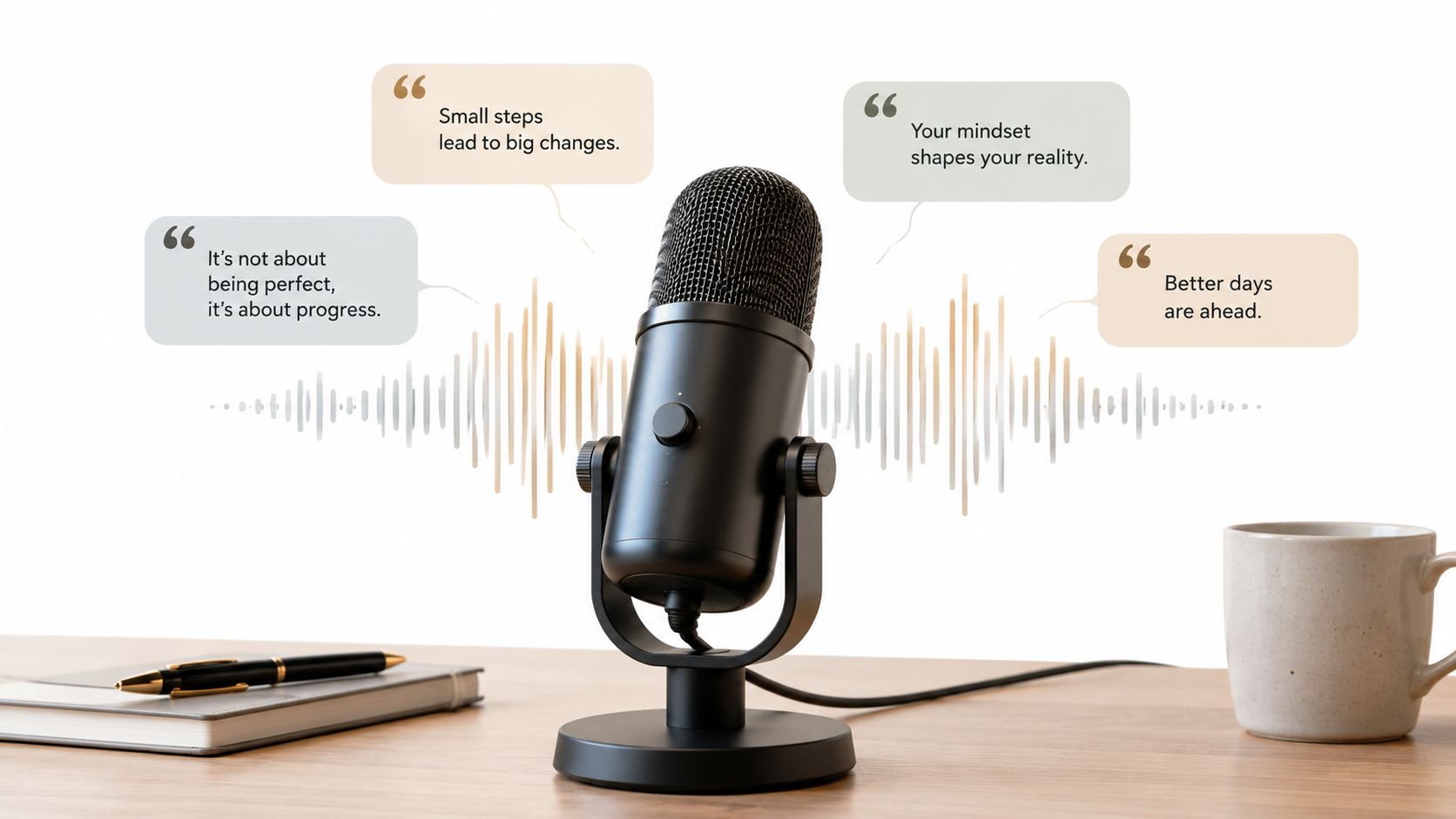
A podcast episode can answer several audience questions at once. A guest may explain a trust-building tactic, challenge a common assumption, or describe a failure in language that later works for an email, article, or short video. Those moments often sit across recordings and transcripts, and the strongest excerpt may never contain the keyword listed in a content calendar.
Try a natural-language query such as, “Find moments where guests explain how a small marketing team can build trust without publishing every day.” Semantic search can connect credibility, limited resources, consistency, and audience expectations, even when speakers use different wording. The results might include a B2B interview, a founder conversation, and a listener question answered months later.
The useful shift is strategic. The marketer stops asking, “What can we post from this episode?” and starts asking, “Which audience problem does this episode address, and where does the wider library discuss it?”
Trace one idea across channels
Start with a clean transcript. Correct speaker names, readable punctuation, and useful timestamps let an editor judge a passage quickly instead of hunting through an entire recording. Store the audio, transcript, guest, topics, audience segment, and commercial context together, so search results retain their surrounding meaning.
Then test the archive with queries that describe editorial value:
- “Find strong objections to publishing every day.”
- “Show practical frameworks for building trust with limited resources.”
- “Locate contrarian advice from experienced guests.”
- “Find beginner questions about consistency and audience expectations.”
Review the results side by side. A podcast passage may become a LinkedIn point of view, an email explanation, a blog section, a short video, or a webinar prompt. The channel determines the treatment. A quote may suit LinkedIn, while a framework needs explanation in an article and a question may open a webinar discussion.
Keep the original episode attached to every adapted asset. Editors can verify the quote, preserve context, and avoid turning a nuanced answer into a misleading clip. Track which adaptations send attention back to the podcast, then prioritize episodes whose ideas support several useful formats.
Practical rule: Treat each transcript as a structured research asset, not merely a caption file.
Contesimal can help teams connect episodes with articles, campaign ideas, guests, and related research in a shared content library. One person can locate a passage, another can check its context, and an editor can shape the approved idea into a finished asset. This approach to mining your content library for fresh ideas turns scattered conversations into a repeatable source of editorial options.
3. Video Creator Production Optimization Using Historical Performance Analysis
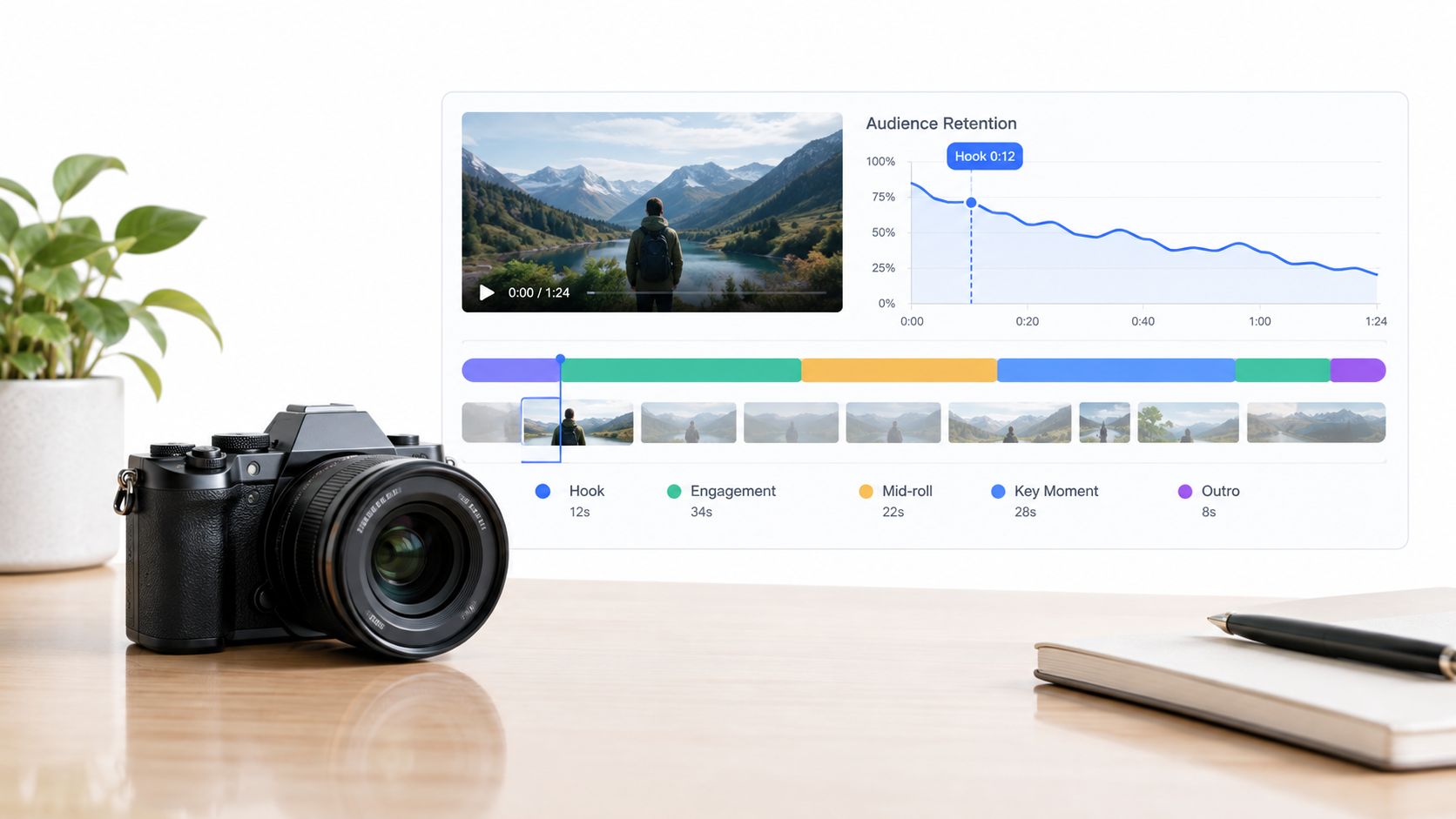
A creator planning the next upload can search the archive for a specific viewer experience, then compare the results with performance records. For example, ask, “Find videos that open with a surprising problem, explain the cause through a personal story, and end with a practical challenge.” The search may connect different subjects through the same narrative design.
Run a second query: “Find videos about those topics that begin with background information and delay the main point.” Placing both groups side by side gives the team a clear editorial test. Did the faster openings retain attention longer? Did personal stories lead to more comments? Did practical challenges produce more subscriptions or clicks?
Let search form the sample, then examine the evidence
Semantic search assembles comparable videos. It does not prove that one hook caused retention or that a format drove shares. Analysts and editors still need to review audience graphs, conversion records, production quality, and the context of each release. Historical comparison works best as a controlled starting point for creative decisions.
Useful search dimensions include:
- Opening device: question, result first, personal failure, surprising fact, or direct promise.
- Story movement: chronological account, problem and solution, comparison, tutorial, or interview.
- Viewer action: subscribe prompt, product click, comment request, download, or no explicit CTA.
- Visual treatment: talking head, screen recording, demonstration, archive footage, or mixed format.
A creator might search, “Find educational videos where a visual demonstration appears before the technical explanation,” then compare those videos with completion and conversion records. A filmmaker could ask for “quiet personal moments that lead into a wider social issue” and use the results to locate scenes for a new edit.
The historical data analysis workflow turns an archive into a working reference. Contesimal can connect video structure, audience response, topics, and production notes, helping a team find patterns and select material to test again.
Use those findings alongside sound editorial judgment and essential video production advice, particularly for story clarity, audio, and visual continuity. A successful structure can also guide repurposing: a strong opening may become a short clip, a demonstration can support a tutorial, and a recurring question can shape the next episode.
Test one structural choice in a new video, record the outcome, and revisit the archive later. Treat the pattern as a hypothesis, not a formula. Audiences and platforms change, so the next experiment should preserve room for surprise.
4. Publishing House Content Monetization Through Rights and Format Optimization
A reader asks, “How do independent researchers evaluate evidence, and where do they commonly go wrong?” In a divided publishing archive, the answer may sit across a magazine feature, an interview, an essay, and several book chapters. Semantic search connects those materials by meaning, even when their titles and vocabulary differ.
That connection changes the editor's starting point. Instead of selecting a format first, the team can inspect the audience need, review the strongest content cluster, and decide whether the material suits a premium collection, paid newsletter sequence, audiobook companion, or course module.
The archive becomes a parts room for new products, with rights attached to every component.
Build the product around the rights
Before packaging anything, confirm ownership, territory, exclusivity, contributor permissions, existing licensing obligations, quality, duplication, publication dates, and reading order. Search identifies a promising group. Editorial review decides whether that group deserves a new life.
A practical workflow looks like this:
- Find the theme: Query, “Show practical reporting and teaching material about evaluating evidence, including examples and common mistakes.” The results can reveal a recurring question across formats.
- Check the assets: Record rights and restrictions for each article, excerpt, interview, or chapter. Remove pieces that cannot support the intended product.
- Shape the sequence: Place introductory material before advanced treatment, then add editorial framing where the archive has gaps.
- Choose the format: A concise digital book may suit researchers, while a guided learning sequence may better serve students or professionals.
- Test the offer: Release a focused collection before building a larger product line. Compare reader response with available business metrics.
A magazine publisher could gather thoroughly reported articles into a themed digital book. An academic publisher could combine eligible journal material into teaching resources, provided the rights and educational purpose are clear. Contesimal can help surface these connections, while editors retain responsibility for permissions, judgment, and product design.
Teams improving discoverability can also consult book search engine optimization. The same search results may support further repurposing: a chapter can become a lesson, an interview can provide audio material, and a recurring reader question can guide a future commission.
5. Screenwriter and Producer Narrative Pattern Recognition for Script Development
A script archive becomes more useful when writers search for dramatic jobs rather than repeated wording. Query, “Find scenes where two allies disagree about the method but share the same larger objective.” The system can surface different settings and dialogue that express the same conflict pattern. The writer then compares how each scene builds pressure, reveals loyalty, and changes the relationship.
A second query could be, “Find season openings that establish a personal threat while hinting at a wider institutional problem.” Instead of reviewing pilots only by title or genre, a showrunner can find comparable openings, inspect their pacing, and identify choices worth testing in a new story.
Study patterns without flattening the writer's voice
Pattern recognition should support judgment, not turn the archive into a recipe book. Organize scripts, notes, episode summaries, and production feedback so a team can search several layers of a project at once. Contesimal can connect related material, while writers and producers decide which findings serve the story.
Useful search dimensions include:
- Story beats: Find where an inciting incident, reversal, midpoint pressure, reveal, escalation, or resolution changes the audience's expectations.
- Character relationships: Compare mentors and students, rivals, reluctant allies, family conflicts, and unstable partnerships by their dramatic function.
- Dialogue purpose: Locate scenes built around concealment, negotiation, exposition, seduction, threat, comic relief, or emotional release.
- Audience response: Match scenes with fan discussion, internal notes, test feedback, or available performance signals, then examine whether the intended effect appeared.
A producer might search, “Find writers whose scripts combine dry humor with emotionally restrained family conflict.” The results create a shortlist for manual review, not an automatic hiring decision. A showrunner can also search earlier drafts and episodes for a character's history, fictional-world rules, or unresolved promise, helping multiple writers maintain continuity.
Version history adds another layer. A discarded scene may explain why a later scene feels restrained, while an unused subplot may supply material for a future episode, companion short, or pitch document. Semantic search opens the right drawer. The writer still chooses what belongs on the page.
6. Academic Research Collaboration and Citation Network Optimization
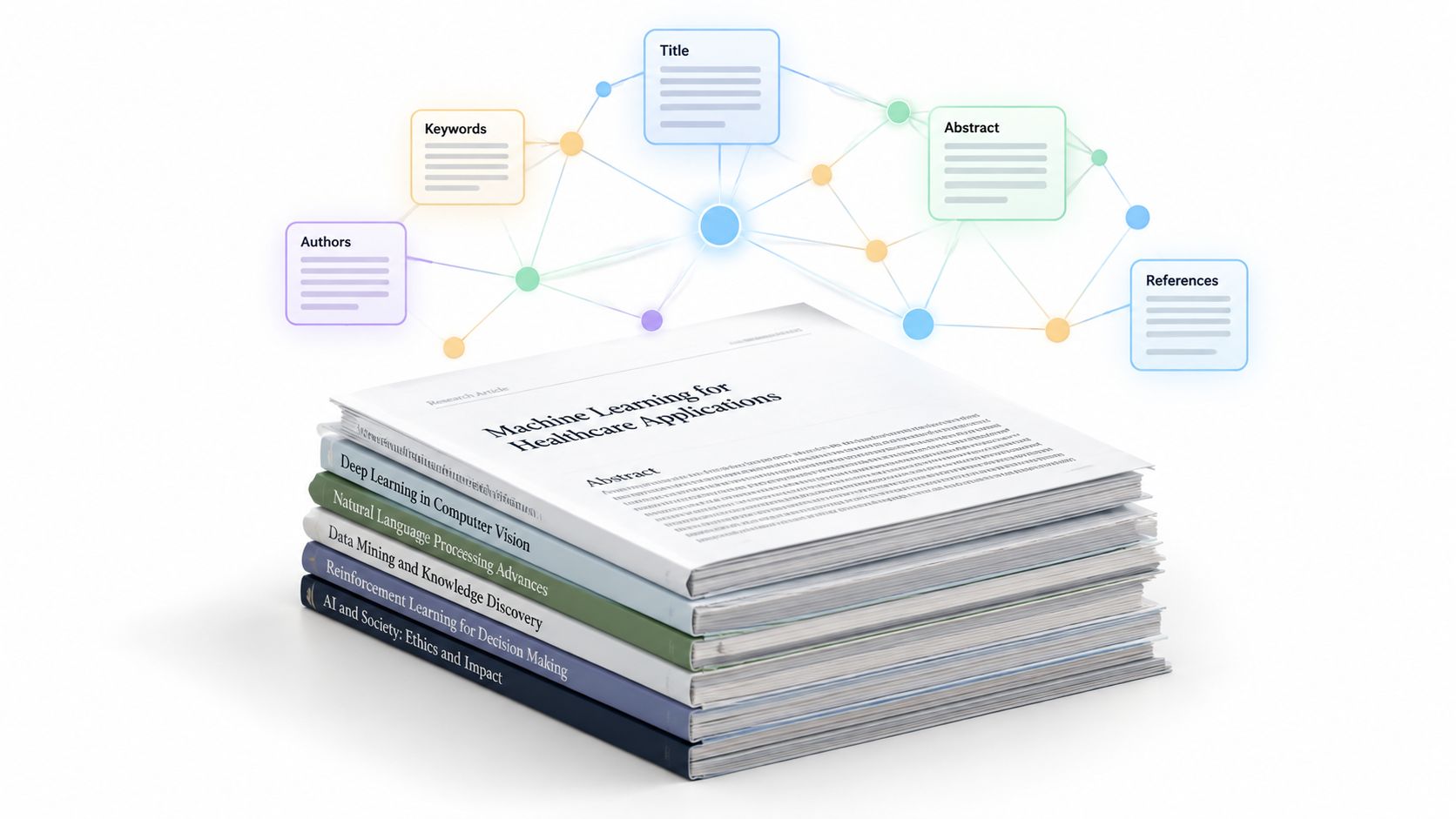
A researcher may recognize each project separately while missing the thread connecting them. One paper examines trust, another studies institutional change, and a presentation addresses public communication. Searching by meaning can reveal how these pieces belong to the same research program.
Try the query, “Find publications where trust changes how institutions respond to uncertainty, and connect them with work on public communication.” Before semantic retrieval, a title search might return separate shelves of papers. Afterward, the researcher can review a cross-project cluster and identify potential collaborators or a shared argument. Another query, “Where do my studies discuss measurement problems without proposing a clear solution?” can point toward an open question for a review article or book.
The repository becomes more useful when it holds more than final publications. Bring together papers, drafts, presentations, notes, datasets, and publication metadata. Add authors, dates, methods, populations, topics, and status so a natural-language result can be narrowed by the facts surrounding each document.
A researcher could then follow this sequence:
- Search how a concept changes across publications, recording shifts in its definition.
- Trace questions that receive only brief treatment, populations that appear once, or methods used in one branch but absent from another.
- Query complementary expertise across colleagues, departments, and research groups.
- Turn the strongest connections into an outline for a review paper, policy brief, textbook, public lecture, or book proposal.
- Open the original passages before concluding that two studies support the same claim.
Contesimal can support this workflow by connecting related documents, metadata, and research notes in one searchable archive. A separate documented semantic retrieval evaluation measured MRR, nDCG, and search speed in milliseconds, reporting that its sentence-transformer setup met product requirements and remained repeatable. The practical takeaway is clear: research teams should test relevance, response speed, and reproducibility rather than trust attractive result pages.
A citation network can also become a production map. A cluster of related studies may support a grant proposal, a collaborative review, a teaching module, or a public explanation. Search finds the connections. Researchers verify the evidence and decide which new work deserves to exist.
7. Author and Book Publisher Franchise Building Through Content Universe Expansion
A manuscript can contain the blueprint for several future stories. A secondary character's unresolved conflict may support a companion novel. One setting may accommodate another genre. A recurring object, custom, or historical event may connect books that began as separate projects.
Start with a natural-language query such as, “Find secondary characters who make difficult moral choices to protect a community but remain excluded from its leadership.” Semantic search surfaces characters with a shared emotional engine, even when their names and scenes differ. Then search, “Find every reference to the rules governing travel between the northern cities.” Those passages give an editor a continuity checklist before a spin-off introduces new locations.
Build outward from evidence
Franchise planning works like an architectural extension. The existing books provide the load-bearing structure, while reader response and editorial judgment indicate where another story can fit. Reader discussions and engagement data may reveal interest in a character or theme. Interest alone does not prove that the character has a durable conflict, a distinct desire, or enough material for a full narrative.
A searchable Contesimal archive can connect manuscripts, notes, reader discussions, and metadata. The team can then organize findings into four working views:
- Character records: motivations, relationships, unresolved threads, speech patterns, and changes across books.
- World rules: geography, politics, technology, magic, religion, history, and exceptions.
- Thematic threads: belonging, ambition, grief, loyalty, justice, or the cost of power.
- Expansion candidates: characters, settings, objects, and events that create a new conflict rather than repeat an old one.
Consider a query for every scene where a minor character makes a sacrifice without receiving recognition. The results may suggest a companion novella. Before drafting, the author can compare the passages, identify the character's private desire, and test whether the problem can sustain a separate story. Strong findings can also become a series bible, proposal material, adaptation notes, or marketing copy.
Public examples offer recognizable paths: J.K. Rowling's expansion of Harry Potter into Fantastic Beasts and stage productions, Brandon Sanderson's interconnected Cosmere universe, and the adaptation of A Song of Ice and Fire into an HBO series. None supplies a formula. Each shows how an organized intellectual property library can preserve consistency while a creative team tests new formats.
8. Marketing Executive Campaign Optimization Through Historical Campaign Analysis
A campaign archive becomes useful when a team can ask a business question instead of opening folders one channel at a time. A marketing executive might search, “Find campaigns for operations leaders worried about implementation, where proof appeared before product features.” The results could connect an email sequence, webinar landing page, sales deck, and customer story.
The team can then compare those assets with campaigns that opened with feature details or broad brand language. Examine the audience, offer, channel, timing, and response context to identify a workable message pattern. Contesimal can help turn the findings into a new brief, a testing matrix, or adapted copy for the next campaign.
Pair meaning-based discovery with exact campaign facts
Semantic search finds related ideas expressed in different words. Exact filters still locate campaign IDs, dates, segment names, product versions, and approved compliance language. A production workflow can combine both approaches: natural-language retrieval surfaces intent, while keyword and structured search handles codes, identifiers, and precise compliance checks, as discussed in this industry discussion of hybrid search.
Organize each asset around the context needed for comparison:
- Objective: awareness, lead generation, launch, retention, fundraising, or education.
- Audience: role, industry, lifecycle stage, need, and known objections.
- Message: pain point, promise, proof, differentiator, and CTA.
- Channel: email, social, paid media, webinar, website, or sales support.
- Outcome: available performance measures and qualitative feedback.
The same archive supports different questions. A SaaS team could ask for “webinar campaigns that answered implementation risk through a demonstration.” An e-commerce team might search for “seasonal messages framing preparation as relief rather than urgency.” A nonprofit could look for “donor communications explaining the human result before the organizational story.”
Search results create hypotheses, not automatic instructions. Review the original context, test the pattern with a new audience, and retain failed campaigns. Their weak points can become exclusion rules, revised briefs, or training examples that prevent the team from repeating an ineffective approach.
8 Semantic Search Use Cases Compared
| Example | Implementation complexity | Resource requirements | Expected outcomes | Ideal use cases | Key advantages |
|---|---|---|---|---|---|
| Multi-Platform Content Repurposing for YouTubers Scaling to Professional Status | Medium–High (library indexing, model tuning) | Large video library, transcripts, compute, automation workflows | Multiple short-form assets per long video; increased reach & consistency | YouTubers moving from hobby to pro; creators with long-form archives | Scale output; cross-platform distribution; data-driven theme selection |
| Podcast Episode Mining for Content Marketers Across Multiple Channels | Medium (transcription + semantic extraction) | High-quality transcripts, audio library, repurposing templates | Social posts, newsletters, clips, articles from single episodes | Podcast producers & content marketers | Maximize episode ROI; surface quotable moments; audience-targeted repurposing |
| Video Creator Production Optimization Using Historical Performance Analysis | High (metric correlation, structural tagging) | Historical performance data, analytics, tagging tools | Improved retention, engagement, and production formulas | Video creators/filmmakers optimizing formats and hooks | Reduce production risk; faster iteration; data-backed creative decisions |
| Publishing House Content Monetization Through Rights and Format Optimization | High (rights management, editorial review) | Extensive archives, rights metadata, editorial workflows | Ebooks, audiobooks, bundles, premium tiers; new revenue streams | Publishers & media orgs with back catalogs | Monetize existing assets; improve discoverability; create premium offerings |
| Screenwriter and Producer Narrative Pattern Recognition for Script Development | Medium (script corpora analysis) | Script databases, produced-episode archives, metadata | Faster development, stronger pitches, consistent series tone | Screenwriters, showrunners, producers | Proven story frameworks; character consistency; accelerate development |
| Academic Research Collaboration and Citation Network Optimization | High (citation mapping, ethical review) | Full-text papers, citation data, repository tooling | Synthesis, review articles, collaboration leads, research gaps | Academics, research centers, think tanks | Faster literature reviews; identify gaps & collaborators; boost citation impact |
| Author and Book Publisher Franchise Building Through Content Universe Expansion | Medium (world/character mapping) | Back catalog, reader engagement data, editorial planning | Spin-offs, series, transmedia opportunities; expanded IP value | Authors & publishers aiming to build franchises | Multiply IP revenue; maintain continuity; target fan interest |
| Marketing Executive Campaign Optimization Through Historical Campaign Analysis | Medium–High (cross-channel metric normalization) | Campaign archives, tracking metrics (CTR, conversions), analytics | Higher ROI, repeatable playbooks, faster campaign launches | Marketing execs, growth teams, brand managers | Data-backed messaging; scalable campaigns; reduced guesswork |
Turn One Search Into the Next Content Move
Across these workflows, the search query is only the beginning. A creator finds a buried explanation, a marketer finds a reusable message, a publisher finds a thematic bundle, or a researcher finds a connection between separate studies. Value appears when someone converts that discovery into a deliberate next move.
The shared cycle is straightforward:
- Ingest and organize the library. Bring in the files people use, including transcripts, videos, articles, scripts, research papers, notes, metadata, and performance context.
- Create a small taxonomy. Start with themes, people, formats, audiences, rights, status, and content purpose. Add detail when a real workflow needs it.
- Ask meaning-based questions. Use natural language such as “find explanations for beginner mistakes” or “show scenes where trust breaks after a public promise.” Then add exact filters for dates, identifiers, formats, or rights.
- Compare strong and weak patterns. Search results can assemble the sample. Analytics, editorial review, and domain expertise determine what the sample means.
- Record useful discoveries. Save the query, relevant assets, reasoning, and decision. Otherwise, the same research hunt will return later wearing a different hat.
- Run one focused experiment. Create a short clip series, package a themed collection, invite a collaborator, outline a review article, or test a campaign message.
That sequence keeps semantic search grounded. It isn't a magic relevance machine, and it shouldn't be treated as an automatic truth engine. Related content can still be incomplete, outdated, wrongly attributed, or missing a key entity. Human review must check context, quality, rights, privacy, and whether the proposed reuse respects the original audience.
Contesimal can support this cycle through searchable content organization, layered taxonomies, AI-assisted research, and collaboration between human and AI contributors. The platform is designed to help teams classify and explore document sets, podcasts, videos, and articles, then connect discovered ideas to creation and distribution workflows. The useful question isn't only “What does our archive contain?” It's “Which verified discovery can we act on next?”
Start with one defined library, such as your podcast archive or last year's campaign assets. Add a practical taxonomy, test natural-language queries, record the results that save real effort, and choose one repurposing or collaboration experiment. Review what happened, improve the organization, and expand only when the workflow earns its place.
Contesimal helps creators, publishers, marketers, researchers, and production teams organize content libraries, search across meaning and context, and collaborate with AI and human contributors. Use it to turn overlooked episodes, videos, articles, scripts, and research into focused ideas and practical next actions, then visit Contesimal to explore the platform.