
A familiar pattern shows up after a creator or media team hits a content wall. They keep publishing, but growth slows, old posts sit unused, and the archive turns into storage instead of an asset. Meanwhile, the clearest audience signals are already sitting inside that back catalog. Old videos, podcast transcripts, blog posts, comments, search queries, email replies, and support questions often show you what people return to, quote, buy from, and share.
Audience research tools help turn those scattered signals into decisions. That matters for more than audience discovery. Used well, these tools help you spot what to repurpose, which topics can support new products or sponsorship angles, and where your existing library still has revenue potential.
The category has also matured. Early research workflows leaned heavily on demographic surveys. Over time, the better platforms added psychographic, behavioral, search, social, and media consumption data, which gave strategists a more usable picture of how audiences think and act.
For creators and publishers, the practical question is not only who the audience is. It is also which assets in your archive already prove demand, where the strongest audience clusters show up, and how to turn that evidence into smarter content packaging.
The tools in this list answer that problem from different angles. Some focus on consumer panels and audience segmentation. Others center on search behavior, social conversations, podcast listeners, or your own content archive. The right choice depends on whether you need audience discovery, content repurposing, sponsor positioning, product validation, or a clearer way to get more value from work you have already published.
1. Contesimal
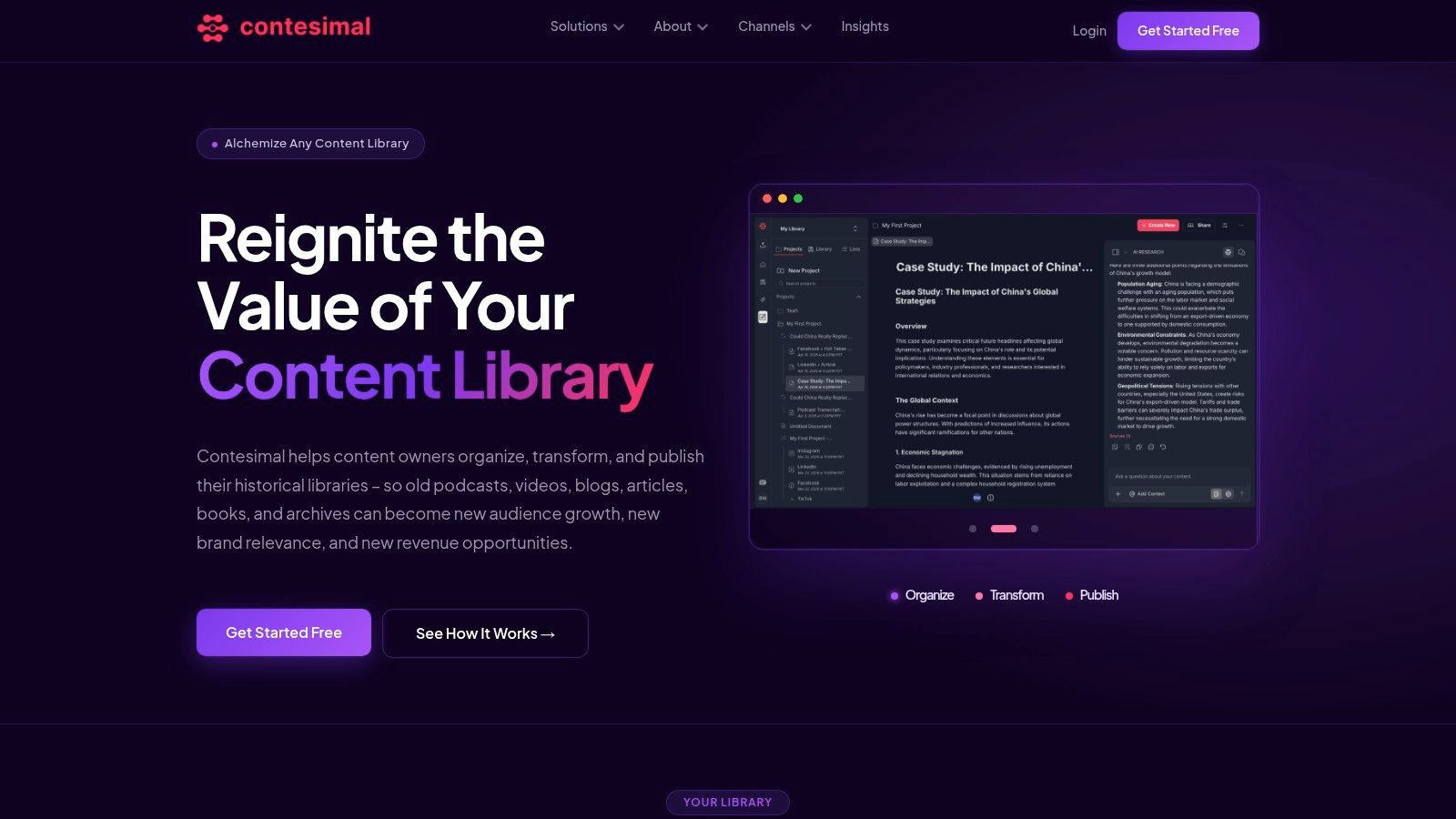
Most audience research tools tell you what people say, click, or follow on external platforms. Contesimal solves a different and often more valuable problem. It helps you mine your own archive for audience intelligence, then turn that intelligence into new content, research assets, and revenue opportunities.
That angle matters because many teams still ignore the richest source of audience insight they already own. A major gap in this category is the difference between stated preferences and observed behavior inside internal content libraries, and research shows organizations fail to mine 60% of their internal data assets for customer insights. The same analysis notes that 70-80% of audience insights often sit in unsearched historical content such as old podcasts, articles, and videos.
Why Contesimal stands out
Contesimal is built for creators and content organizations with a real library. Podcasts, videos, transcripts, books, articles, research notes, and other longform assets can be organized into a system that's searchable and usable. Instead of dumping everything into a chatbot and hoping for a decent answer, you get a chat-based research interface plus layered taxonomies, workflow tools, collaborative lists, snippets, and dossiers.
That combination changes how research gets used. You can surface recurring themes across years of episodes, identify republishing opportunities in old blog posts, turn transcripts into scripts and social clips, and build campaigns from archival material instead of starting from zero every time.
Practical rule: If your team keeps asking, “Didn't we already cover this somewhere?”, you don't have an idea problem. You have an archive retrieval problem.
Contesimal is especially strong for podcasters, YouTubers, bloggers, publishers, authors, and production teams moving from hobbyist output to a real content operation. It supports multiple media types, fast ingestion, and programmatic uploads, which matters when your archive is too large for manual sorting.
What works and what doesn't
What works is the blend of AI and structure. A lot of tools can summarize content. Fewer can help a team classify, search, compare, curate, and act on a deep historical library without creating another messy knowledge pile.
The trade-off is that public pricing isn't listed. You can start a free trial or book a demo with Contesimal, but if you need firm budget planning, you'll likely have to talk to sales. I also didn't see public testimonials, case studies, or third-party certifications on the site, so buyers who need external proof points may want a hands-on evaluation before committing.
A useful fit if your main audience research question is not just “Where are my people?” but “How do I turn my existing content into better targeting, faster repurposing, and more monetizable output?”
2. SparkToro
You publish a strong piece, slice it into clips, send the newsletter, and then hit the same question every creator team hits. Where should this go so it reaches people who already care?
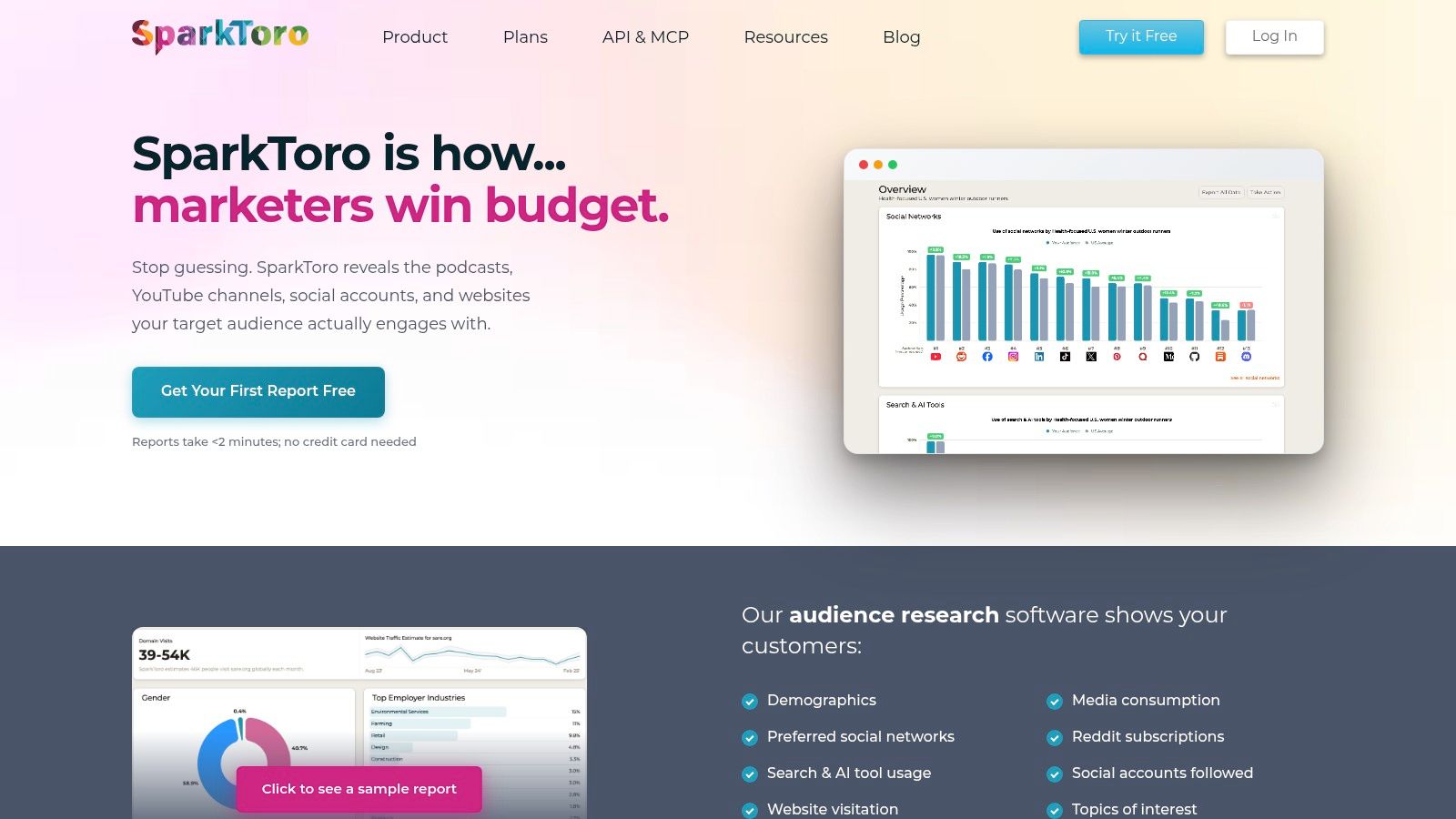
SparkToro is built for that decision. It quickly shows the podcasts, YouTube channels, websites, newsletters, social accounts, and communities an audience already follows, which makes it useful when distribution is the bottleneck, not production. For creators and lean marketing teams, that matters because the value of an existing content library often depends on getting each asset in front of the right adjacent audience.
I use SparkToro less for raw ideation and more for placement. If a webinar becomes a blog post, a LinkedIn carousel, short video clips, and an email sequence, SparkToro helps sort out where each version has the best chance of getting attention. That makes it a practical tool for repurposing and monetization, especially when sponsorship, partnerships, guest appearances, or affiliate offers depend on knowing which channels your audience already trusts.
Best use case
SparkToro earns its keep in channel research and partner discovery. The results are easy to scan, and the workflow pushes toward action instead of leaving you with a pile of audience observations that never turn into outreach or distribution plans.
- Best for channel mapping: Find niche publications, creators, podcasts, and communities that are easy to miss in standard keyword research.
- Best for repurposing distribution: Match archived content formats to the places your audience already spends time.
- Best for sponsorship and partnership research: Build a better shortlist of collaboration targets based on audience overlap.
- Best for small teams: The interface is approachable, so strategists, creators, and marketers can use it without heavy setup.
The trade-off is precision. SparkToro relies on modeled and aggregated data, so it works best as a direction-setting tool, not a final source of truth. I would still validate big decisions against first-party analytics, campaign results, or direct customer research. Contact details can also be inconsistent depending on the source, and pricing becomes a real consideration if you need higher usage limits.
3. Audiense
Audiense is for teams that need segmentation depth, not just a quick list of channels. It clusters audiences using social and behavioral data, then maps affinities, media preferences, influencers, and related interests. That makes it more useful for strategy, creative development, and media planning than for quick creator-side brainstorming.
There's also a bigger category trend behind tools like Audiense. One verified market analysis projects the audience analytics market will reach US$ 15.01 billion by 2032, growing at a CAGR of 12.1% from 2024, with adoption pushed by AI-powered qualitative research and audience intelligence platforms that process organic behavior in real time, according to this audience analytics market projection.
Where Audiense earns its keep
If you're running campaigns across multiple regions, launching a new show into a specific cultural segment, or trying to understand nuanced audience clusters instead of one broad persona, Audiense can justify its complexity. Its suite spans Social Intelligence, Digital Intelligence, and Demand Intelligence, so it goes beyond simple social listening.
Teams that only need topic ideas will probably find Audiense too heavy. Teams that need defensible audience segments for creative, paid media, and partnerships usually won't.
A few practical pros stand out. Onboarding and support are part of the product experience, and unlimited seats on the base plan can help larger teams avoid access bottlenecks. That said, pricing leans enterprise, some modules require sales contact, and report-based pricing can become expensive if your team runs a high volume of analyses.
4. GWI
A common scenario: your comments, creator DMs, and social analytics all suggest there is demand for a topic, but you still need to answer the harder question. Is this a real audience segment you can build products, sponsorship packages, or repurposed content offers around? GWI is strong at that step.
Unlike social-first tools, GWI is built around panel data and structured audience profiling. That makes it useful when you need to size a segment, compare one audience against another, or show stakeholders evidence that goes beyond platform-specific signals. If SparkToro or social listening helps you spot who people pay attention to, GWI helps you understand how those people live, what they buy, what they care about, and whether the segment is commercially meaningful.
That distinction matters for creators with a growing content library. GWI can help you decide which audience slices deserve a newsletter spinout, a paid community angle, a course module, or a sponsorship category. It is less about chasing the next post idea and more about turning existing audience attention into clearer packaging and revenue decisions.
When to choose GWI
GWI earns its place when the work needs defensible segmentation and clean presentation. Strategy teams use it for market sizing, audience profiling, trend comparisons, and crosstabs that hold up in planning meetings. It is also useful for pressure-testing assumptions pulled from anecdotes, comments, or channel analytics.
The trade-off is straightforward. GWI is not the fastest option for a solo creator who just wants a quick read on what people are discussing this week. It works better when the question is bigger than content ideation, such as whether a segment is large enough to justify a new offer or whether two adjacent audiences should be treated differently in your repurposing plan.
Its Canvas dashboards and AI assistant lower the learning curve, but this is still a research platform first.
- Best for structured audience profiling: Strong for segment comparison, attitudes, purchase behavior, and trend analysis.
- Useful for monetization planning: Helps connect audience traits to sponsorship angles, product positioning, and packaging decisions across your back catalog.
- Less suited to lightweight discovery: Smaller teams may find the setup, pricing, and depth heavier than they need for day-to-day editorial use.
Pricing is still sales-led, and plan limits matter. If your workflow depends on fast content mining from your own archive, GWI is usually a supporting input, not the operating system. Used that way, it can keep repurposing decisions tied to audience value instead of guesswork.
5. YouGov Profiles

YouGov Profiles sits in a useful middle ground. It can support serious audience segmentation work, but Profiles Lite also gives you a lighter entry point for directional research. That makes it easier to sanity-check an audience idea before committing to a deeper research project.
For creators and publishers, the appeal is straightforward. You can use it to understand media habits, attitudes, and brand affinities without building a custom research process from scratch. If you're trying to expand beyond one platform, that's often enough to sharpen your distribution decisions.
What it's good at
YouGov Profiles is strong when your audience definition is clear enough to model but not yet specific enough to activate. It helps answer questions like which media habits overlap with a given segment, how those people think about certain categories, and what adjacent interests might be useful for sponsorships or content packaging.
One important context point. Psychographics continue to matter, and GWI's 2025 data says 90% of marketers agree values and interests are key to engagement. But many teams still struggle to connect those psychographic traits to the actual search and retrieval workflows they use in their own content libraries.
That's where YouGov Profiles can inform strategy, but not necessarily operationalize it. Profiles can tell you more about the audience. It won't organize your archive for you or help your team search a multimodal library in real time.
The biggest trade-off is access. Full pricing is sales-led, Lite is intentionally limited, and deeper activation features tend to pull you toward enterprise engagement.
6. Similarweb
Similarweb is less about what audiences say and more about what they do across websites and apps. If you care about behavioral overlap, visit paths, app affinity, and digital adjacency, it's one of the most useful audience research tools in the category.
That makes it especially good for competitive mapping. If you want to know where your audience came from, where they go next, and which sites or apps share your users, Similarweb gives you a broad behavioral view that your own analytics won't.
Best for competitive audience mapping
For repurposing and monetization work, I like Similarweb when the question is distribution, partnership, or category adjacency. A publisher can use it to spot overlapping sites worth syndicating with. A creator can use it to identify adjacent audiences before investing in a new series.
If your team is trying to choose research methods based on the job at hand, this guide on research by purpose is a useful companion to Similarweb-style workflows.
Similarweb is great for “Where else does this audience go?” It's not great for “What in our archive should we remake next?”
The limitations are the usual ones for modeled behavioral platforms. Full access is typically sales-led, some modules are add-ons, and the data is estimated rather than log-level truth from your own stack. Still, for media planning and competitor audience discovery, it's one of the more actionable options.
7. Semrush
Semrush is often underestimated in this category because people think of it as an SEO suite first. That's fair, but it also includes audience research features like One2Target and Audience Intelligence that can be useful inside a broader content workflow.
Its main advantage is consolidation. If your team already uses Semrush for search, ads, and competitive analysis, adding audience insight to the same stack can simplify planning. You don't need a separate system just to validate who's reading competitor sites or what interests overlap between audiences.
Best if you already live in Semrush
Semrush works well when audience research is one input among several. You're building a content strategy, checking competitor traffic patterns, reviewing keywords, and planning distribution in the same session. For many mid-market teams, that's more practical than buying a dedicated audience platform with deeper but narrower functionality.
There's also a real connection between audience fit and content format. GlobalWebIndex 2024 trend data says audiences are 3.2 times more likely to engage with content that appears in their preferred format and is distributed across at least three distinct platforms, as summarized in this audience research explainer. Semrush won't create those assets for you, but it can help you identify what to optimize and where competitive demand exists.
If you're trying to tie audience research more tightly to search planning, this piece on SEO content strategy is a strong next read.
The downside is plan complexity. Some audience modules are add-ons, some require higher tiers, and Semrush's navigation can feel fragmented if you only need audience intelligence.
8. Brandwatch Consumer Research
Brandwatch is built for scale. It's the kind of platform large brands, agencies, and enterprise research teams use when they need broad coverage across social, news, forums, and historical conversation data.
For creators, that sounds like overkill, and often it is. But for media companies, publishers, or brands managing a large audience program, Brandwatch can be powerful for trend spotting, community mapping, and campaign analysis across a huge conversation set.
When Brandwatch makes sense
Choose Brandwatch when you need robust listening across culture and conversation, not just channel discovery. It's useful for identifying how people talk about a topic, what adjacent themes cluster around it, and how those discussions evolve over time.
This category has shifted fast because consumers increasingly share opinions in social environments rather than formal surveys. Verified data in a 2024 study says 92% of consumers prefer to express opinions on social media rather than in surveys, and tools with real-time insight provide a 35% faster response time to audience trends than historical data methods.
That kind of real-time monitoring is where Brandwatch earns its keep. But you pay for it with complexity, enterprise pricing, and the need to scope queries carefully. If you don't define your questions well, you can drown in mentions without learning much.
If you're connecting social conversation back to what your own content already proved, this article on how to analyze content performance helps close that loop.
9. BuzzSumo
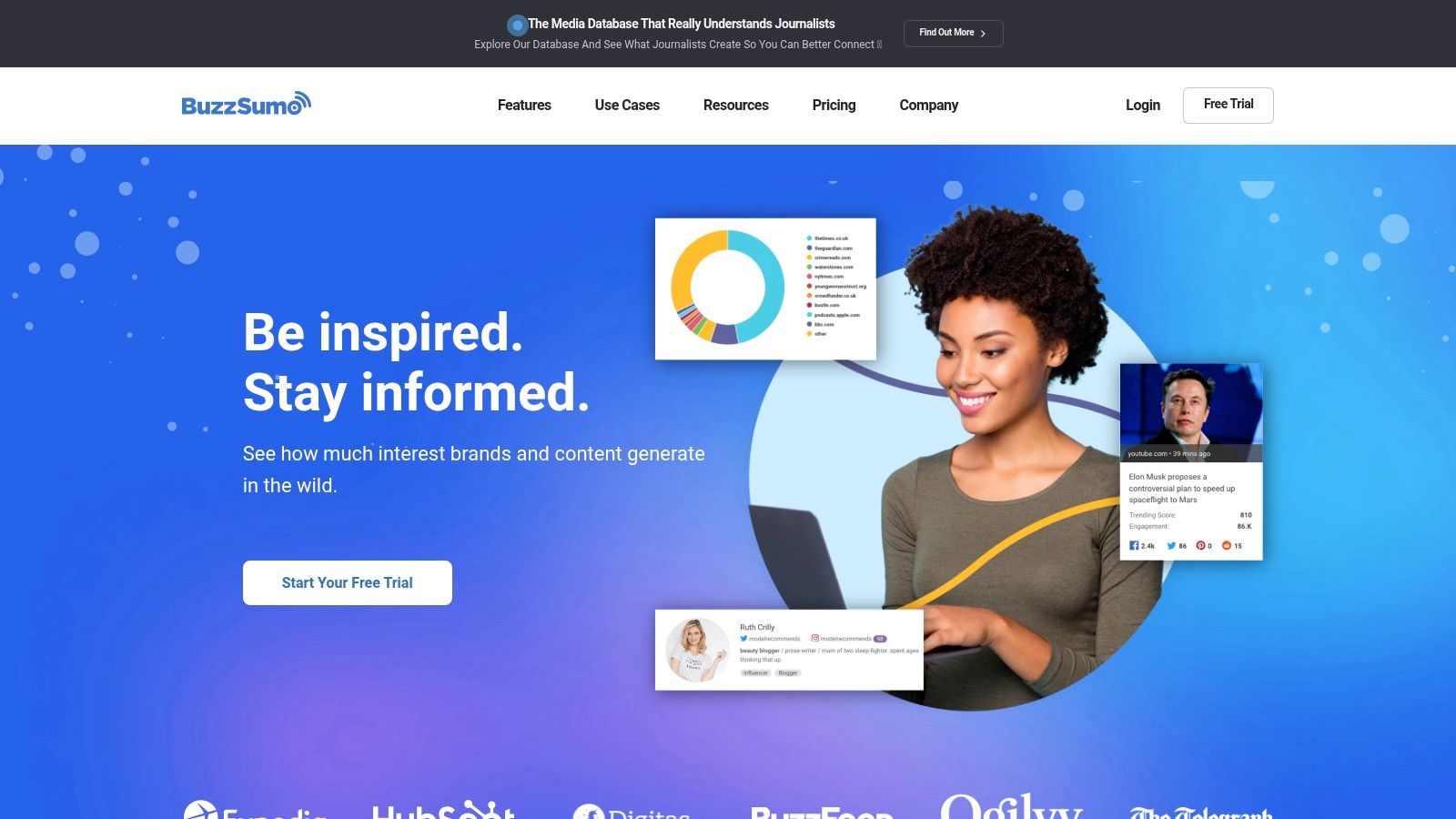
You publish a strong piece, it performs well for a week, then it disappears into the archive. BuzzSumo helps prevent that. It shows which topics, headlines, formats, and authors keep earning attention across search, social, and publisher sites, so you can decide what to refresh, repackage, or pitch again.
That makes it especially useful for creators and content teams sitting on a large back catalog. Instead of guessing which old webinar should become a thread, which article deserves a video version, or which theme could support a paid product, you can look for proven patterns in the market and match them to assets you already own.
Good for content-first research
BuzzSumo works best when your research starts with content behavior. You can scan a niche for recurring angles, compare headline patterns, track competitor output, find journalists and authors covering a subject, and monitor whether interest is rising or fading.
I usually recommend it to editorial teams, solo creators with a real library, and content marketers who need quicker answers than a survey tool can provide. It will not give you rich demographic segmentation. It will show you what people pay attention to, who publishes successfully on that topic, and where a repurposing or distribution opportunity is starting to form.
That matters for revenue, not just reach. Better topic validation helps you choose which assets are worth updating, which themes can support sponsorship packages, and which ideas have enough traction to turn into a newsletter series, lead magnet, or productized offer.
- Useful for trend validation: Strong for deciding what to refresh, expand, repackage, or retire.
- Useful for outreach: Helpful when PR, partnerships, and editorial work from the same topic data.
- Less useful for deep segmentation: It does not replace panel research, first-party audience analysis, or customer interviews.
The trade-off is straightforward. BuzzSumo is fast and practical, but it is still a surface-level audience tool compared with platforms built for identity, attitudes, or detailed consumer profiling. Lower tiers can also limit searches, exports, and alerts, so check the plan details against your workflow before you buy.
10. Rephonic
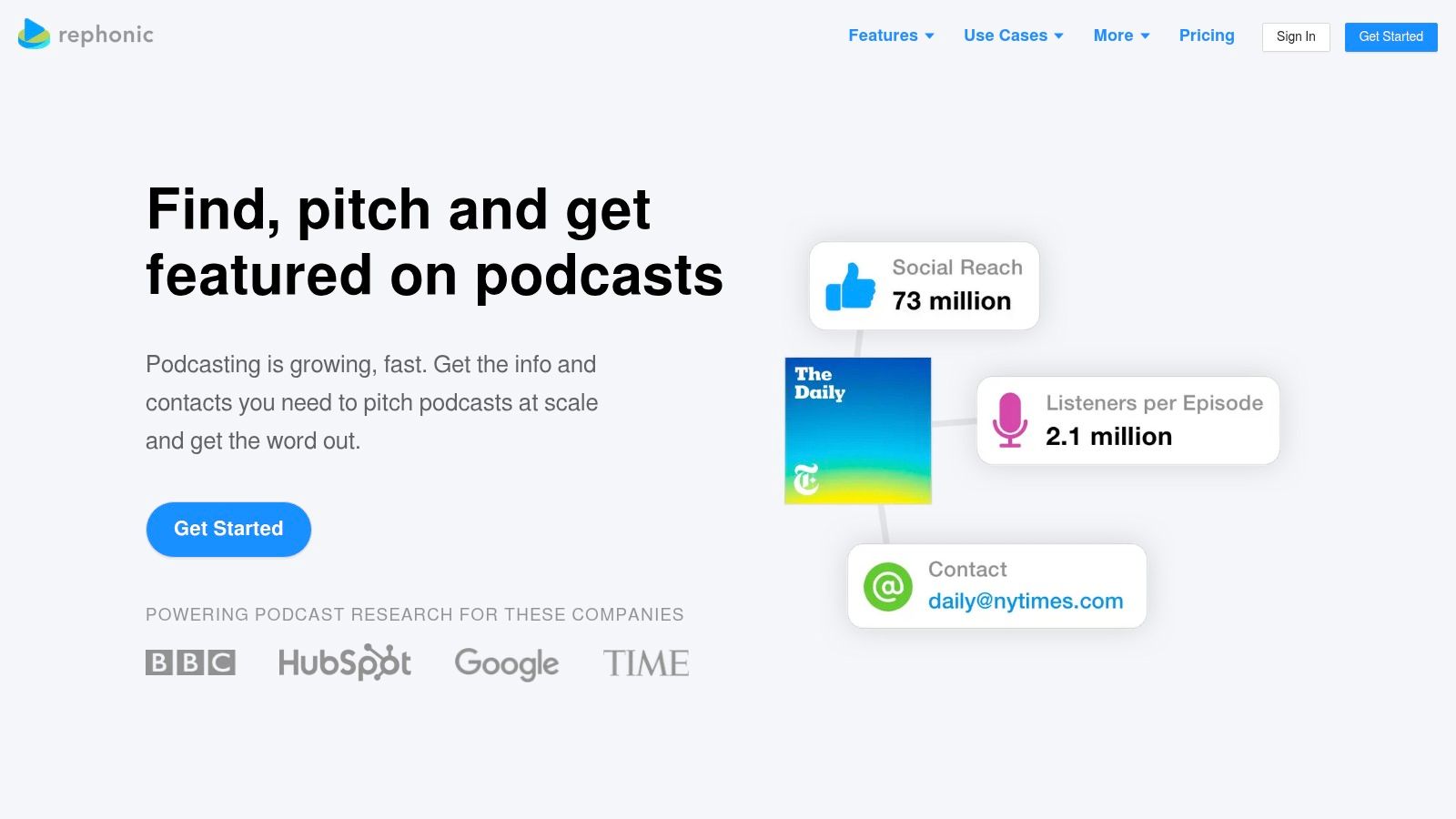
A common creator problem looks like this. You know podcast guesting or sponsorships could grow the business, but building a target list by hand takes hours, and you still end up guessing which shows overlap with your audience. Rephonic is built for that specific job.
It focuses on podcast discovery, listener estimates, related-show mapping, episode transcripts, alerts, and outreach details. If your best growth opportunities sit inside podcast ecosystems, that focus matters. You can move from research to shortlist to outreach without bouncing across several general-purpose tools.
Best for podcast growth and partnerships
Rephonic is strongest when podcast audience fit is tied directly to revenue. It helps creators, agencies, and partnership teams find shows that are plausible matches for sponsorships, guest appearances, feed swaps, and creator collaborations. That makes it useful not only for audience research, but for deciding which existing content can be repackaged into audio appearances, sponsor-ready talking points, or partnership assets.
That is the hidden value here. A back catalog becomes easier to monetize when you know which podcast audiences are adjacent to your own and which topics already travel well in audio.
I would use Rephonic when the question is practical: Which shows should we pitch this quarter, which hosts are realistic partners, and which episodes from our library can be turned into a strong guest angle? Transcript access also helps with message research. You can study how hosts frame a topic before you pitch, then tailor the angle to the show instead of sending a generic request.
The trade-off is pretty clear. Rephonic goes deep on podcasts, but it will not replace broader audience platforms for full demographic profiling, cross-channel behavior, or survey-based consumer insight. Audience sizes are also modeled, so treat them as directional, especially for smaller or newer shows. Pricing is not prominently listed on the homepage, so it makes sense to confirm fit before you commit.
Top 10 Audience Research Tools Comparison
| Product | Core features | Strengths / Value | Best for | Pricing & access |
|---|---|---|---|---|
| Contesimal (Recommended) | AI chat research, layered taxonomies, multi‑media ingestion, programmatic uploads, publish workflows | Turns archives into discoverable assets, collaborative dossiers, real‑time enrichment | Podcasters, publishers, production & research teams | Free trial / demo; full pricing sales‑led |
| SparkToro | Audience mapping across web, social, YouTube, podcasts, Reddit; demographics; exports & API | Fast, shareable discovery; finds niche communities; free tier available | Marketers, creators, PR & distribution planners | Free tier; paid plans (higher tiers pricier) |
| Audiense | Social graph segmentation, affinities & clusters, digital & demand intelligence | Deep segmentation, onboarding/support, flexible suite | Enterprise media teams, creative planners | Sales‑led / enterprise pricing |
| GWI (GlobalWebIndex) | Large consumer survey panel (50+ markets), trended data, dashboards | Statistically robust profiles, trend analysis, AI assist | Enterprise researchers, academics, global planners | Self‑serve & enterprise tiers; pricing sales‑led |
| YouGov Profiles | Connected‑data audience profiles, media habits, Profiles Lite (free) | Granular attitudinal data, activation options, free Lite for quick checks | Brand & marketing teams, pitch support | Profiles Lite free; full Profiles sales‑led |
| Similarweb | Web & app behavioral panel, audience overlap, visit paths, app insights | Strong competitive & partner discovery, broad web/app coverage | Media planners, competitive analysts, affiliate teams | Sales‑led; some modules add‑ons |
| Semrush | SEO & marketing stack with One2Target & Audience Intelligence apps | Integrated SEO + audience research, practical for content teams | Content, SEO, paid‑media teams | Core paid plans; audience modules may be add‑ons |
| Brandwatch Consumer Research | Large‑scale social & news listening, historical coverage, APIs | Enterprise‑grade trend & conversation mapping at scale | Large brands, agencies, enterprise research programs | Capacity/enterprise pricing; sales‑led |
| BuzzSumo | Content discovery, trend feeds, influencer & journalist discovery, alerts | Quick insight on top formats/topics, useful for outreach & PR | Content marketers, PR teams, publishers | Paid plans with tier limits |
| Rephonic | Podcast database: listener estimates, related‑show graphs, transcripts, contacts | Podcast‑focused audience & outreach tooling, rapid list building | Podcasters, sponsorship & guesting teams | Pricing not prominently published; sales/plan pages |
Final Thoughts
A creator with three years of podcasts, videos, newsletters, and blog posts usually does not have an idea problem. They have a selection problem. The hard part is deciding what to reuse, what to expand, what to package, and what can bring in revenue.
That is why audience research matters after publishing, not just before it. Good research helps you spot the episodes that can become a short-form series, the posts that deserve a refresh, the transcripts that can turn into lead magnets, and the topic clusters that are strong enough to support a product, sponsor package, or paid community offer.
Teams that treat audience research as a one-time persona exercise miss that value. The better use is operational. Use it to shape repurposing plans, choose distribution channels, brief collaborators, price sponsorship inventory, and decide which parts of your archive deserve another round of investment.
Analysts at Grand View Research report strong growth in audience analytics, with customer experience and software solutions holding a large share of the market in 2024, according to Grand View Research's audience analytics market report. Buyers are spending on systems that connect insight to action.
A practical stack usually looks like this:
- Discovery tools such as SparkToro, Audiense, Similarweb, and Rephonic help map attention. You get a clearer view of where your audience spends time and which adjacent communities overlap with yours.
- Validation tools such as GWI and YouGov Profiles help test whether a pattern is broad enough to matter. They are useful when you need firmer segmentation, market sizing, or planning inputs for a pitch.
- Content resonance tools such as BuzzSumo and Semrush help you choose topics, formats, and search angles with better odds of traction.
- Archive intelligence tools such as Contesimal help you organize and reuse the assets you already own, which is often where the fastest revenue opportunities sit.
That last category deserves more attention. Many creators keep publishing new work while their best proof of audience fit sits buried in old interviews, episodes, articles, webinars, and research notes. Those assets can become newsletter series, sales collateral, course modules, sponsor packages, and cross-platform clips. They can also show what your audience returns to over time, which is often more useful than a stated preference in a survey.
If you also want a stronger handle on post-publish performance, this guide to best video analytics tools pairs well with the tools above.
If your archive is full of podcasts, videos, transcripts, articles, or research you have not fully monetized, Contesimal is worth a serious look. It helps you organize, search, and turn your existing content library into new ideas, better workflows, and revenue-ready assets without starting from scratch each time.