
You can stare at your follower count for weeks and still miss the central question. The number on the screen matters, but it's not the thing that puts cash in your account. I've watched creators with tiny audiences make money faster than bigger accounts because they picked the right monetization path, not because they chased a prettier vanity metric.
If you're asking how many followers to make money on Instagram, the honest answer is this: money starts earlier than many think, but the kind of money changes fast as your audience grows. A creator with a few hundred followers can already monetize through Instagram's built-in features, while a creator with a much larger audience may still earn less if the audience doesn't respond. If you want the broader platform comparison, the logic is similar to what creators deal with on YouTube Shorts too, which is why how much does youtube pay for shorts is a useful parallel read.
The Real Question Behind Your Follower Count
The follower counter is a distraction if you don't know what you're selling. A creator with 2,000 followers and a loyal niche can earn before a creator with 20,000 followers who posts broad, forgettable content. The question isn't “How big does my account need to be?” It's “What revenue path fits my current audience, and how responsive is that audience?”
That shift matters because Instagram monetization isn't one thing. Some paths pay you directly through the platform, some pay through brands, and some pay because your audience wants your product, service, or recommendation enough to act. The same follower count can produce totally different income depending on whether your audience buys, clicks, shares, subscribes, or just scrolls.
Practical rule: treat follower count as a gate, not a paycheck. If your audience doesn't convert, the gate opens and nothing happens.
Creators waste months chasing a round number because it feels tidy. Brands don't care about tidy. They care about whether your audience is real, relevant, and likely to move. That's why a smaller account in a focused niche can often monetize more cleanly than a bigger account built on vague entertainment.
If you want the clearest mental model, stop asking for one magic threshold. Start asking which monetization method you qualify for now, which one you can work toward next, and which one best matches your content library. That's the whole game.
What Monetizing on Instagram Actually Means
Instagram monetization splits into two lanes, and creators blur them all the time. The first lane is platform-native revenue, where Instagram pays you directly through features like Gifts, Reels Play Bonus, Badges, and Subscriptions. The second lane is off-platform revenue, where a brand, customer, or affiliate program pays you because your content drives attention or sales.
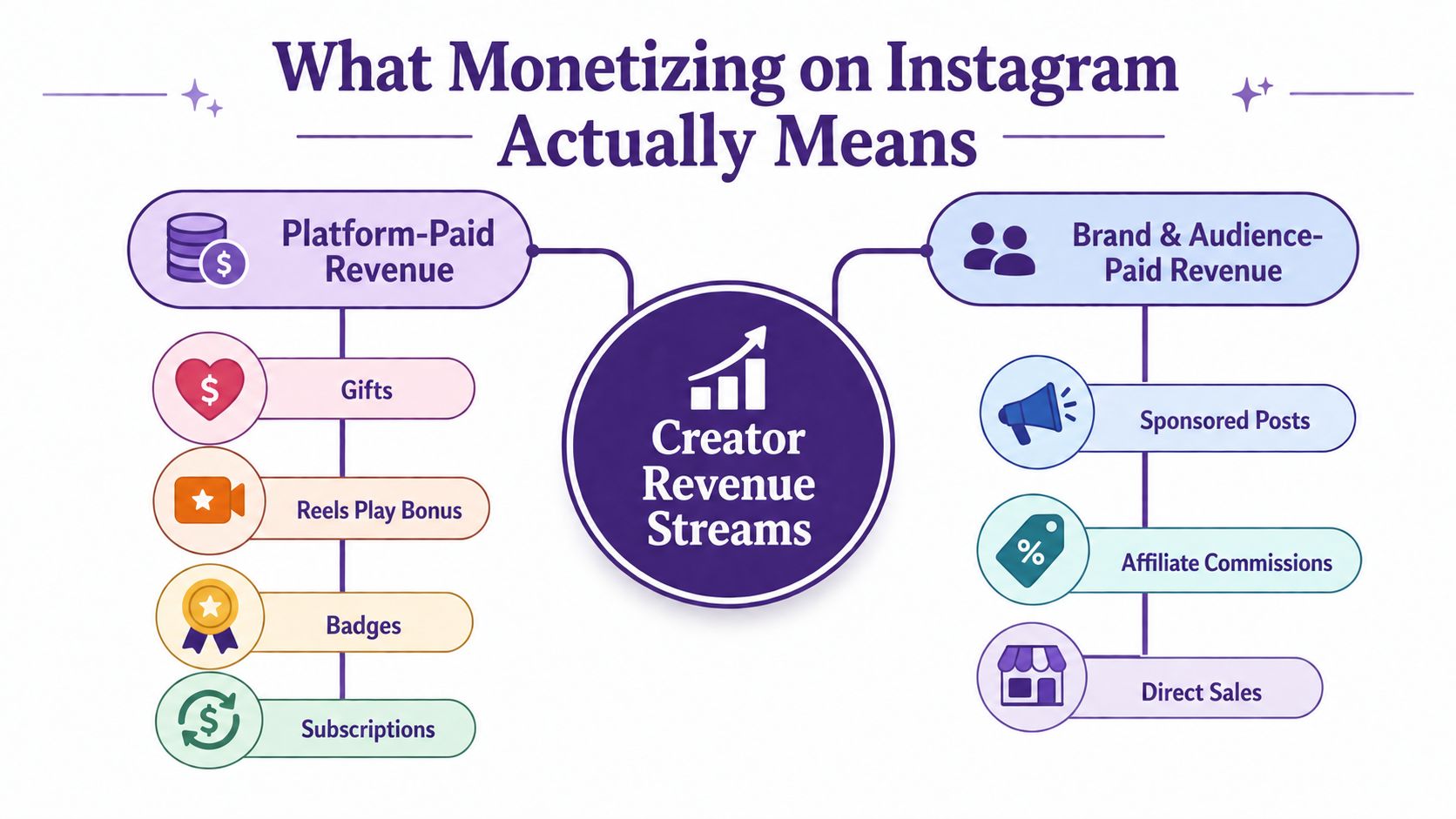
The distinction matters because follower count helps different income types in different ways. Platform-native payouts depend on feature eligibility and product rules. Sponsored posts depend on your trust, niche, and audience fit. Affiliates and products depend on conversion, which is a different animal entirely.
Platform-paid revenue
Instagram's own features are the easiest place to get your head around because the rules are clearer. If you qualify, you can turn audience activity into direct payments. That doesn't mean the payouts are massive, but it does mean the path is visible and measurable.
Brand and audience-paid revenue
Most serious creators make real money here. Sponsored posts, affiliate links, digital products, consulting, memberships, and services all sit here. The upside is flexibility, because you're not waiting for a single app feature to decide your fate. If you want a tactical companion guide, maximize Reels revenue streams is worth reviewing alongside the more operational advice in the internal guide on Instagram Reels monetization.
The cleanest way to think about it is simple. Platform payouts are nice. Owned revenue is durable. Brand revenue is where most accounts first feel “real” money.
Instagram's Native Payout Thresholds
Instagram's built-in monetization features arrive in tiers, and the tiering tells you a lot about how the platform thinks about audience maturity. Gifts can start at 500 followers for creators with a professional account and the required age eligibility, according to a 2026 industry roundup from Linktree's guide to making money on Instagram. That's a low bar, and it should be. Instagram is signaling that you don't need celebrity scale to begin earning, you need a real account setup and an audience that consistently shows up.
At the next step, 1,000 followers grants access to the Reels Play Bonus and the Creator Marketplace in that same roundup. The practical meaning is clear. Once you're past the earliest tier, Instagram wants creators who can consistently produce attention, not just collect followers. The platform is telling brands and the system that you're now worth indexing more seriously.
At 10,000 followers, the door opens wider in eligible markets. The same source places Badges and Subscriptions at that threshold, which is where direct fan support starts to look more like a recurring monetization system than a novelty. Another creator-earnings source also notes that creators can earn through Stars, where viewers buy Stars and Instagram pays creators at 1¢ per Star on a monthly payout cycle, and Shopify says that feature is available at 500 followers with a professional account requirement and age rule (Shopify's Instagram monetization guide).
The key thing is to separate the ability to use a feature from the feature being meaningful. A feature can be available and still not move much money if the audience is passive. That's why native payouts are best treated as the first layer, not the whole plan. They're a proof-of-life signal, not a complete business.
Bottom line: Instagram's native features can start paying before the follower count feels big, but the money stays modest until your audience repeatedly acts.
Sponsored Posts and Brand Deal Earnings by Tier
Sponsored posts are where follower count starts to matter in a more obvious way, but even here the number alone is misleading. A recent 2026 creator-earnings analysis said paid brand deals become consistently available at 10,000 followers, and the median priced integration at that tier was $2,200 in its database, according to Influencer Advisory's follower-to-paid-deals report. That's the moment a lot of creators stop improvising and start pricing like a business.
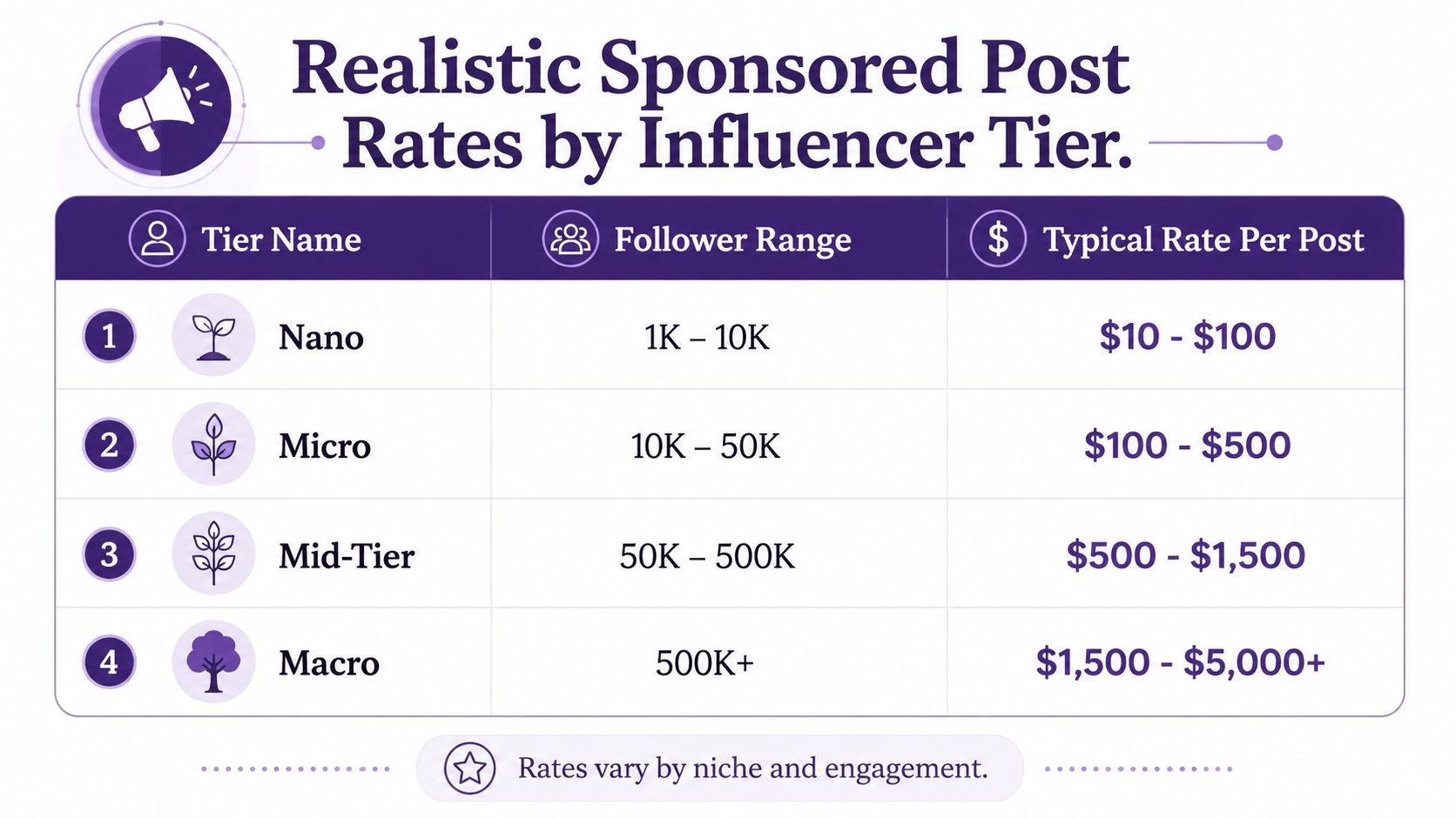
The most useful way to read the market is by tier, not by dream scenario. Nano-influencers, generally 1,000 to 10,000 followers, typically earn about $10 to $100 per post. Micro-influencers, generally 10,000 to 50,000 followers, typically earn about $100 to $500 per post. Those bands line up with guidance from both Buffer's Instagram monetization breakdown and Sellfy's creator earnings guide.
Sponsored post earnings by follower tier
| Follower Tier | Follower Range | Typical Per-Post Earnings |
|---|---|---|
| Nano | 1,000 to 10,000 | $10 to $100 |
| Micro | 10,000 to 50,000 | $100 to $500 |
| Mid-tier | 50,000 to 500,000 | materially larger brand deals |
| Macro and above | 500,000+ | premium campaigns and larger contracts |
The jump from nano to micro is where creators usually feel the first real shift. Below that, deals are often one-off, product-heavy, or light on cash. Above that, you start getting repeatable sponsorship conversations, better briefs, and brands that already understand influencer pricing. If you're still figuring out rate language, brand deal advice from Gainsty is useful because it keeps the conversation grounded in what brands buy.
The best negotiators don't sell “a post.” They sell a package, a niche, and a measurable result.
Earning Below 10,000 Followers With Affiliates and Your Own Products
You do not need to wait for a badge of legitimacy to start earning. Creators can make money with around 1,000 engaged followers because brands and affiliate programs care more about responsiveness, niche fit, and conversion potential than raw reach. A small audience that buys beats a larger audience that scrolls past you.
Here's the practical version. A fitness creator with 3,000 followers selling a $29 program does not need huge reach for the math to work if the audience is tightly matched. A lifestyle creator pushing a $10 affiliate link to 30,000 followers can still underperform if the audience is broad, distracted, and low on trust. The account size looks impressive. Conversion pays the bills.
What works before 10K
- Affiliate links: keep the offer tightly matched to the niche and place it where your audience already clicks. Strong placement matters more than shouting harder.
- Digital products: templates, guides, presets, or mini-courses work well when your audience keeps asking the same question.
- Services: consulting, coaching, editing, design, and speaking engagements can monetize even a tiny account.
- Small sponsorships: local, niche, or product-fit brands will still pay when the audience is specific enough.
If you want a broader model for affiliate setup and audience monetization, affiliate marketing examples and websites gives useful context for how creators turn attention into clicks and sales.
The mistake is thinking small means weak. Small means focused. If your audience knows exactly why they follow you, they are easier to monetize than a larger audience that follows you for random clips and never buys. Content creators, podcasters, and publishers with niche libraries often do well here because they have already built trust around a specific problem or taste.
Why Engagement Rate and Niche Beat Raw Followers
Follower count is a blunt signal. Engagement rate and niche specificity tell you whether the audience is alive. That's why two accounts with the same follower count can earn wildly different amounts. Brands aren't paying for a headcount, they're paying for attention that converts.
A useful way to think about it is earnings per follower, not just total followers. An account with fewer followers but stronger interaction can outperform a larger account that gets lazy likes and low-intent scrolling. That logic is why high-value niches like finance, B2B, SaaS, and health usually monetize better than generic lifestyle or motivational content. The audience is more specific, the problem is clearer, and the conversion path is easier to justify.
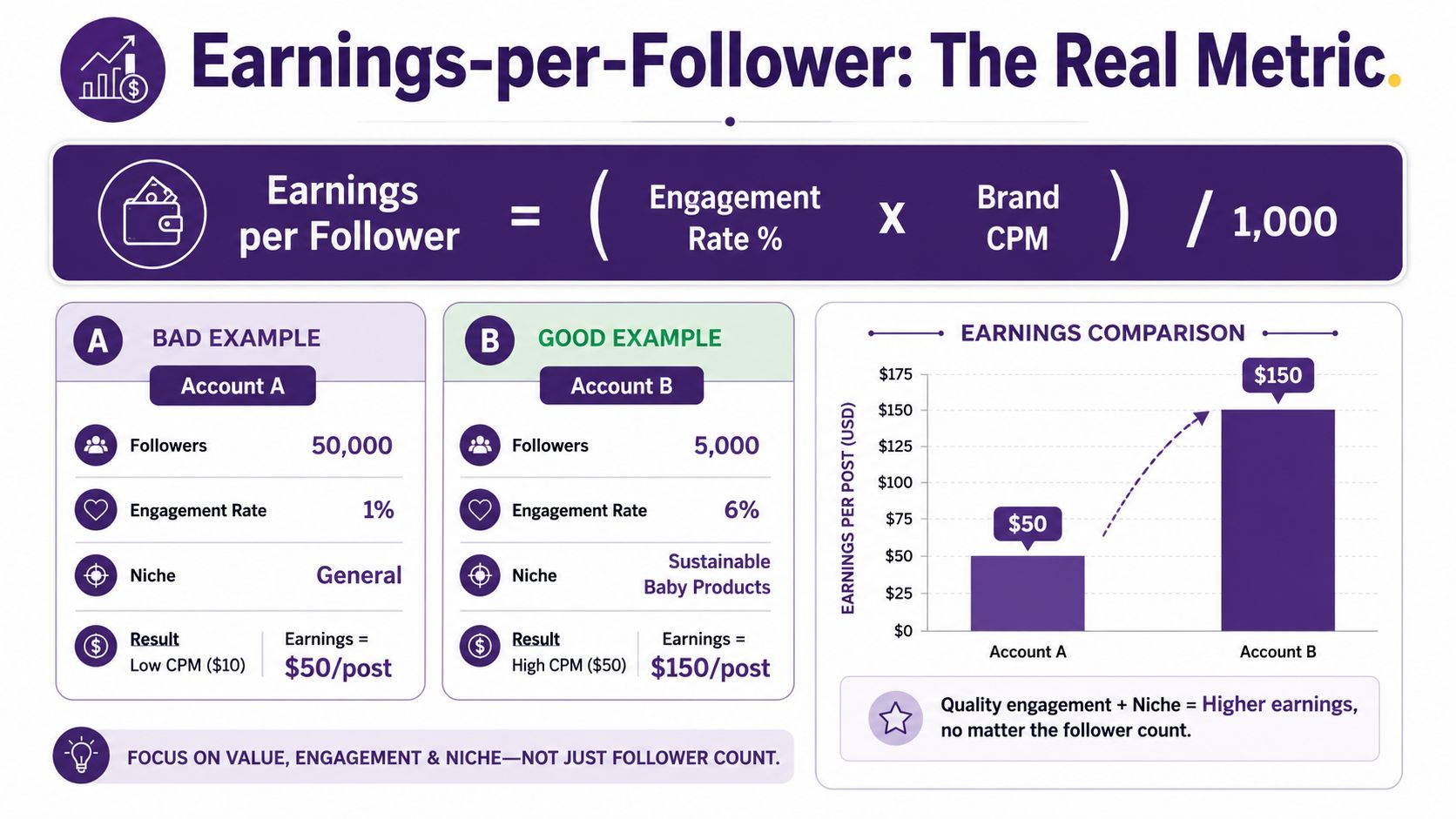
The money also gets easier to explain when the niche is strong. A creator speaking to buyers of a particular software category, a health product, or a financial service tends to command more confidence than a creator posting generic inspiration. That doesn't mean every broad account is doomed. It means broad accounts have to work harder to prove value.
Short version: audience quality compounds. Vanity metrics flatter you, engagement pays you.
The best growth target isn't “more followers.” It's “more people who react, click, save, reply, and buy.” If you're choosing what to post next, ask whether it deepens trust in a niche or just pads the count. One builds revenue. The other builds screenshots.
Your Action Plan at Each Follower Milestone
Start with the milestone that matches your current reality, not the one that looks good in a pitch deck. At 500 followers, switch to a professional account and turn on Gifts if you qualify. At this point, your metric is simple, are people responding to your content, or are they just watching and moving on?
At 1,000 followers, apply for Reels Play Bonus and get listed in the Creator Marketplace if you're eligible. This is also the point where your profile should stop looking casual. Add a clear bio, a clean content niche, and a few highlights that show what you do. If you want a practical growth companion, the internal guide on growing Instagram followers fits this stage well.
At 5,000 followers, build a one-page media kit, set up affiliate links, and launch a small product. That might be a template, guide, digital download, or mini service offer. The metric to watch is not just new followers, it's clicks and replies. If nobody taps, your offer is off.
At 10,000 followers, formalize a rate card and start pitching paid sponsorships. This is when the micro-influencer pricing language starts to matter, and your account shifts from “could be interesting” to “budgetable.” At 50,000 followers, layer in retainer deals and exclusive brand partnerships. You're no longer just selling posts, you're selling reliability, repetition, and access.
Milestone checklist
- 500 followers: professional account, Gifts enabled, track replies and story taps.
- 1,000 followers: Reels Play Bonus, Creator Marketplace, track saves and shares.
- 5,000 followers: media kit, affiliate stack, one small product, track clicks and conversion.
- 10,000 followers: rate card, sponsorship outreach, track deal volume and repeat inquiries.
- 50,000 followers: retainers, exclusivity, track partner retention and revenue mix.
The goal at every tier is the same: turn attention into a repeatable offer, not a lucky spike.
Negotiating Rates and Measuring What Actually Pays
Never price yourself on follower count alone. Price by deliverables, timeline, exclusivity, and any usage rights the brand wants. If a deal wants more than one post, paid usage, or category exclusivity, the rate should move. If you don't know which lever is being pulled, you're undercharging.
Track the numbers that expose what's working. Watch RPM, earnings per follower, conversion rate by offer, and your repeat-brand ratio. The creators who stay profitable don't just land deals, they learn which audience segment buys, which format closes, and which brands come back.
The mindset shift is simple. The goal isn't a magical follower number. It's a revenue mix that compounds across native payouts, sponsorships, affiliates, and owned products. Once that clicks, follower count stops owning the conversation and starts acting like what it really is, one input among several.
If you're ready to stop treating your content library like a pile of old posts and start turning it into revenue paths you can manage, go build the system with Contesimal.