
Level up your content game, one episode at a time. Most creators look for a podcast that make you smarter as if the win is just better taste. It isn't. The true win is building a repeatable input system that feeds your scripts, interviews, newsletter angles, and editorial calendar.
That's the gap in most recommendation lists. They tell you what to listen to, but not how to turn listening into usable raw material. If you're publishing regularly, passive consumption doesn't help much. You need shows that sharpen your thinking and leave behind assets you can reuse, from episode structures to fresh framing devices to quotable concepts.
Podcasting now works at mass scale, not at the edges. Edison Research and Triton Digital reported in the 2024 Infinite Dial that 47% of Americans age 12+ had listened to a podcast in the last month, 34% in the last week, and 67% had ever listened to one, according to Spark Podcast's summary of the 2024 Infinite Dial. That matters for creators because smart audio isn't just personal development anymore. It's a routine learning environment.
If you're also trying to turn long-form ideas into more outputs, Fame's content repurposing offers a useful parallel. A good listening habit should work the same way. One strong episode should become five angles, not one forgotten thought.
1. Radiolab
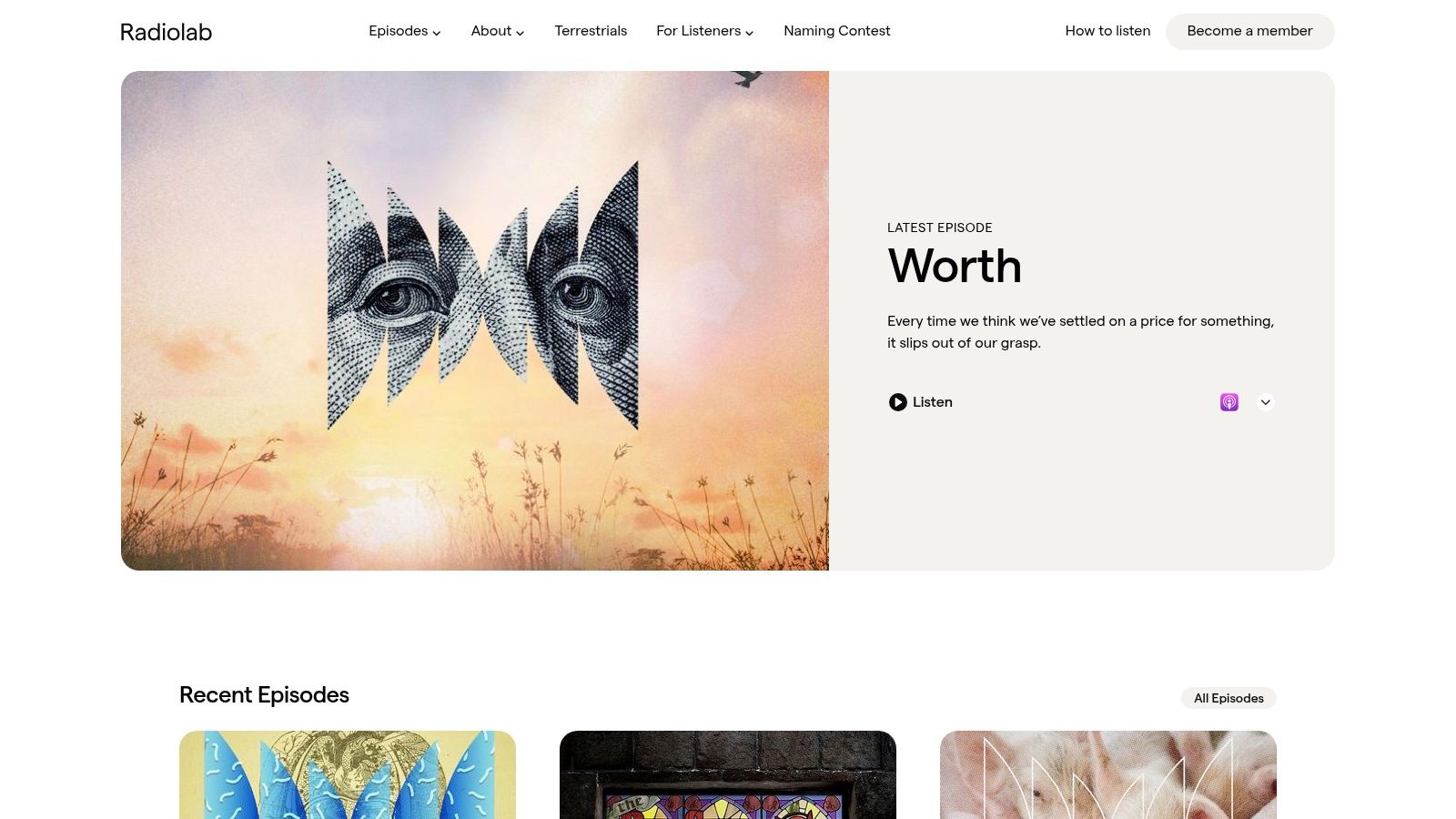
Radiolab is what I recommend when a creator's work feels informative but flat. The show takes science, culture, ethics, and social questions, then turns them into audio stories that feel alive. If your writing or production needs more shape, not just more facts, this is one of the best places to study.
A lot of podcasts explain. Radiolab constructs. That's the difference.
Why creators should study it
The value isn't only in what you learn. It's in how the episode teaches you to sequence information. Radiolab often withholds part of the answer, introduces tension early, and uses sound design to make abstract ideas easier to hold in your head. That makes it useful for anyone building explainers, documentaries, or essay-style content.
Its official site also gives you a deeper archive and episode pages with transcripts. That matters if you're serious about knowledge capture instead of casual listening.
Practical rule: Don't just note the topic. Note the turn. Ask where the episode changed your understanding and why.
Use Radiolab when you need:
- Narrative pacing practice: Study how the team opens with intrigue before widening into context.
- Cross-disciplinary prompts: Pull concepts from science into business, culture, or creator education.
- Evergreen angle mining: Older episodes still generate fresh hooks because the framing is durable.
The trade-off is real. Sometimes the storytelling style takes priority over exhaustive technical depth. If you're looking for a lecture, this won't scratch that itch. But if your job is making complex ideas accessible to non-experts, that's exactly why it works.
Radiolab is less useful as a definitive source on a specialized field. It's far more useful as a model for making complicated material emotionally legible.
2. Planet Money
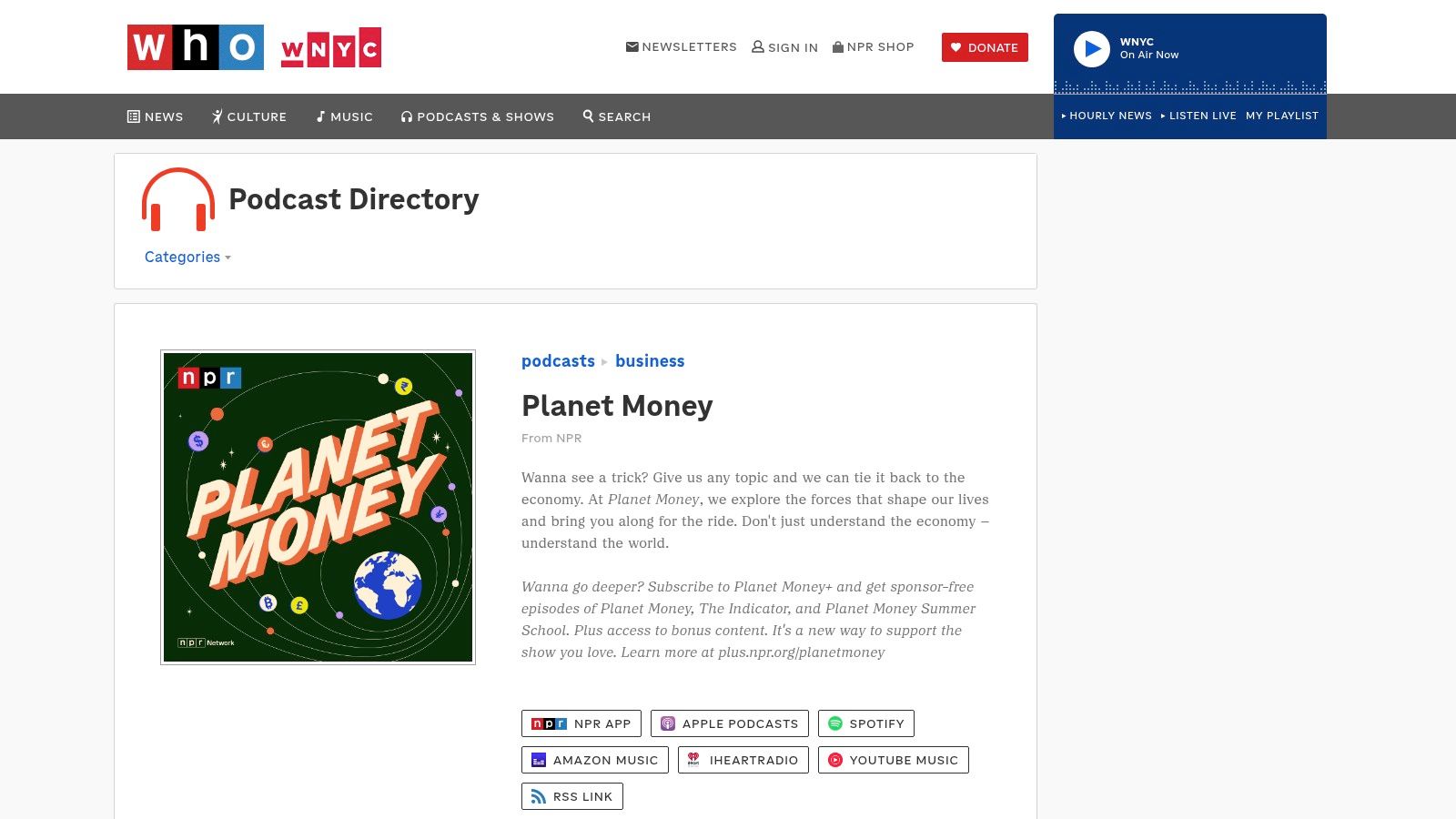
Planet Money is one of the cleanest examples of explainable thinking in audio. It takes markets, policy, labor, trade, and weird economic mechanics, then packages them into stories regular people can follow. For creators, that makes it useful far beyond economics.
If your niche involves systems, incentives, pricing, audience behavior, or platform dynamics, this show gives you language for cause and effect.
Where it earns a permanent spot
I like Planet Money for creators who need stronger framing. A good episode often answers one practical question. Why did this market behave that way? Why does this regulation create that outcome? Why does a simple object cost what it costs? That question-first structure translates well into YouTube titles, podcast hooks, and newsletter subject angles.
Its official NPR page also connects you to related shows like The Indicator and Summer School, which makes it easier to build topic clusters instead of random listening habits.
When you use Planet Money as research input, apply the same filter you'd use with any serious source set. If your team needs a framework for that review step, this guide on what makes a source credible is a useful companion.
Good educational content doesn't dump information. It isolates one mechanism and follows it until the listener can explain it to someone else.
A few trade-offs matter. Some episodes are intentionally introductory, so they won't satisfy specialists. And because the show often centers U.S. economics and policy, not every framework travels cleanly to a global audience.
Still, for creators who want sharper explanatory instincts, Planet Money is one of the best podcasts that make you smarter without making you work too hard just to stay engaged.
3. Hidden Brain
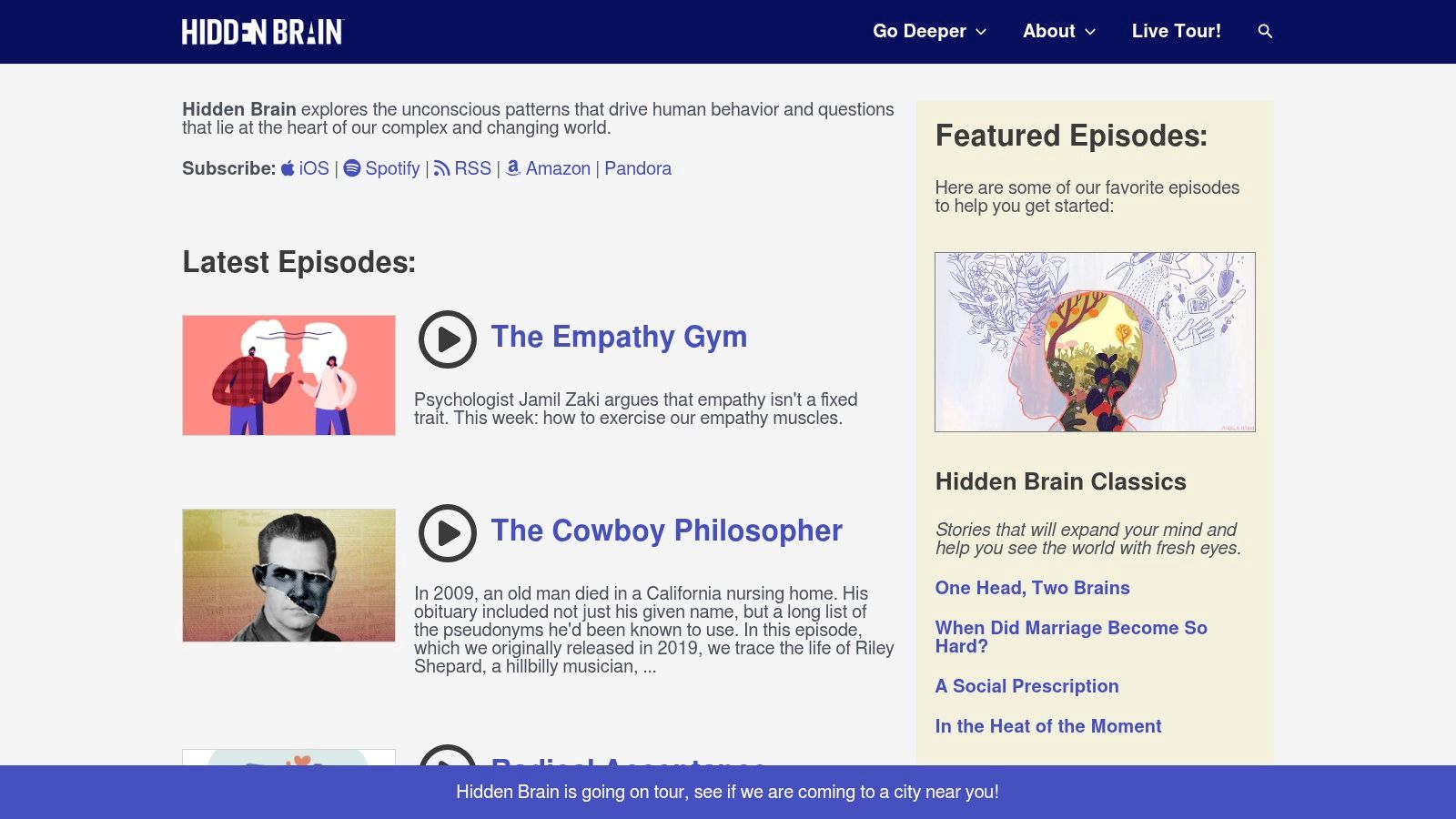
Hidden Brain is what I point people to when they want to understand audiences better, not just accumulate facts. The show sits at the intersection of psychology, behavior, relationships, motivation, and decision-making. For creators, that's practical territory.
You can learn a lot about why people pay attention, avoid change, misread signals, or stick with habits that don't serve them. Those aren't abstract insights if you write hooks, design offers, or build recurring content.
Best use case for content teams
This show works especially well when your content needs more empathy. Some creators over-index on information and under-index on human behavior. Hidden Brain helps correct that by tying research themes to real situations people recognize.
The Hidden Brain website is the place to start if you want the official archive and show details. I also like pairing episodes with transcripts, because behavioral concepts are easier to reuse when you can search the language later. If that's part of your workflow, this piece on Spotify podcast transcripts is relevant.
A practical way to use Hidden Brain is to listen for reusable audience questions:
- Why do people resist obvious solutions?
- What makes habits stick or break?
- How do stories change perception?
- What social pressures shape public behavior?
Those questions can fuel podcast episodes, sales-page revisions, editorial hooks, and interview prep.
The limitation is that Hidden Brain aims for accessibility. That's a strength for broad learning, but it also means you won't always get exhaustive methodological depth. If you want a graduate seminar, look elsewhere. If you want applicable insight with strong production and clear takeaways, this is a smart pick.
For creators building educational brands, that balance is often exactly right.
4. 99% Invisible

99% Invisible trains a skill most creators say they want but rarely practice. Observation. The show focuses on design, architecture, infrastructure, artifacts, systems, and the unnoticed decisions shaping daily life.
That's why it belongs on this list. Smart creators don't only consume more information. They notice more structure in ordinary things.
What it teaches better than most shows
A strong 99% Invisible episode can make a sidewalk sign, a building code, a map, a garment, or a civic object feel loaded with meaning. That habit transfers beautifully into content work. You start spotting stories inside interfaces, workflows, rituals, and design choices your audience usually ignores.
Its official archive is especially useful because many episodes connect to companion visuals and articles. That's helpful when you're turning an audio idea into a written or visual format later.
Editorial move: If you can't find a fresh topic, inspect something familiar until the hidden system appears.
This show is especially good for:
- Finding “hidden in plain sight” stories: Great for essays, explainer videos, and documentary framing.
- Learning evergreen structure: Many episodes stay useful because they're built around durable questions.
- Sharpening systems thinking: You begin to ask who designed this, for whom, and with what consequence.
The trade-off is straightforward. This isn't a rigorous academic analysis show, and it's not trying to be. It uses narrative design to help listeners care about overlooked systems. Some listeners will want more technical detail than it provides.
But if your content is getting too obvious, too surface-level, or too trend-chased, 99% Invisible is a strong reset.
5. Freakonomics Radio
Freakonomics Radio is useful when you need to break out of default explanations. The show applies incentives thinking, economic reasoning, interviews, and reported examples to everyday questions that seem simple until you inspect them.
That counterintuitive angle is where many creators get value. If your content sounds like everyone else in your niche, you probably need better questions, not more volume.
How to mine it for better angles
Freakonomics Radio often starts from a familiar assumption and then pressures it. That's a productive move for content creators. Instead of asking what happened, ask what incentives made it likely. Instead of asking what people say they want, ask what behavior reveals.
That habit can sharpen interviews, strategy pieces, and opinion writing fast.
I find this show most useful when building:
- Contrarian episode ideas: Not hot takes for the sake of it, but angles grounded in incentives.
- Experiment frameworks: Useful for creators testing formats, pricing, or audience segmentation.
- Context layers: The archive gives backstory you can use before publishing a trend reaction.
The limits are also worth naming. Some episodes lean macro and U.S.-centric. Others can tilt toward a data-and-incentives frame that leaves less room for qualitative nuance, identity, or culture.
Still, if you're a creator who wants to sound less reactive and more analytical, Freakonomics Radio is one of the more reliable podcasts that make you smarter by improving your mental models, not just feeding you topics.
6. Huberman Lab

Huberman Lab is less about broad curiosity and more about operational performance. If you're a creator trying to manage energy, focus, sleep, habits, stress, and long work blocks, this show can be useful.
That said, it's only useful if you engage it with discipline. This is not background chatter.
When long-form depth pays off
The strength of Huberman Lab is that Andrew Huberman doesn't just mention topics. He spends time on them. The official podcast page includes show notes, citations, and topic-specific resources that make episodes easier to revisit later.
For creators, that means you can build a practical personal knowledge base around workflow and performance. A single episode might generate changes to your recording schedule, sleep habits, meeting blocks, or creative warm-up routine.
Listener behavior is a significant factor. A benchmark analysis of Spotify podcast funnel metrics reported an average 8.6% awareness-to-interest conversion rate and a 63% interest-to-stream conversion rate, according to this Spotify podcast funnel discussion on YouTube. For educational shows, that reinforces how important the opening minute is. Huberman Lab works best when you choose episodes intentionally and commit, not when you sample casually and bounce.
Long educational podcasts reward replay. Don't treat them like a feed to clear. Treat them like a reference shelf.
The obvious downside is length. Episodes can be demanding, and not every creator wants that level of detail. If you need fast synthesis, this may feel heavy.
But if your work suffers because your attention is fragmented, your sleep is off, or your routines are inconsistent, Huberman Lab can help you think more clearly about the machine doing the work. That's your brain, your energy, and your daily process.
7. Sean Carroll's Mindscape
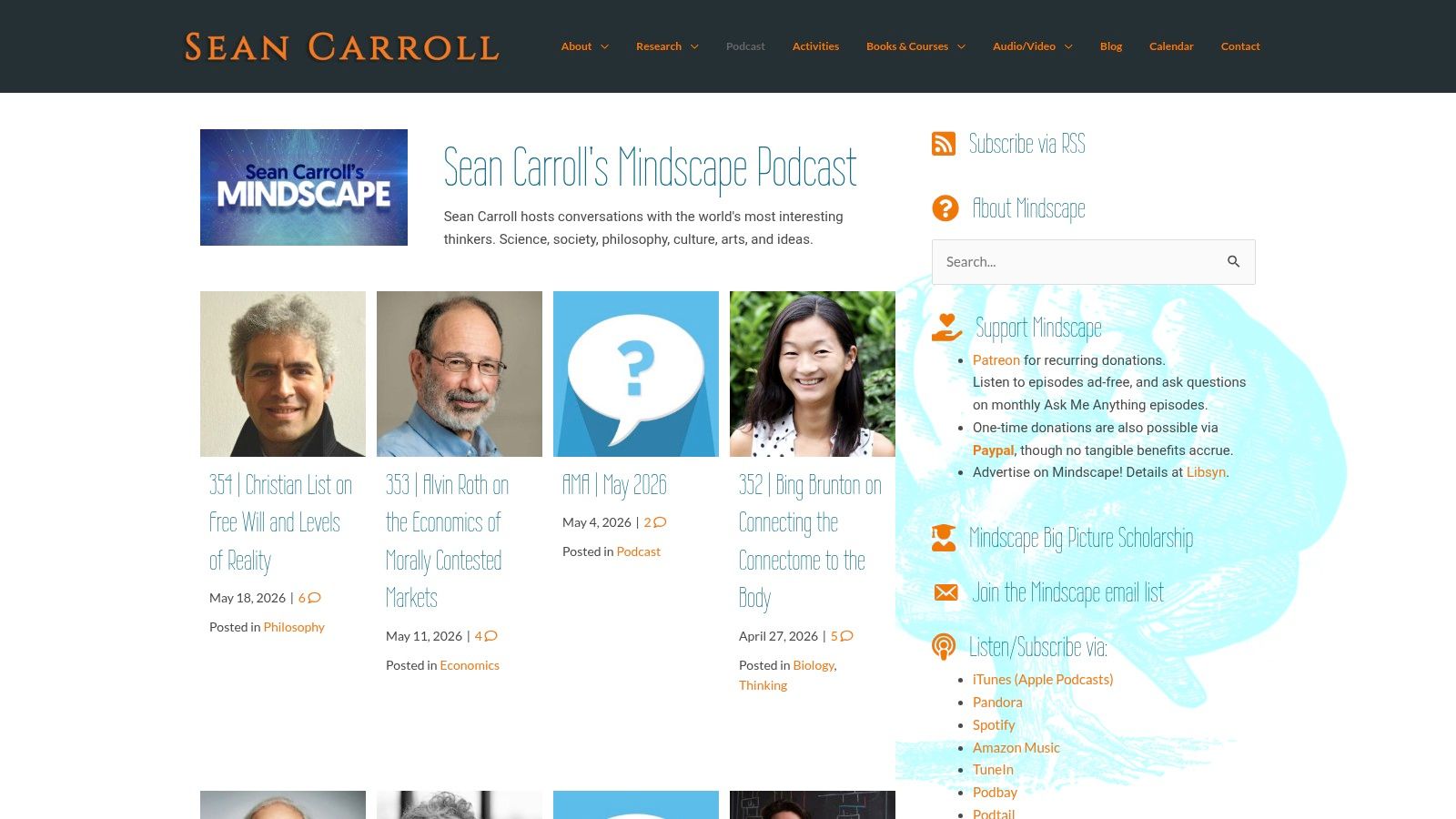
Sean Carroll's Mindscape is for creators who don't mind doing some intellectual lifting. The conversations move across physics, philosophy, AI, economics, consciousness, mathematics, and culture. They aren't designed to simplify everything down to a neat takeaway.
That's the appeal.
Best for deep thinkers and synthesis-heavy creators
If your work depends on pattern recognition across fields, Mindscape is a strong input. It trains comfort with abstraction, uncertainty, and ideas that resist easy summarizing. For essayists, interviewers, researchers, and serious nonfiction creators, that's valuable.
The Mindscape archive includes transcripts and show notes, which makes the show much more usable as a long-term research asset. And if you're intentionally building a process around extracting ideas from audio, this guide on learning from podcasts fits naturally here.
A few reasons it stands out:
- Cross-disciplinary transfer: You hear how scholars move concepts between domains.
- Idea density: Episodes reward note-taking because a lot happens conceptually.
- Archive value: The back catalog works well for thematic research sprints.
The downside is accessibility. This isn't a cinematic narrative show, and it won't hold every casual listener. It assumes patience and some tolerance for complexity. If you're commuting and half-listening, you may miss the point.
Still, among podcasts that make you smarter, Mindscape is one of the best for creators who want to build depth, not just collect polished surface knowledge.
Top 7 Podcasts That Make You Smarter, Comparison
| Show | Implementation complexity | Resource requirements | Expected outcomes | Ideal use cases | Key advantages |
|---|---|---|---|---|---|
| Radiolab | Medium, narrative editing needed to repurpose stories | Moderate listening time; member feed for some archives | Idea generation, storytelling templates, cross-disciplinary curiosity | Commutes or focused listening sessions | Cinematic sound design, accessible explanations, large archive |
| Planet Money | Low, insights are concise and easy to adapt | Low time per episode (~20 min); optional Planet Money+ | Clear economic frameworks, explainable case studies, quick takeaways | Short commutes, lunch breaks, quick briefings | Bite-size economics, practical examples, sister shows for learning paths |
| Hidden Brain | Low–Medium, behavioral insights map well to audience work | Moderate time; research interviews and actionable takeaways | Audience understanding, persuasion tactics, persona development | Routine tasks, workouts, hands-busy listening | Empathetic storytelling, applicable behavioral insights, steady cadence |
| 99% Invisible | Medium, requires translating observational stories into assets | Moderate time; archives and visuals for reference | Systems thinking, design spotting, evergreen narratives | Walks, travel, field observation of built environment | Deep design dives, browsable archive, strong visual companion material |
| Freakonomics Radio | Medium, needs reframing topics through incentives/data lens | Moderate time; networked archives and interviews | Counterintuitive angles, experimentation ideas, strategic frameworks | Deep work prep, brainstorming and creative problem-solving | Data-driven perspective, research + case studies, wide topical range |
| Huberman Lab | High, protocols require careful adaptation and testing | High time commitment; detailed show notes and citations | Actionable, research-backed protocols for performance and habits | Dedicated learning time, long workouts, focused study blocks | Long-form, evidence-based guidance with extensive citations |
| Mindscape (Sean Carroll) | High, abstract ideas need translation for practical use | High attention; long-form episodes and full transcripts | Big-picture conceptual transfer, deep disciplinary insight | Long drives, quiet evenings, focused deep-listening sessions | Idea-dense interviews, rigorous cross-disciplinary depth, transcripts for study |
Turn Your Listening Habit into a Content Engine
Listeners often stop at recommendation. That's where creators should start.
A smart listening habit only becomes valuable when it turns into a working system. Right now, podcasting is large enough that this matters strategically, not just personally. Independent industry research projects the worldwide podcast audience will reach 619.2 million listeners in 2026, while the ecosystem had already grown to more than 4.5 million active podcasts by November 2025, according to Content Allies' podcast statistics roundup. In a crowded field, general listening isn't enough. You need intentional inputs that sharpen expertise and improve output.
The next step is simple. Stop tracking podcasts by title alone. Track them by function.
Create buckets such as:
- Structure models: Shows that teach pacing, framing, and narrative turns
- Audience psychology: Shows that improve empathy, persuasion, and relevance
- Systems thinking: Shows that explain incentives, design, and hidden mechanisms
- Deep research: Shows worth revisiting with transcripts, notes, and clips
That system matters because listening behavior is fragmented. Edison Research's 2025 Infinite Dial found that 55% of Americans age 12+ listened to a podcast in the last month, while 38% listened weekly, as summarized in Thrive Global's discussion of smart podcasts and listening habits. In practice, a lot of people sample. Creators can't afford to. If you want compounding value, you need repeatable learning habits tied to actual production goals.
For organization to move from administrative to creative, notes, transcripts, clipped moments, framing patterns, and recurring themes should live in a searchable system, not in scattered apps and forgotten tabs. That's where a tool like Contesimal fits naturally. Contesimal is designed to help teams organize content libraries, search across materials, collaborate with AI and human contributors, and surface reusable knowledge from podcasts, videos, documents, and articles.
That kind of setup turns listening into R&D. It also helps your old inputs keep paying you back, whether you're planning a series, refreshing old ideas, or building a stronger editorial pipeline. Even odd adjacent details can sharpen your process when they're stored well enough to retrieve later, like this quick reference on email subject line capitalization when you're adapting a podcast idea into newsletter packaging.
The best podcast that make you smarter won't just change what you know. It should change what you can make next.
If you're ready to turn podcast notes, transcripts, and archived content into a searchable idea system, take a look at Contesimal. It's built for creators and teams who want to organize what they know, collaborate around it, and generate new value from the content library they already have.