
You've already done the hard part. You published the videos, recorded the podcast episodes, wrote the posts, built the archive. Now you're sitting on a content library that has real value, but value on its own doesn't create revenue, alignment, or momentum. A team needs a plan, and if you want budget, buy-in, or investor confidence, that plan usually has to be written down in a form people can evaluate.
That's where strong topics for a proposal paper become useful. Not academic for the sake of sounding formal, but practical. A proposal paper gives your next move a structure: the problem, the opportunity, the method, the expected result. It turns “we should probably repurpose more content” into a decision-ready strategy.
The most credible proposal topics are narrow enough to test and broad enough to matter. Academic guidance on statistics and proposal writing consistently points toward focused, measurable questions rather than broad themes, especially when the topic can use accessible data and real-world relevance, as summarized by PaperOwl's overview of statistics project ideas. For creators and publishers, that's good news. Your content operation already produces data, patterns, and repeatable workflows.
If you're moving from hobbyist mode into a real business, these topics for a proposal paper give you something stronger than inspiration. They give you frameworks you can present to a team, a client, a publisher, or a potential backer.
1. AI-Powered Content Repurposing and Multi-Format Distribution
A strong proposal here starts with a simple business problem. Most creators publish once and let the asset fade. Meanwhile, the best material in the archive still has unrealized value because it hasn't been adapted for the formats where different audiences spend time.
That makes repurposing one of the most practical topics for a proposal paper. You can argue for a workflow where a long-form asset gets transformed into clips, quote graphics, newsletters, blog posts, short videos, episode notes, and searchable knowledge assets. Podcasters already do this well when they turn one recorded conversation into a transcript, article, promo reel, and email sequence. Newsrooms do a version of it every day across web, mobile, and social.
Where this proposal gets serious
The proposal becomes stronger when you focus on process instead of hype. The useful question isn't whether AI can help repurpose content. It's which parts should be automated, which parts need editorial judgment, and how your team will preserve voice across formats.
One practical angle is AI-assisted retrieval and categorization across older assets. For proposal papers aimed at media teams, semantic retrieval across mixed media is increasingly relevant, and current topic guides keep highlighting AI tools, digital trends, consumer behavior, and content strategy as active areas of research demand, not generic brainstorming, as noted by PaperWriter's discussion of marketing research topics.
If you want a product-focused implementation path, Contesimal's guide to AI content repurposing gives you a concrete model for turning archived material into reusable assets.
Practical rule: Don't start with your biggest archive. Start with your clearest winners.
A proposal in this area works best when it includes operating choices like these:
- Start with evergreen assets: Pull from episodes, articles, or videos that still answer recurring audience questions.
- Define format ownership: Decide who approves clips, who rewrites for blog, and who checks tone before distribution.
- Map content to channels: A YouTube clip, LinkedIn post, and email excerpt shouldn't all carry the same framing.
- Study what others do well: HypeScribe's guide to repurposing content is useful for comparing tactical approaches.
What doesn't work is proposing “repurpose everything.” That usually creates clutter, not an advantage.
2. Content Gap Analysis and Strategic Audience Expansion
A lot of content teams mistake volume for coverage. They publish constantly, but they still miss the questions their next audience segment cares about. That's why content gap analysis makes such a solid proposal topic. It turns an editorial problem into a strategic one.
The strongest version of this proposal compares three things: what your library already covers, what your audience is asking for, and what competing publishers have overlooked. Buffer has long used social listening and audience feedback loops to shape content direction. Netflix is the entertainment version of the same instinct, looking for under-served interests instead of blindly repeating what already exists.
What a useful gap analysis proposal includes
This topic becomes persuasive when you avoid broad claims like “we need more top-of-funnel content.” That language is too vague to guide action. A better proposal isolates missing categories, underserved use cases, or new audience segments your current archive can support.
Academic topic guidance also supports this kind of framing. Broadly relevant proposal papers tend to perform better when they can be supported by public datasets and standard methods such as comparison, correlation, regression, or time-series analysis. Major topic guides repeatedly highlight issues like inflation, migration, healthcare costs, urbanization, education, and inequality because they connect broad importance with measurable evidence, as summarized by Instant Assignment Help's discussion of statistics project ideas.
That logic applies directly to content strategy. The best topic isn't “how to grow the audience.” It's something like: which unserved subject cluster has enough audience demand, enough internal expertise, and enough reusable source material to justify a new series?
Use a proposal structure that answers:
- What's missing: Not just topics, but formats, audience intent, and buyer-stage coverage.
- Why it matters: Link the gap to reach, retention, authority, or monetization.
- How you'll test it: A pilot playlist, a newsletter series, a limited article cluster, or a niche podcast run.
What doesn't work is copying competitor topic lists. That gives you parity at best. Gap analysis should help you find the spaces where your archive gives you an advantage.
3. Personalized Content Discovery and Recommendation Engine
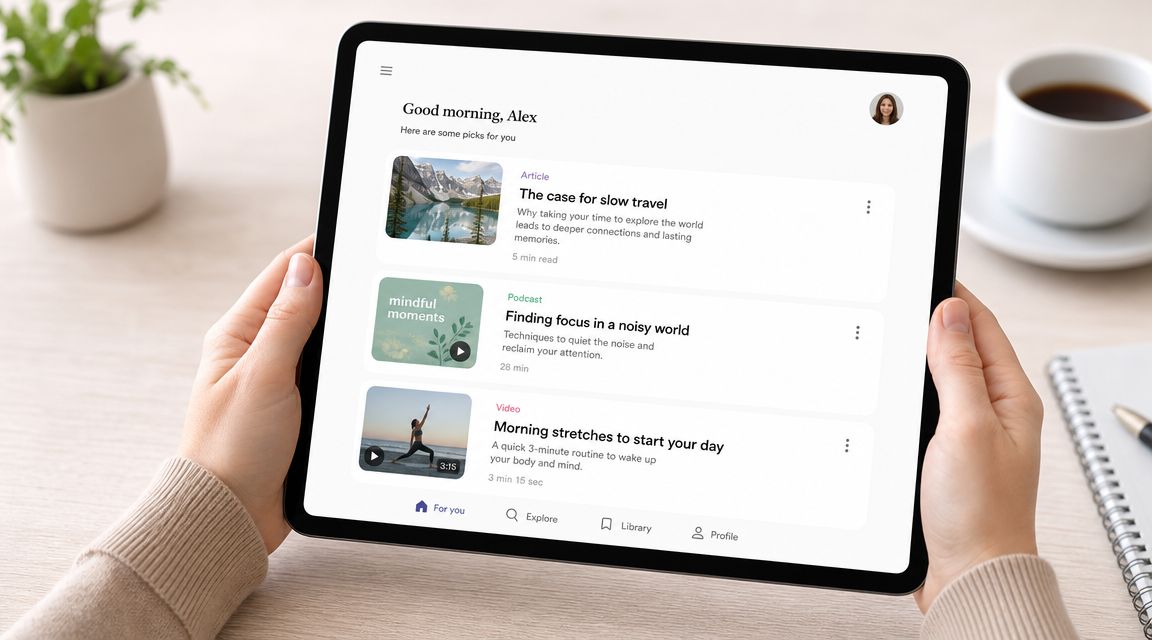
A big archive can become a liability when users can't find anything beyond the newest post. That's why recommendation and discovery systems belong on this list. For publishers, educators, and creators with deep catalogs, poor discovery wastes assets you already paid to produce.
Spotify, YouTube, Apple Podcasts, and major publishers all understand the same principle. A user who gets a relevant next suggestion stays in the ecosystem longer and develops a stronger habit around the brand. For smaller teams, the proposal doesn't need to be as complex as a platform-scale recommendation engine. It can focus on personalized playlists, related-episode blocks, dynamic reading paths, or intent-based content bundles.
The real trade-off
Personalization sounds impressive, but it can become a mess if the proposal ignores privacy, transparency, and editorial standards. A recommendation system that only chases clicks can trap people in narrow loops and bury valuable but less immediately flashy content.
This topic becomes stronger when you frame it around utility. Help people discover older material that matches their role, format preference, or current problem. A screenwriter may want interviews, frameworks, and case studies. A podcaster may want workflow tutorials and monetization breakdowns. A publisher may want archive-led research and taxonomy tools.
Good discovery doesn't just surface more content. It surfaces the right next asset for the right user at the right moment.
Useful proposal angles include:
- Behavior-based recommendations: Suggest related material based on prior reading, listening, or viewing.
- Role-based journeys: Build tracks for creators, editors, marketers, and researchers.
- Mixed-media discovery: Connect a podcast clip to the full transcript, the article version, and a downloadable guide.
- User controls: Let people influence what they see more of, not just receive machine-selected suggestions.
What fails here is overengineering. If your team can't maintain the metadata, tagging logic, or editorial rules, a simpler curated recommendation model is usually the smarter proposal.
4. SEO Optimization and Search Performance Scaling
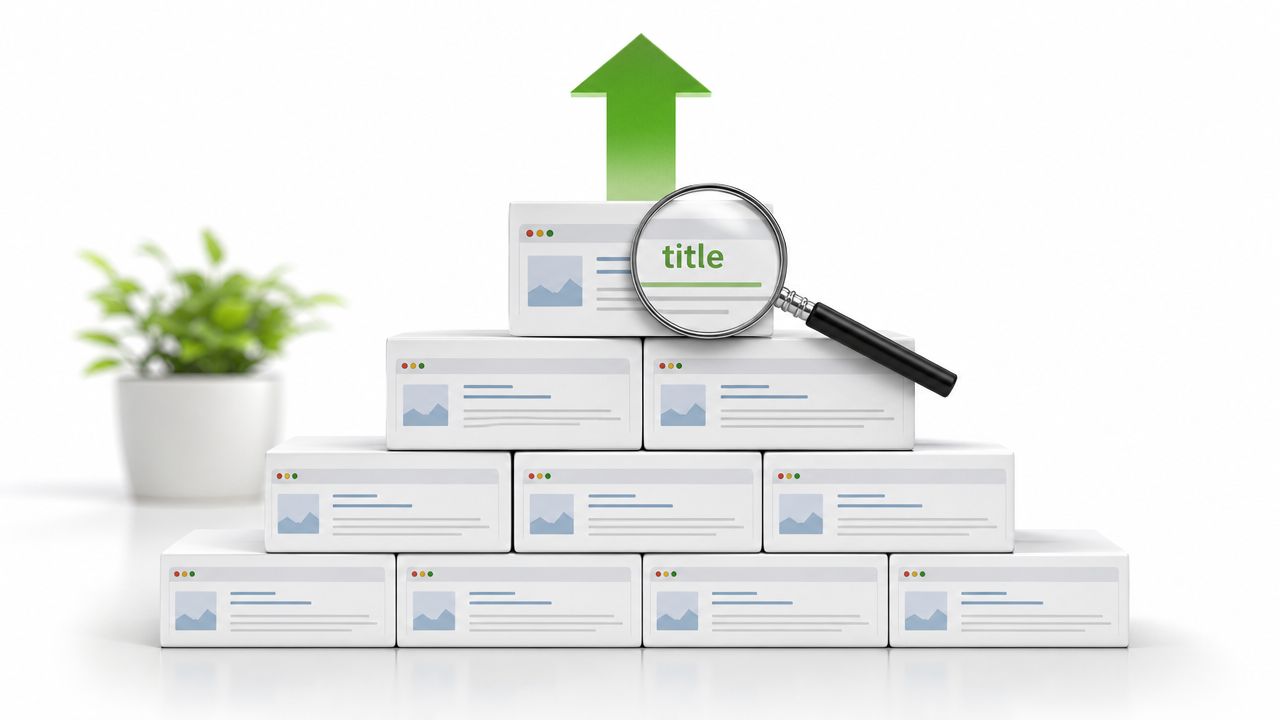
If your archive is rich but invisible, search is usually the bottleneck. This proposal topic works because it connects editorial effort to durable distribution. Unlike social spikes, search rewards libraries that are organized, updated, internally linked, and clearly mapped to intent.
HubSpot, Moz, and Zapier are the obvious examples because they treat search as a system, not a one-off publishing tactic. They cluster topics, strengthen internal links, refresh aging pages, and build content around problems people repeatedly search for. Smaller content businesses can do the same with fewer moving parts.
Where the archive becomes an advantage
Older content often contains the raw material for search growth. A forgotten webinar can become a how-to article. A podcast transcript can become a long-tail post. A series of related essays can become a pillar page with supporting cluster content.
This proposal gets sharper when you define the mechanics. Keyword mapping, metadata updates, internal link restructuring, archive consolidation, and content clustering are concrete actions. So is identifying which historical assets should be rewritten rather than republished.
For teams using AI as part of that workflow, Contesimal's overview of AI for SEO is a practical reference for connecting content intelligence with search operations.
A proposal in this category should account for the realities that teams often ignore:
- Search intent changes: A page that ranked well before may now need a different angle or format.
- Not every page deserves optimization: Some assets are better folded into a stronger canonical page.
- Internal linking matters: A library without structure leaves authority stranded in isolated posts.
- Editorial refresh is part of SEO: Metadata alone won't rescue weak or outdated material.
What doesn't work is treating SEO like a plugin setting. Search performance improves when a team organizes knowledge, aligns pages to intent, and keeps updating what already has traction.
5. Audience Segmentation and Behavioral Targeting Strategy
One audience is almost never one audience. A creator may think they serve “marketers” or “business owners,” but the archive usually tells a different story. New subscribers want fundamentals. Loyal fans want depth. Buyers want implementation. Partners want evidence. Segmenting those groups gives a proposal paper both strategic depth and operational value.
This is one of the strongest topics for a proposal paper if you're trying to convince a team to stop publishing generic content. Generic content feels safe, but it usually underperforms because it smooths over real differences in motivation.
How to keep segmentation useful
A proposal here should stay practical. Don't build fifteen personas nobody will use. Start with a small number of behavior-based segments that change decisions. For instance, a publisher might distinguish between casual readers, topic specialists, and paid subscribers. A podcast business might separate discovery listeners, repeat listeners, and conversion-ready prospects.
The best proposal arguments usually emerge when you connect segment definitions to messaging and format choices:
- New audience segment: Needs clear, accessible entry-point content.
- Mid-funnel evaluator: Needs comparisons, workflows, and outcome-driven examples.
- Power user or loyal subscriber: Wants depth, archives, research, and community access.
If a segment doesn't change what you publish, how you package it, or where you distribute it, it isn't a useful segment.
Real examples are everywhere. LinkedIn effectively tailors content and offers by role and industry. Streaming platforms organize recommendations around taste and behavior. Publishers refine newsletters and homepage modules based on reading patterns. The opportunity for smaller teams is to make this intentional instead of accidental.
What fails is demographic-only segmentation with no content implication. “Ages 25 to 34” won't help much unless it aligns with a specific behavior, need, or monetization path.
6. Content Performance Analytics and ROI Measurement Framework
A content operation becomes much easier to fund when it can explain what's working and why. That's why analytics and ROI deserve a place on this list. A proposal paper in this area helps teams move from activity reporting to decision-making.
Most creators already have dashboards. That isn't the same as having a framework. Views, downloads, open rates, watch time, subscriber growth, retention, leads, and conversions can all matter, but they don't matter equally for every format or business model.
What to measure and what to ignore
The proposal gets stronger when it separates signal from noise. A podcast may generate modest direct conversions but strong downstream trust. A search article may bring consistent discovery traffic but weak immediate revenue. A newsletter may have a smaller audience but much stronger commercial intent.
This topic is also timely because AI is moving from novelty to infrastructure in knowledge-heavy environments. One data point worth using is that 84% of organizations say they are using or plan to use AI in knowledge management. That makes measurement more important, not less. Once more systems help classify, retrieve, summarize, and distribute content, teams need clearer ways to judge business impact.
A useful proposal often includes a tiered model like this:
- Reach metrics: Traffic, impressions, listens, or views.
- Engagement metrics: Completion rate, return visits, saves, replies, or shares.
- Business metrics: Leads, subscriptions, consult requests, product interest, sponsorship readiness.
For teams building a formal business case, ROI guide for AI-driven marketing is a helpful external reference point for framing measurement discussions.
What doesn't work is trying to reduce every asset to one number. The better approach is to create a framework that respects different jobs each piece of content performs.
7. Research and Insights Generation from Content Archives

Some of the best proposal topics don't focus on publishing more content. They focus on extracting higher-value products from what you already know. That's where archive-based research becomes interesting. If your library captures recurring conversations, audience questions, interviews, transcripts, or editorial analysis, you may be sitting on the foundation for reports, white papers, briefings, and proprietary insight pieces.
This is especially useful for publishers, B2B creators, and niche experts. McKinsey, HubSpot, and large media brands all turn accumulated knowledge into higher-authority research assets. Smaller operators can do the same on a tighter scale by synthesizing what their archive reveals about audience concerns, market shifts, or recurring misconceptions.
Turning archive material into authority
The quality of this proposal depends on discipline. Research output has to be more than a stitched-together blog recap. The paper should define the corpus, explain the classification method, identify patterns, and specify what kind of insight the team expects to surface.
If your archive includes transcripts, articles, interviews, and notes, Contesimal's guide to qualitative research content analysis is a useful way to think about turning messy content collections into usable findings.
This topic is also a smart fit for current proposal trends. Guidance on proposal essays points to a major gap in topic selection itself: many topic lists stop at broad idea dumping and rarely help people choose based on feasibility, evidence depth, originality, or audience fit. That gap matters because a proposal essay is supposed to present a problem and a workable solution, as discussed in DoMyEssay's article on research proposal topics.
That same logic applies here. Archive research works when the proposal answers:
- What unique material do we have?
- What pattern can we credibly investigate?
- Who will care about the resulting insight?
- How will the research output create revenue or authority?
What fails is trying to imitate a major annual industry report without proprietary access or a clear point of view.
8. Collaborative Content Creation and Distributed Workflow Optimization
Content businesses usually hit a ceiling when everything depends on one person's memory, inbox, or editing queue. Collaboration and workflow optimization make a strong proposal topic because they deal with one of the least glamorous but most expensive problems in publishing: friction.
Google Workspace, Slack, Grammarly, and creator-focused collaboration tools all solve parts of this problem. The main issue isn't whether tools exist. It's whether your workflow is designed clearly enough that tools can help. Many teams adopt software before they define who briefs, who edits, who approves, who repurposes, and who publishes.
The proposal angle that decision-makers understand
This proposal works best when it focuses on bottlenecks. Maybe a podcast team loses time in transcript review. Maybe a publishing team duplicates research because notes live in scattered folders. Maybe approvals drag because nobody knows which version is final. Those are proposal-worthy problems because they produce delays, inconsistency, and wasted labor.
A good paper here usually recommends a smaller pilot instead of a company-wide overhaul. Pick one content stream. Document handoffs. Introduce shared taxonomy, version control, AI-assisted summarization, and clear editorial checkpoints. Then assess what changed.
The fastest way to kill a workflow proposal is to promise “seamless collaboration” without naming the handoffs that keep breaking.
Useful proposal components include:
- Task routing: Who owns ideation, draft creation, review, design, scheduling, and distribution.
- Version control: One source of truth for scripts, transcripts, articles, and derivative assets.
- Knowledge reuse: Shared research layers that teams can search instead of recreating.
- Human review gates: AI can assist with summaries and organization, but final editorial judgment still needs an owner.
What doesn't work is automating a bad workflow. You'll just scale confusion faster.
9. Voice Search Optimization and Conversational Content Strategy
Search behavior keeps getting more conversational. People don't just type chopped-up keywords anymore. They ask full questions, speak to devices, and expect direct answers. That makes voice and conversational content strategy a smart proposal topic, especially for brands with educational, informational, or instructional libraries.
This doesn't mean every creator needs a futuristic voice app. It means your content should be easier to retrieve and understand using natural language. FAQ pages, transcript optimization, concise answer blocks, and well-structured educational content all fit here.
Why this topic is timely without being trendy-only
A lot of topic lists throw in AI, privacy, deepfakes, hybrid learning, and misinformation because they sound current. The better proposal asks what evidence makes a topic persuasive now and what measurable outcomes make it credible. Recent guidance specifically points out this gap: many proposal lists surface trending themes but fail to connect them to workable angles, evolving evidence, or measurable outcomes, as outlined by PaperOwl's article on proposal essay topics.
That's the key discipline in a voice-search proposal. Don't just say conversational interfaces matter. Identify which slice of your library is best suited for question-driven retrieval and how you'll restructure it.
Strong ideas include:
- Transcript optimization: Clean up podcast and video transcripts so answers are easier to parse and search.
- Question-led content design: Rewrite sections around the natural questions users ask.
- FAQ architecture: Build support pages and resource hubs around concise, answer-first responses.
- Audio-first packaging: Turn educational content into spoken formats people can use on the move.
This proposal works best for practical, recurring queries. It works less well for abstract brand storytelling that depends on visual context or long-form nuance.
10. Community Building and User-Generated Content Integration
Some of the most defensible content businesses stop thinking like publishers only and start thinking like hosts. Community is where the archive becomes a living asset instead of a static one. Users don't just consume. They react, annotate, discuss, contribute examples, and create context around the original material.
That makes community building one of the most forward-looking topics for a proposal paper. It's especially relevant for creators who want to move beyond ad-dependent growth into memberships, subscriptions, premium access, live experiences, or expert networks.
The business case for participation
Reddit, Stack Overflow, Wikipedia, Product Hunt, and community-driven media products all prove the same idea in different ways. Participation increases stickiness. It also creates a feedback loop that helps teams see what matters most to the audience. For a smaller brand, that might look like reader annotations, creator challenges, member-submitted case examples, or discussion threads attached to core content assets.
The proposal becomes credible when it treats community as an editorial system, not just a comment section. That means moderation standards, promotion rules, contributor recognition, and quality thresholds all need to be defined.
A practical proposal might include:
- Contribution pathways: Let users submit examples, questions, templates, or responses tied to specific content.
- Editorial curation: Highlight the best community contributions so quality stays visible.
- Knowledge loop: Feed recurring audience questions back into your official content pipeline.
- Recognition systems: Feature contributors in newsletters, episodes, roundups, or member showcases.
What doesn't work is launching “community” with no participation design. If people don't know what kind of contribution is welcome or what happens to it next, the space goes quiet fast.
10 Proposal Topics Comparison
| Initiative | Implementation complexity | Resource requirements | Expected outcomes | Ideal use cases | Key advantages | Key limitations |
|---|---|---|---|---|---|---|
| AI-Powered Content Repurposing and Multi-Format Distribution | Medium, automation, templates, onboarding | Moderate, archive access, AI tools, editorial oversight | Increased content output, extended lifespan, lower production costs (40–60%) | Brands with large evergreen archives, podcasts, newsrooms | Scales asset creation, improves SEO via varied formats, enables consistent posting | Needs human QC, risk of repetitive messaging, initial setup/training time |
| Content Gap Analysis and Strategic Audience Expansion | Medium–High, data integration and analysis pipelines | High, historical data, analytics platforms, cross-team coordination | Data-driven roadmap, identifies high-value topics, better discoverability | Organizations planning strategic content growth, competitive markets | Eliminates planning guesswork, uncovers niche audiences, supports editorial decisions | Requires robust data, time-intensive, trends may shift quickly |
| Personalized Content Discovery and Recommendation Engine | High, recommender algorithms, real-time systems | High, user data, compute, ML expertise, privacy compliance | Higher engagement and retention (20–40%), drives back-catalog traffic | Consumer platforms, media sites, apps with repeat users | Boosts session time and retention, recommendations improve with data | Privacy/legal concerns, algorithmic bias, significant compute needs |
| SEO Optimization and Search Performance Scaling | Medium, keyword mapping, metadata, linking | Moderate, SEO tools, content editing, monitoring | Sustainable organic traffic growth, topical authority, qualified leads | Sites with large archives aiming for long-term traffic | Long-term organic gains, scalable discoverability, low ongoing cost after setup | Results take 3–6 months, requires ongoing updates, vulnerable to algorithm changes |
| Audience Segmentation and Behavioral Targeting Strategy | High, modeling, cohort analysis, integrations | High, historical consumption data, analytics, privacy safeguards | Hyper-targeted content, improved campaign effectiveness, less content waste | Subscription services, publishers, product-marketing alignment | Identifies high-value segments, informs product and messaging | Needs extensive data, privacy issues, segments require frequent updates |
| Content Performance Analytics and ROI Measurement Framework | Medium–High, attribution models, dashboards | High, integrations across channels, analytics expertise | Clear ROI evidence, optimized budget allocation, predictive insights | Enterprise content teams, marketing leaders proving impact | Connects content to business outcomes, identifies underperformers | Complex attribution, long measurement windows, integration overhead |
| Research and Insights Generation from Content Archives | High, research methodology and synthesis workflows | High, analyst time, validation, data aggregation | Thought leadership assets, high-value reports, inbound leads | Organizations with unique historical data seeking authority | Establishes credibility, creates premium gated content, media opportunities | Time-intensive, requires methodological rigor, relevance can decline |
| Collaborative Content Creation and Distributed Workflow Optimization | Low–Medium, tool setup, change management | Moderate, collaboration tools, training, editorial guidelines | Faster production (25–40% time reduction), better consistency, streamlined reviews | Distributed teams, remote-first content operations | Speeds production, improves consistency, enhances review workflows | Learning curve, cultural buy-in required, risk of over-reliance on AI suggestions |
| Voice Search Optimization and Conversational Content Strategy | Medium, restructure content, schema, testing | Moderate, transcription services, audio production, testing | Capture voice search growth, featured snippets, audio distribution | Podcasts, FAQ-heavy sites, brands targeting voice assistants | Future-proofs content, improves conversational discoverability, supports snippets | Requires substantial restructuring, evolving best practices, audio/transcription quality matters |
| Community Building and User-Generated Content Integration | Medium–High, platform setup, moderation systems | High, community managers, moderation tools, platform maintenance | Increased content volume and engagement, loyal advocates, lower production costs (30–50%) | Niche communities, product platforms, knowledge-sharing sites | Scales content via users, builds retention, crowdsourced quality | Needs active moderation, quality control challenges, legal/privacy risks |
Turn Your Proposal Into Profit
You have ten strong ideas on the table, and the team likes all of them. Finance wants a budget case. Leadership wants a clear outcome. An investor or department head wants proof that this proposal turns content into revenue, efficiency, or defensible audience growth. That is the point where a good topic for a proposal paper stops being academic and starts functioning like an operating plan.
The best choice depends on cost, timing, and internal friction. Some proposals produce value fast but require process change. Others take longer to show returns but build a stronger foundation for search, discovery, or productized knowledge. A useful proposal names that trade-off early so decision-makers know what they are funding, what the team must change, and how success will be measured.
A proposal that gets approved usually does four things well. It defines one expensive problem. It recommends one clear intervention. It shows how the work will happen. It ties the outcome to a metric the business already cares about, such as qualified traffic, production speed, retention, or reuse of existing assets.
That is where creators and content operators have an advantage. The evidence already exists inside the business. Archive performance, publishing bottlenecks, missed search demand, weak discovery paths, and underused material all give you raw material for a focused proposal. Instead of starting with a vague goal like brand growth, start with an observable constraint and build the paper around fixing it.
For internal teams, that often means writing a proposal around waste reduction or revenue efficiency. For investors or stakeholders, it often means showing that the content library can operate like an asset, not a cost center. That framing is stronger than a broad creative pitch because it connects content strategy to margin, speed, and repeatable output.
Contesimal fits that operating model well because it helps teams organize archives, retrieve usable source material, classify content consistently, and turn stored knowledge into new strategic output. When the library is searchable and structured, proposals become easier to scope, defend, and execute. The business case gets sharper because the team can point to actual assets, actual gaps, and actual workflow constraints instead of assumptions.
Pick one topic. Tie it to a business problem with visible cost. Write the proposal for the person who has to approve the spend and the team who has to carry it out.
If you're ready to turn an underused archive into a real growth system, Contesimal can help you organize your content library, uncover patterns across podcasts, videos, and articles, and build new value from work you've already created. It's a practical way to move from scattered assets to searchable knowledge, stronger collaboration, and content strategies you can scale.